Spotting crumbling, discolored wood on your San Diego home can be alarming. This silent destroyer is often dry rot, a common issue that can quickly compromise your home’s structure and appearance. Understanding what dry rot is and its repair costs helps you take quick action.
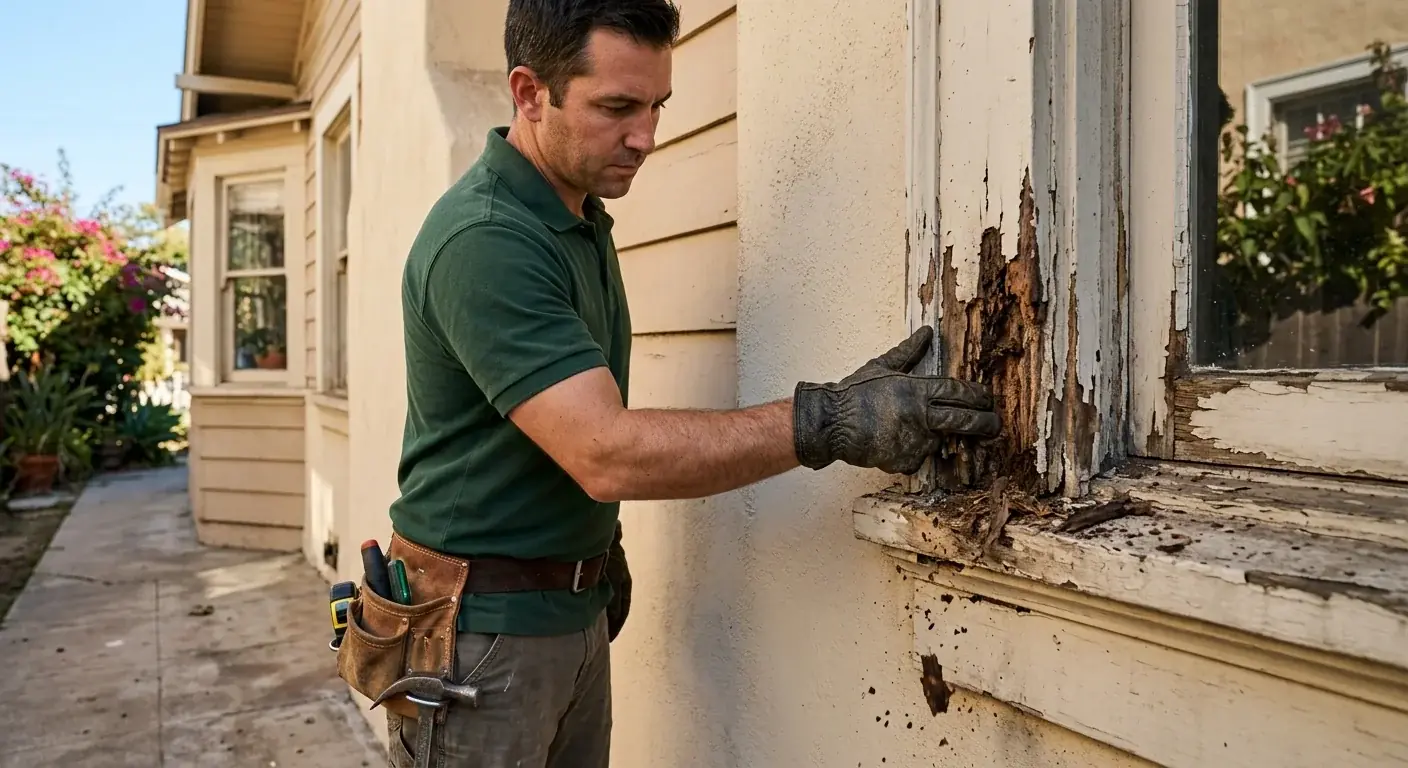
What causes dry rot in San Diego homes
Despite its name, dry rot isn’t caused by dryness. It needs moisture to thrive, but it can then spread to seemingly dry wood. Specifically, dry rot is caused by certain species of fungi, most commonly Serpula lacrymans. This fungus doesn’t need much light and can even survive in enclosed, unventilated spaces. What it does need is consistent moisture and a food source, which is your home’s wood.
In San Diego’s climate, dry rot often starts in areas that experience intermittent dampness, poor ventilation, or direct water exposure. Think about places like decks exposed to morning dew and occasional rain, eaves that might catch runoff, or window and door trim where sealants have failed. Leaky pipes behind walls, condensation in crawl spaces, or insufficient drainage around your foundation can also create the ideal breeding ground for these fungi.
The fungus releases spores that settle on damp wood. Once established, it develops a network of thread-like structures called hyphae, which penetrate the wood. These hyphae break down the wood’s cellulose, stripping it of its strength and integrity. Over time, the wood becomes brittle, crumbly, and loses its structural capacity. San Diego homes, with their mix of coastal humidity and sudden rains, are particularly susceptible if maintenance isn’t consistent. Regular home checks can make a big difference in catching issues before they escalate.
How to identify dry rot on decks, eaves, and trim
Early detection of dry rot is crucial for limiting damage and repair costs. Unlike some other forms of wood decay, dry rot has distinct signs. Knowing what to look for can save you significant hassle and expense down the line.
Visual cues
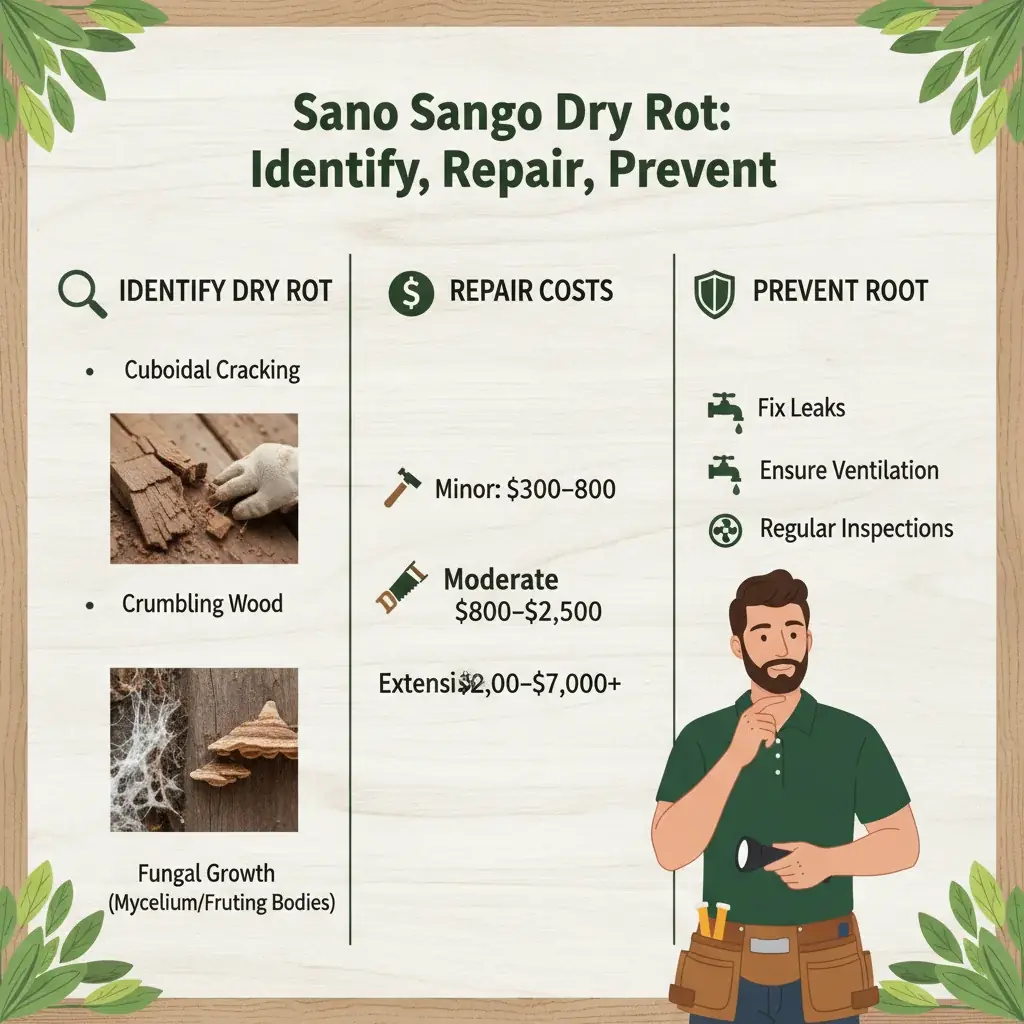
First, look for visible changes in the wood itself. Dry rot typically causes wood to crack in a cuboidal pattern, meaning it breaks into small, cube-like pieces. The wood might appear darker than surrounding healthy wood, or it could have a bleached, greyish look. You might also see visible fungal growth, which can range from cotton-wool like strands (mycelium) to flat, pancake-shaped fruiting bodies. These fruiting bodies are often orange, brown, or rust-colored and will release red, dusty spores. These spores are a clear sign of an active infestation.
Touch and feel tests
Touch is another key indicator. Dry rot makes wood surprisingly soft and crumbly. If you can easily push a screwdriver or a utility knife into the wood, or if it crumbles when you apply pressure, you likely have dry rot. This is especially true for exterior wood elements like your decks, window sills, and door frames. Pay close attention to areas that stay damp longer or are poorly ventilated, such as the underside of deck boards or hidden corners of eaves.
Odor and other signs
Sometimes, dry rot has a distinct, musty odor, like damp earth or mushrooms. This smell is often more noticeable in enclosed areas where the rot is active. Check for peeling paint on wood surfaces, as this can indicate moisture intrusion underneath. Also, look for signs of water damage, such as water stains or warped wood, which can precede or accompany dry rot. If you suspect dry rot, it’s always best to consult with a professional. They can accurately diagnose the issue and recommend the most effective wood rot repair San Diego solutions.
The average cost of dry rot repair
The cost of dry rot repair in San Diego varies widely depending on the extent of the damage, the location of the rot, and the chosen repair method. It’s not a one-size-fits-all estimate, but we can give you a realistic range to expect.
Minor dry rot repairs, such as addressing a small section of a window sill or a single piece of trim, might cost between $300 and $800. This typically involves removing the damaged wood, applying a fungicide, and patching or replacing the small section. The labor for these smaller jobs is usually a few hours.
For moderate dry rot affecting larger sections of decking, fascia boards, or a significant portion of a door frame, you might look at costs ranging from $800 to $2,500. This often requires more extensive wood removal, fungicide treatment, and replacement of larger wood pieces. The job complexity and material costs increase here. For instance, replacing several deck boards might be on the lower end of this range, especially if it’s part of a larger deck maintenance guide San Diego effort.
Extensive dry rot, especially if it has spread into structural elements like joists, beams, or multiple areas of the home, can be significantly more expensive. These large-scale repairs can range from $2,500 to $7,000 or more, potentially involving demolition, structural shoring, and complete reconstruction of affected areas. Factors like accessibility (e.g., rot in a hard-to-reach eave or crawl space) also drive up labor costs. Always get a detailed estimate from a reputable handyman service for larger jobs.
Keep in mind that these costs are for the repair itself. They might not include the cost of fixing the underlying moisture problem that caused the rot in the first place, which is crucial for preventing future recurrence. Always address the source of moisture, whether it’s a leaky gutter or a drainage issue.
Epoxy consolidation vs. full wood replacement
When tackling dry rot, professionals typically consider two primary repair methods: epoxy consolidation and full wood replacement. The choice depends on the severity and location of the rot.
Epoxy consolidation
Epoxy consolidation is a viable option for minor to moderate dry rot where the wood’s structural integrity hasn’t been completely compromised. This method involves carefully removing all soft, crumbling wood, usually by scraping or routing it out. Once the area is clean and dry, a special liquid epoxy consolidant is applied. This epoxy penetrates the remaining sound wood, soaking into its fibers and curing to form a hard, durable, and waterproof repair. The consolidated wood regains its strength and becomes resistant to further moisture intrusion.
The benefits of epoxy consolidation include preserving original architectural elements, which is particularly useful for historic homes or intricate trim work. It’s often less invasive and can be more cost-effective for smaller, non-structural areas like window sills, decorative trim, or non-load-bearing sections of eaves. However, it’s not suitable for wood that has lost significant structural strength or where the rot is widespread and deep.
Full wood replacement
Full wood replacement is the preferred method for extensive dry rot, especially when structural components are affected, or the wood is too far gone for epoxy to be effective. This process involves completely removing the rotted section of wood and replacing it with new, treated lumber. The surrounding healthy wood is thoroughly inspected and treated with a fungicide to prevent any lingering spores from spreading.
Replacement ensures maximum structural integrity and longevity. It’s often necessary for critical areas like deck joists, support beams, or large sections of fascia and siding. When rot has reached exterior boards, our guide to siding repair costs in San Diego breaks down when a patch works and when the wall needs replacing. While it can be more labor-intensive and costly than epoxy consolidation, it guarantees a complete resolution to the dry rot problem in severely damaged areas. For San Diego homes, using pressure-treated or rot-resistant wood for replacement is always a smart investment, especially in areas prone to moisture.
Steps to prevent dry rot from coming back
Preventing dry rot is far more cost-effective than repairing it. The key is controlling moisture and ensuring good ventilation. Here are the most effective steps San Diego homeowners can take:
-
Manage moisture: Fix any leaks promptly. This includes leaky roofs, plumbing fixtures, or overflowing gutters. Ensure your gutters are clean and direct water away from your home’s foundation. Grading your landscape away from the house helps prevent water from pooling near the foundation. Regularly check your sprinkler system to ensure it’s not constantly soaking your home’s exterior.
-
Ensure proper ventilation: Good airflow helps dry out damp areas quickly. Check your attic, crawl spaces, and basements for adequate ventilation. Consider installing vents or fans if these areas consistently feel damp or smell musty. For decks, ensure there’s enough space between boards and underneath the deck for air to circulate.
-
Use appropriate materials and sealants: When building or repairing, use rot-resistant wood like redwood, cedar, or pressure-treated lumber for exterior elements, especially for decks and fences. Regularly inspect and re-caulk around windows, doors, and any other penetrations in your home’s exterior to prevent water intrusion. This is a simple but highly effective preventative measure.
-
Regular inspections and maintenance: Make it a habit to inspect your home’s exterior annually. Look for peeling paint, soft spots in wood, or visible fungal growth. Pay special attention to eaves, window sills, door frames, and your deck. Catching small issues early can prevent a major dry rot problem. For specific guidance on maintaining your deck, refer to our deck maintenance guide San Diego.
-
Maintain landscaping: Trim trees and shrubs away from your house. Foliage touching siding can trap moisture and impede airflow, creating ideal conditions for dry rot. Avoid planting dense shrubs directly against your foundation.
Taking these proactive measures helps protect your San Diego home from the damaging effects of dry rot, preserving its value and structural integrity for years to come.
When to call us
Dry rot can quickly escalate from a minor nuisance to a significant structural issue. If you suspect dry rot or need professional assessment and repair, it’s best to call a qualified handyman. Before hiring anyone for wood repair, you can verify a contractor’s status with the California Contractors State License Board. Fix Pro San Diego specializes in comprehensive carpentry and wood repair, ensuring a lasting solution to protect your home.
Call us at (858) 400-4611 for a same-day estimate.
Want a flat-rate quote for this instead of doing it yourself? Call (858) 400-4611.
Request a quote