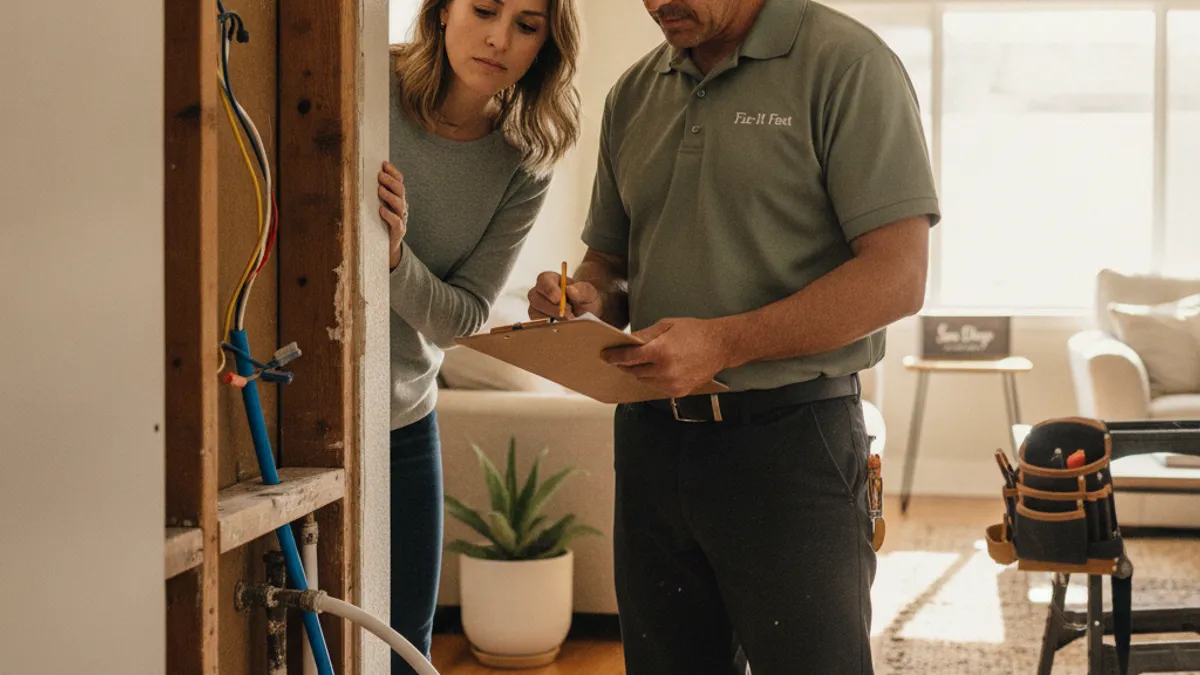
Whether a handyman charges for a repair estimate in San Diego depends more on how the estimate is delivered than on a county-wide rule. Some independent pros quote from a phone call or photos. Others charge a site visit or assessment fee when the scope is unclear or the property is far. Fix Pro San Diego is a referral service. It does not set those fees, waive them, or promise a free estimate. Ask the matched professional, in writing, before anyone drives out.
Why some estimates are billed and others are not
A straightforward job, mounting a TV, fixing a sticking door, patching drywall, is often quoted from a description and photos because the visible scope is easier to name. That is a common local practice. It is not a Fix Pro policy. Larger or less-defined jobs are different. A full-property punch list, a rural property with several outbuildings, or damage that is not visible until someone opens a wall or crawls under a structure takes real time to assess. Some companies bill that assessment and credit it only if you hire them. Confirm the rule with that company. Do not assume it.
What a good estimate process actually includes
A useful estimate isn’t just a number. It should specify what’s included (materials, labor, and any disposal or cleanup), what could change the price once work begins (for example, discovering rot behind a wall that wasn’t visible beforehand), and how the professional will handle schedule questions. If an estimate is a single flat number with no breakdown and no mention of what happens if the scope changes mid-job, ask more questions before agreeing.
Quote planner versus an actual quote
Our handyman quote planner is not a price calculator and it does not invent hours, hourly rates, or multipliers. It replaced the old calculator that tried to output a dollar figure from hours and region multipliers. The current tool walks 23 project types, 7 San Diego County regions, and 3 condition levels so you can send a complete scope: photos, measurements, access, and the questions a quoting pro needs. Use it to organize the request. Then get a written quote from the professional who will do the work. Marketplace listings and national cost widgets on competing sites advertise starting prices. Those are their numbers. They are not a Fix Pro quote.
Questions worth asking before you agree to a visit
Ask whether the estimate is included or has a fee, and if there is a fee, whether it is credited toward the job if you hire them. Ask whether the estimate is a flat number or has conditions that could change it once work starts. Ask when they can actually inspect or start, because a no-fee quote that cannot be scheduled when you need the repair is still a delay. Fix Pro does not control that calendar.
Why this matters more for bigger jobs
The estimate process matters most when the job is bigger than a single repair, a full-day punch list, multiple carpentry items, or work on a rural property with outbuildings. These are exactly the kinds of jobs where scope can shift once someone is actually looking at the property, and a clear, written estimate upfront protects both sides from a misunderstanding about what was actually agreed to.
Phone, photo, and in-person estimates aren’t interchangeable
A phone estimate works fine for a job you can describe completely and accurately, mount this size TV on this type of wall. A photo-based estimate adds real value for anything visual, a crack, a water stain, a section of damaged trim, since seeing the actual condition catches details a verbal description misses. An in-person visit is worth insisting on for anything where scope is genuinely uncertain, a property with multiple issues, older construction where hidden damage is more likely, or any job where getting it wrong would mean a meaningfully different price. Matching the estimate method to the job avoids both a wasted in-person visit for something simple and an inaccurate phone quote for something that needed an actual look.
What happens if the final cost differs from the estimate
A well-run estimate process should rarely produce a big surprise, but it happens, most often when a wall gets opened up and reveals rot, damage, or a prior repair that wasn’t visible beforehand. A trustworthy company communicates that change before proceeding, explains specifically what was found and why it changes the scope, and gets your approval before continuing rather than presenting a bigger bill after the fact. If a company’s process doesn’t include that step, that’s worth asking about directly before agreeing to any work.
Frequently asked questions
Do handymen charge for repair estimates in San Diego?
Some independent San Diego handymen quote standard, well-defined jobs from a phone call, photos, or a short walkthrough with no separate fee. Others bill an assessment, especially on larger or unclear jobs, and may credit it only if hired. Ask the quoting professional. Fix Pro San Diego does not advertise or waive estimate fees.
Does the Fix Pro quote planner calculate a price?
No. It is a scope planner with 23 projects, 7 regions, and 3 conditions. It does not output dollars or hours. Treat competitor calculators the same way unless that site names a source and you can check it.
What should a written estimate include?
A clear breakdown of materials and labor, what could change the price if the scope shifts once work begins, and how schedule questions will be handled if drying, parts, or hidden damage appear.
Should I get multiple estimates for a repair?
For anything beyond a small, single-item repair, yes. Comparing a couple of estimates helps confirm you’re getting a reasonable price and gives you a sense of how clearly each company explains their process.
To get matched with a pro who can quote a repair anywhere in San Diego County, call Fix Pro San Diego at (858) 400-4611.
Would you rather hand this one to a pro than do it yourself? Call (858) 400-4611.
Request a quote