A new Escondido home can need paint before the boxes arrive. The useful first step isn’t choosing colors. It’s defining exactly what each painter should inspect and quote.
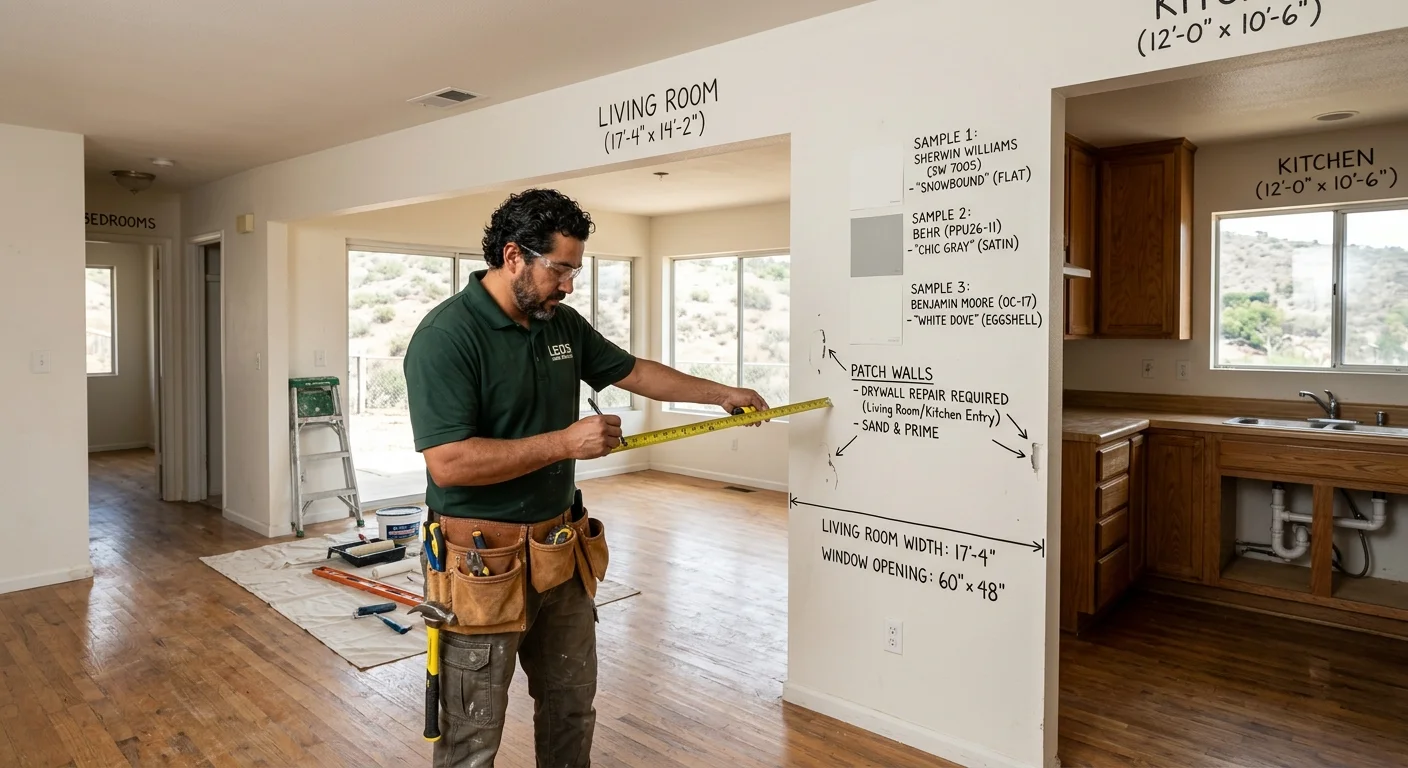
Choose rooms before selecting colors
Start with a room list, even if every wall looks tired. Separate definite work from optional work. That distinction keeps your main priorities visible when painters review the house.
Walk through the home in one direction. Use the same room names that appear on your notes. “Front bedroom” and “hall bathroom” are clearer than “bedroom one” and “small bath.” Label open areas carefully. A living room, dining area, and connecting hallway may look continuous, but you might not want identical work throughout.
Give every space one status:
- Include in the main proposal
- Price as an optional room
- Leave unchanged
- Decide after the walkthrough
Then record the wall color decision separately. You can write “color pending” without delaying the scope discussion. The painter still needs to know which whether the room, ceiling, trim, and doors belong in the project.
Photograph each room from the doorway. Add closer photos of visible marks, patches, and edges. File names such as “kitchen-west-wall” make later conversations easier. Avoid relying on one video that moves quickly through the house.
Think about the first weeks after moving. A bedroom needed immediately may outrank a guest room. A home office may need attention before desks and shelves arrive. The order should reflect your move, not the path someone happens to take through the property.
Our interior painting referral service can connect you with an independent local pro. Before that conversation, a firm room list gives the pro a useful starting point.
Separate wall repairs from painting
Wall condition deserves its own section in your scope. Don’t bury holes, cracks, loose material, or earlier patches beneath a general request for painting. Ask the painter to identify which preparation is included and which repairs need separate approval.
Mark every visible concern with removable tape or a numbered note. Photograph it from across the room, then take a close view. Include an object for scale when the image doesn’t show size clearly. Your written note should name the room and wall.
Distinguish between several conditions:
- Small holes left by mounting hardware
- Larger openings or unfinished patches
- Visible cracks
- Dents and damaged corners
- Uneven earlier repairs
- Areas with a different texture
- Stains or discoloration needing investigation
Don’t diagnose the cause yourself. Describe what you can see and where it appears. If a mark has changed since your first visit, tell the pro. If you don’t know whether an area is drywall or another material, say that too.
Texture needs specific attention. A repaired spot can have a different surface pattern from the surrounding wall. Ask whether texture work is part of the painting proposal or a separate repair item. Our drywall repair matching service is available when the wall work needs its own scope.
Escondido homeowners can also use this guide to drywall repair scope and texture. It explains how to document the damaged area before requesting proposals.
Keep uncertain areas out of the assumed painting total. Ask for a written explanation of how discovery work would be handled. That approach prevents a painter from interpreting “paint the room” as a request that excludes visible wall repairs.
Plan empty rooms, occupied rooms, and access
An empty house still needs an access plan. The painter needs accurate information about keys, gates, parking, alarms, pets, utilities, and other people entering the property. Record those details before scheduling work around your move.
List which rooms will remain empty. Then identify anything arriving early, including appliances, window coverings, stored boxes, or assembled furniture. If another service provider needs the same room, note that conflict. A clean schedule depends on knowing who needs access and when.
For occupied rooms, decide what can move and who will move it. Don’t assume furniture relocation belongs in a painting proposal. Describe large items, wall-mounted pieces, shelves, and fragile belongings. Ask the pro to state any access requirements in writing.
Create a simple access sheet with:
- Property address and preferred entrance
- Gate or building instructions
- Parking details confirmed for that property
- Lockbox or key arrangements
- Rooms that must remain accessible
- Known delivery dates
- Contact person for jobsite questions
Escondido directions should identify the correct property entrance. If an approach from Interstate 15 or Centre City Parkway matters, include it. Don’t add route details that won’t help someone find the entrance or approved parking area.
Keep the move-in date separate from the painting request. Instead of demanding a guessed completion date, share your occupancy plan and ask each pro for a written schedule based on the inspected scope. Our guide to how long interior painting takes can help you prepare scheduling questions.
Also decide when you’ll review the rooms. If you can’t be present, identify who may answer scope questions. Written decisions are especially helpful when a realtor, property manager, relative, or moving company also has access.
Record ceilings, trim, doors, and finish boundaries
“Paint the interior” leaves too many boundaries undefined. Walls are only one part of the visual field. A proposal should state what happens at ceilings, baseboards, door casings, window trim, doors, closets, and built-ins.
Inspect every room at eye level and from the doorway. Record each surface independently. A room might include walls and baseboards while leaving the ceiling unchanged. Another might include one door face but not the hallway side. Those choices should appear in the same language across every proposal.
Pay close attention where spaces connect. Escondido homes with open living areas can create unclear stopping points. Instead of saying “stop near the dining room,” identify a corner, doorway, trim edge, or other visible boundary. Photograph that location and mark it on the room list.
Doors need precise notes. State whether the scope includes the room side, hall side, edges, frame, and casing. Use similar detail for closets. Specify the interior walls, shelving, ceiling, trim, and door rather than treating “closet” as one item.
For trim, list baseboards, window trim, crown molding, and door casing separately. Note visible damage without prescribing a repair method. The pro can inspect it and explain what belongs in the proposal.
Record existing finish differences as observations. You might write “ceiling appears different from walls” or “door casing differs from baseboard.” Don’t guess the product or finish already present. Ask the painter what must be confirmed during the walkthrough.
Finish the section with exclusions. “No ceilings,” “leave closet interiors unchanged,” and “exclude kitchen cabinets” are useful notes. Clear exclusions matter as much as included surfaces when comparing the final documents.
Build one scope before requesting proposals
Create one master scope and give the same version to every painter. When comparing painters in Escondido, CA, changing the request between walkthroughs makes the proposals harder to evaluate. A shared document keeps the discussion tied to the same rooms and boundaries.
Organize the scope in this order:
- Property and access details
- Desired project sequence
- Included rooms
- Optional rooms
- Wall repairs needing inspection
- Ceilings, trim, doors, and closets
- Known exclusions
- Color and finish decisions
- Questions requiring written answers
Attach labeled photos beneath the matching room. Don’t place every image in an unlabeled gallery. A painter should be able to connect each note with a physical location during the walkthrough.
Ask each pro to describe included preparation, repairs, surfaces, and exclusions. Materials should also be identified in the proposal. If a decision remains open, ask the pro to label it as an option instead of assuming one outcome.
The California Contractors State License Board recommends getting at least three written bids. It also advises homeowners to verify license information and review detailed written contract terms. You can check a contractor’s license through the CSLB before hiring.
Fix Pro San Diego is a referral service. We match homeowners with licensed, independent local handyman professionals. The customer contracts with and pays the selected professional directly. Fix Pro San Diego doesn’t perform the painting, set the price, or provide a warranty.
Before accepting a proposal, compare the actual scope line by line. Check that room names, repair areas, doors, trim, ceilings, options, and exclusions match your master list. Resolve missing items in writing before work starts. Keep the final scope available during the project so decisions don’t depend on memory.
When to call us
A pro is worth considering when several rooms, wall repairs, or detailed finish boundaries make the move-in scope difficult to manage yourself. Call us at (858) 400-4611 and we’ll match you with a local pro who quotes the job before starting.
Would you rather hand this one to a pro than do it yourself? Call (858) 400-4611.
Request a quote