Older grout in a San Diego home almost never looks like the sample card. Salt air in Ocean Beach, hard water in El Cajon, and daily mopping in a Chula Vista kitchen all shift the same original color in different ways. If you are shopping for tile grout repair services, the color call is the job, not the bag you grab at the store.
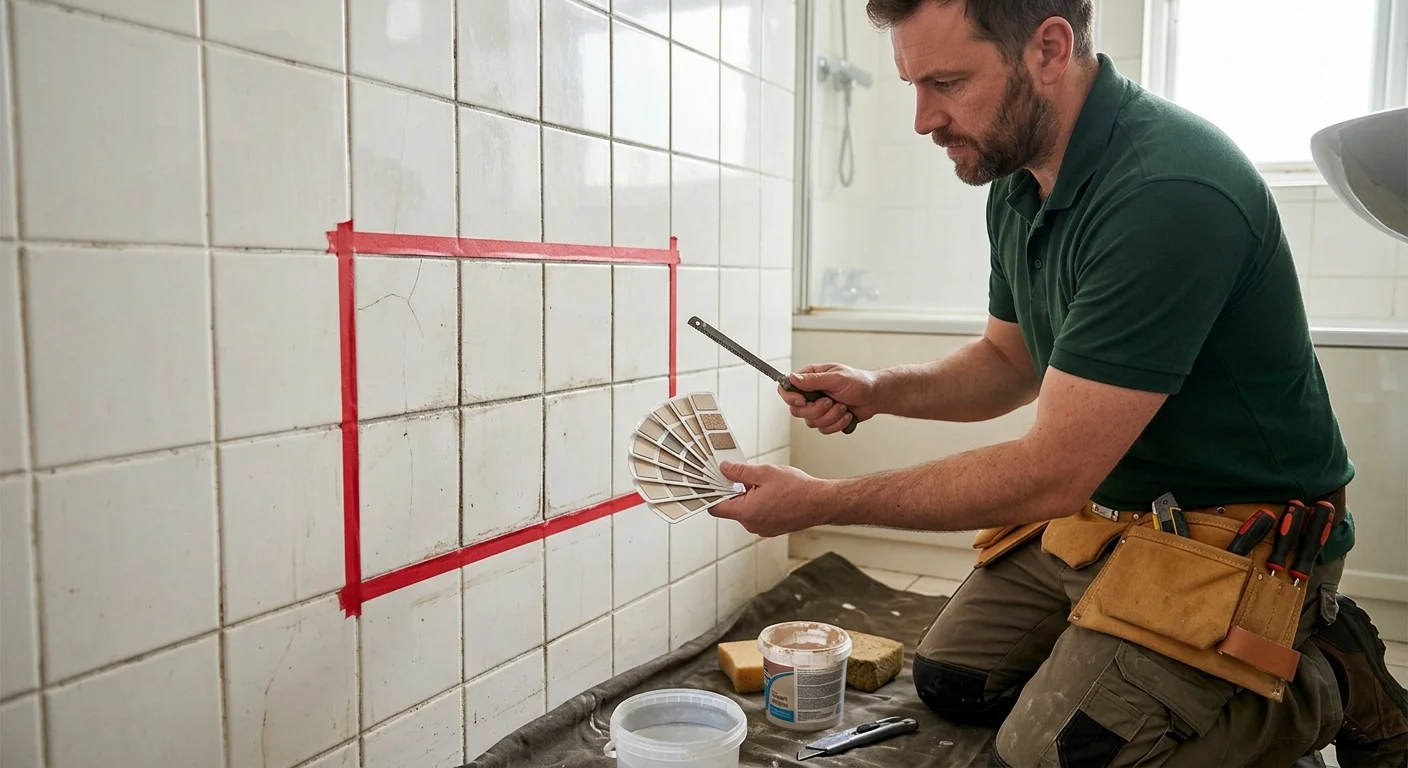
Record the tile and grout locations
Start with a room map, not a product name. Write down every surface next to the repair: shower floor, shower walls, bathroom floor, kitchen backsplash, entry, patio. In many San Diego houses those surfaces were not installed in the same year. A 1970s Clairemont ranch often has different grout on the hall bath floor than on the tub surround. A 2000s Mission Valley condo may use one grout in the kitchen and another in the guest bath.
Photograph each surface in place. Stand far enough to show the whole field, then take a close shot of four or five grout lines. Include a north-facing window if you have one, and a lamp if the room is windowless. Coastal north county light in Encinitas is cooler than inland north county light in Escondido. That difference shows up in photos.
Note traffic and water. Kitchen floors near the stove, shower floors under the spray, and entries off a sandy beach path all stain differently. You are not diagnosing the stain. Grout repair specialists need that map because a close match on a dry powder room floor can still look wrong on a wet shower curb.
Write the tile type if you know it: ceramic, porcelain, Saltillo, or a stone look-alike. Do not guess a brand. South Bay Saltillo with wide joints makes a new line obvious. Tight porcelain joints in a newer Carlsbad production home hide a small mismatch. If you have a floor plan, photograph it. Put room names on one page so every tile and grout repair bid talks about the same grout.
Compare dry and recently cleaned areas
Grout color on an older surface is two colors, not one. There is the color after a normal week, and the color after you wipe a small test patch. Pros comparing those two shots will not treat the dirty traffic path as the target.
Clean a few inches of grout in a low-visibility spot using the cleaner you already own. Do not start a chemical experiment. Wait until it is fully dry. In a humid coastal bath in Imperial Beach that can take longer than in a dry Ramona powder room. Photograph the cleaned patch next to the uncleaned joint, same camera, same time of day.
Then photograph a dry area that never gets mopped, if you have one. Inside a linen closet, behind a toilet, or under a fridge kick. Those sheltered joints often sit closer to the original mix. They are a reference, not a promise. Sun through a west-facing La Jolla slider can bleach nearby grout. That is appearance, not a moisture diagnosis.
Keep wet and dry shots in separate folders labeled by city and room. A grout repair services near me search will send you several companies, and mixed wet-and-dry files make them guess.
Do not assume a darker line is dirt and a lighter line is the true color. You are collecting evidence for the person who will mix or select the grout. If the cleaned patch still looks uneven after it dries, write that down. That note belongs in the proposal.
Define the visible repair boundary
Color matching fails most often at the edge of the work, not in the middle of a new joint. Decide in writing where the new grout will stop. Write a concrete edge, such as three cracked lines by the stove or the shower floor but not the walls.
Walk the room at the distance you actually use it. A mismatch at eye height on a shower wall in a Point Loma master bath will matter every morning. Mark the proposed boundary with painter’s tape on the tile faces, not in the joints, and photograph it.
This site’s guide on whether a grout spot fix or a full regrout fits after you have a boundary, not before. Corner joints and tub rims are often caulk, not grout. Keep those lines on the map so the bid does not mix the two materials.
If the house is in a City of San Diego historic district, or it is a designated historic resource, flag that. Confirm current rules with Development Services before anyone grinds joints on a designated resource. For ordinary similar-material replacement that does not touch plumbing, electrical, or mechanical systems, check the city’s no-plan building permit bulletin.
Set the visible edge where a natural break already exists: a doorway, a shower curb, a change in tile size. If no break exists, say so in the notes so the pro can talk about blending a larger field.
Check spare materials and product records
Open the garage, the laundry cabinet, and any leftover-tile box from the last remodel. A partial bag of grout with a brand, color name, and lot number is the most useful object you can hand a pro. A leftover tile is next. Even a dusty sample board from a 2014 Mira Mesa kitchen helps more than a verbal description.
Photograph labels in full. Include the sanded or unsanded note if it is printed there. Joint width on older tile in East County ranch homes is often wider than the tight joints in a recent Encinitas remodel. The leftover bag may not match today’s formula even when the color name is the same. Flag that as product history, not as a defect you have to explain.
If you have a closing packet, HOA file, or contractor invoice, pull the grout line item. Condos in downtown San Diego and planned communities in San Marcos sometimes keep finish schedules. Copy the page. Do not treat the schedule as proof the installed grout matches it. Builders substitute. The installed joint is still the reference.
No leftover bag does not mean the repair cannot proceed. It means the pro will mix from the live surface, the cleaned patch, and the sheltered joint you already photographed. Write that no leftover grout was found on the same sheet as the room map so every bid starts from that gap.
If you find leftover caulk, keep it separate from the grout bag. The two products are not interchangeable at a shower curb or a tub rim. Photograph both labels and note which joints each one served, if the old invoice says.
Set expectations before requesting proposals
Ask for a color plan in the proposal, not a verbal promise to get close. Name the rooms, the taped boundary, leftover product, and the edge after the grout dries. Indoor lighting in a windowless Kearny Mesa powder room is not late-afternoon light on an Alpine patio.
Do not ask anyone to guarantee an exact match on a 20-year-old joint. Ask how they will handle a visible difference: stop at a natural break, widen the field, or recut a larger area, and get that in writing.
People also ask grout repair cost, whether new grout can go over old grout, and whether replacing tile is cheaper. No single San Diego figure is verified for those questions. Use our tile grout repair cost in Carlsbad page to structure the talk, then confirm every number with the person who will do the work. Layering new grout over old grout is a method question for that pro.
If the aggregate price for labor, materials, and everything else reaches $1,000, or the work needs a building permit, or employees will perform it, licensing rules apply. The current minor-work exemption in Business and Professions Code section 7048 is not a green light based on price alone. Check a license at the CSLB license lookup before you sign. For help reading competing bids, see how to compare tile repair companies in San Diego.
Bring the room map, the wet and dry photos, the leftover bag, and the taped-boundary shots to that comparison. Tile grout repair services that skip the color record are bidding a joint, not the room you live in.
When to call us
If the repair sits in the middle of an older field, leftover grout is missing, or you cannot agree on where the new joints should stop, hand the color call to a local pro instead of mixing a bag in the driveway. Call us at (858) 400-4611 and we’ll match you with a local pro who quotes the job before starting.
Would you rather hand this one to a pro than do it yourself? Call (858) 400-4611.
Request a quote