For TV mounting after moving, don’t assume the old mount fits the new room. Inventory every part, document the new wall, and decide whether power or cable work belongs in the request. Those details help a local pro evaluate the old hardware and quote the planned setup.
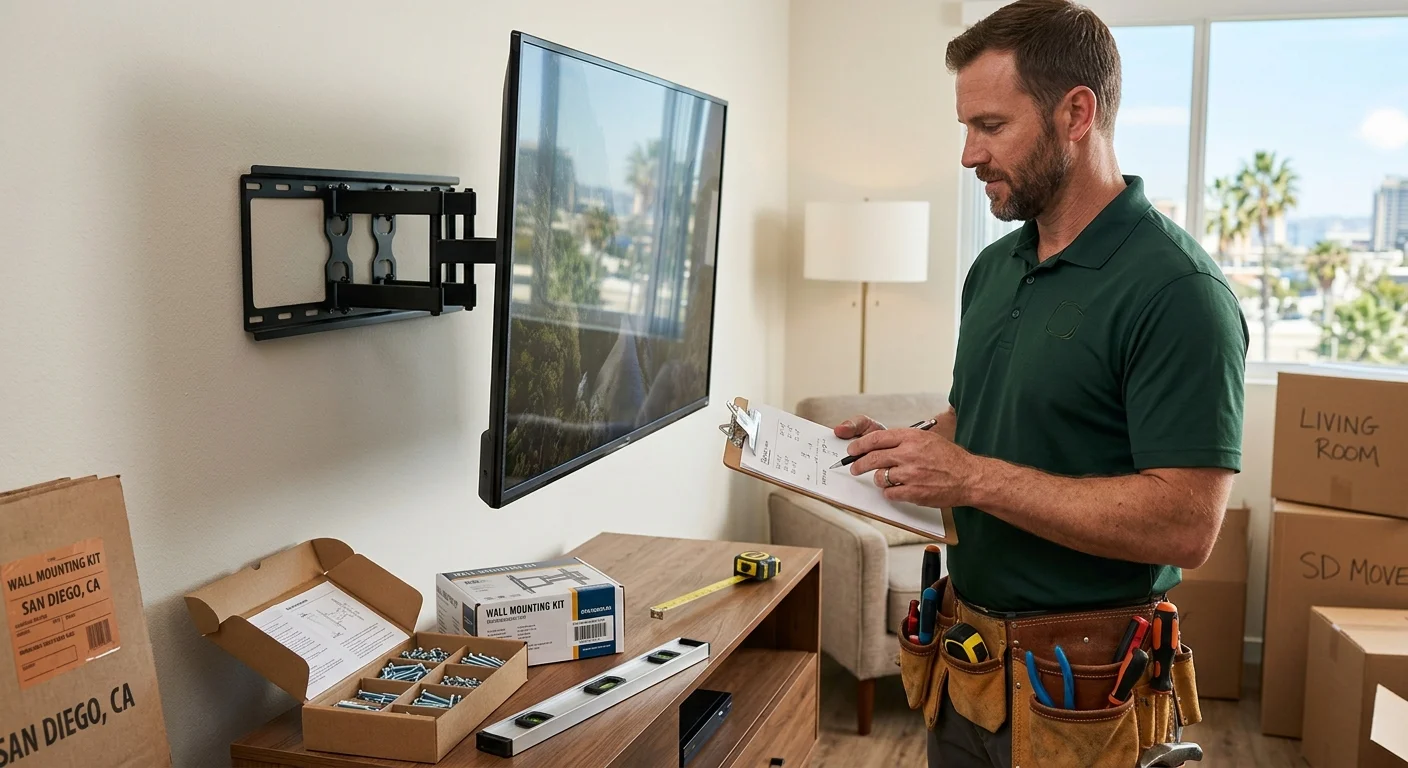
Inventory the television and existing mount hardware
Start with the television, its label, and every mounting part from the move. Put the wall plate, television brackets, arms, bolts, spacers, washers, and loose fasteners together. Keep unfamiliar pieces instead of discarding them. A mounting pro can identify what belongs with the system.
Photograph the television’s product label and the mount’s label. Include each model number in your booking notes. If the original instructions survived the move, photograph their front page too. These identifiers give the pro something concrete to compare before discussing reuse.
Next, note how the hardware traveled. Was the mount packed in its original box, wrapped with the television, or placed loose in a moving bin? Record any bent pieces, missing fasteners, damaged threads, or parts that no longer move as expected. Don’t decide that a piece is usable based only on its appearance. Ask the pro to review it against the equipment and planned wall.
Keep used wall fasteners separate from the mount itself. Tell the pro which parts came out of the old wall and which remained attached to the television. The new wall is a separate installation decision, even when the television and mount haven’t changed.
If the mounting hardware is incomplete, say that before booking. Don’t buy replacement pieces based only on their general shape. Share the available labels and let the pro explain what must be confirmed.
Fix Pro San Diego’s TV mounting service connects homeowners with licensed, independent local pros. The brand handles the match, while the customer contracts with and pays the professional directly.
Check the new wall and planned viewing position
The old room shouldn’t determine the new mounting position. Begin with the wall you want to use, the planned furniture layout, and the seats facing the screen. Mark the proposed television area with removable tape if that helps you judge the placement.
Take one photograph from across the room. Then take closer photographs of the planned mounting area. Include nearby corners, trim, outlets, switches, vents, shelves, and visible wall changes. If previous occupants left holes, brackets, patches, or cable openings, capture those details separately.
Don’t identify the wall material unless you know what it is. Instead, describe what you can see and share the photos. A mounting professional can determine what needs an in-person review. The old mount’s fit and the new wall’s attachment plan should be evaluated together.
For a Downtown San Diego condo, ask building management about parking, elevator access, and property rules. If you’re moving into a rental in Chula Vista or a house in La Mesa, confirm any owner or property-manager instructions before scheduling wall work. Include those instructions with the job request. These checks prevent the booking notes from depending on assumptions about the address.
Measure the available wall area, not the old installation. Record the width between nearby openings or furniture. Note the intended screen location and the approximate position of the main viewing seat. The pro can then discuss placement using the room you actually have.
If you’re still choosing how the screen should move, compare a fixed or full-motion TV mount before requesting hardware. That decision changes what the pro needs to evaluate.
Separate mounting from power and cable requests
Describe the wall mounting, power changes, and cable preferences as separate items. A request to hang the television doesn’t automatically describe what you want done with power, streaming devices, speaker wires, or other connections.
Write down the finished result you expect. You might want an existing outlet used as-is, cables grouped outside the wall, or electrical work evaluated separately. Don’t describe a hidden-cable result without mentioning where the current outlet and devices are located.
If you want an outlet added, moved, or changed, state that clearly. Ask which licensed professional should handle that portion. Whether your exact television project requires a permit couldn’t be confirmed here. For an address within the city, confirm the current requirement through the City of San Diego permits and inspections page. Outside city limits, check with the authority responsible for that address.
Any work requiring a building permit requires a licensed contractor, regardless of price. California’s minor-work licensing exemption applies only when the total contract price is less than $1,000, the work is casual, minor, or inconsequential, and no permit is required. Don’t divide a larger project into smaller contracts to avoid licensing requirements.
When licensed work enters the scope, ask for the professional’s license number and check it through the CSLB license lookup. Contractors must display their license numbers on bids and contracts.
Also list every connected item moving with the television. Include soundbars, streaming boxes, game systems, antennas, and separate speakers. The pro can review what belongs in the mounting request and what needs another type of service.
Record doors, windows, furniture, and viewing seats
A television location affects more than one blank section of wall. Record how the room will work after the moving boxes disappear. Include the doors, windows, furniture, and seats that shape the planned view.
Stand where the main sofa or chairs will sit. Take a photograph toward the proposed wall. Then photograph the wall from both corners of the room. These angles show the professional how the planned screen relates to the rest of the space.
Open nearby doors and cabinet fronts before measuring. Note whether furniture will remain beneath the television. Include the furniture’s planned width and height in your notes. If the piece hasn’t arrived, share its product page or measurements rather than guessing.
Check the room during the hours when you expect to watch television. Note any window reflection visible from the main seat. Record curtains, blinds, or other features you plan to keep. The goal isn’t to solve the placement alone. It’s to give the pro an accurate picture of your preferences.
A short room note can cover the main decisions:
- Planned wall and main viewing seat
- Television model and screen size from its label
- Furniture planned below or beside the screen
- Doors, windows, shelves, and cabinets near the mounting area
- Preferred screen position
- Fixed, tilting, or moving mount preference
- Devices and cables included in the request
Don’t copy measurements from the former home. Record the new room after the major furniture positions are known. That keeps the mounting conversation focused on the San Diego home you’re moving into.
Send wall photos and product labels before booking
Good booking notes let the pro review the actual request. Send a full-room photograph, a straight-on wall photograph, and close views of visible holes or previous mounting work. Add clear images of the television and mount labels.
Lay the hardware on a plain surface before photographing it. Group matching pieces, but don’t force unfamiliar parts together. Include one image showing the entire set and closer images of labels or damaged pieces. Mention anything that may have been lost during packing.
Your message should identify the San Diego County address, property type, and access instructions. Say whether the home is owner-occupied or rented. For a managed building, include the rules you received from management. Don’t assume a pro can infer access details from the neighborhood or postal code.
State the decision you need help making. For example: “I moved with this television and mount. I need the existing hardware evaluated for the new wall, and I’m open to different hardware if needed.” That wording doesn’t presume the result.
Photos can’t confirm every condition behind a finished wall. They also don’t replace an on-site evaluation. Their purpose is to show the visible setup, identify the products, and reveal missing information before the work is discussed.
For a broader preparation list, read the San Diego TV mounting guide. Keep your post-move request narrower. Focus on the television, the old mount, the new wall, room placement, access, and any separate power or cable request.
When to call us
Hand the job to a pro when the hardware is incomplete, the wall is unfamiliar, placement remains unsettled, or electrical work may be involved. Call us at (858) 400-4611 and we’ll match you with a local pro who quotes the job before starting.
Would you rather hand this one to a pro than do it yourself? Call (858) 400-4611.
Request a quote