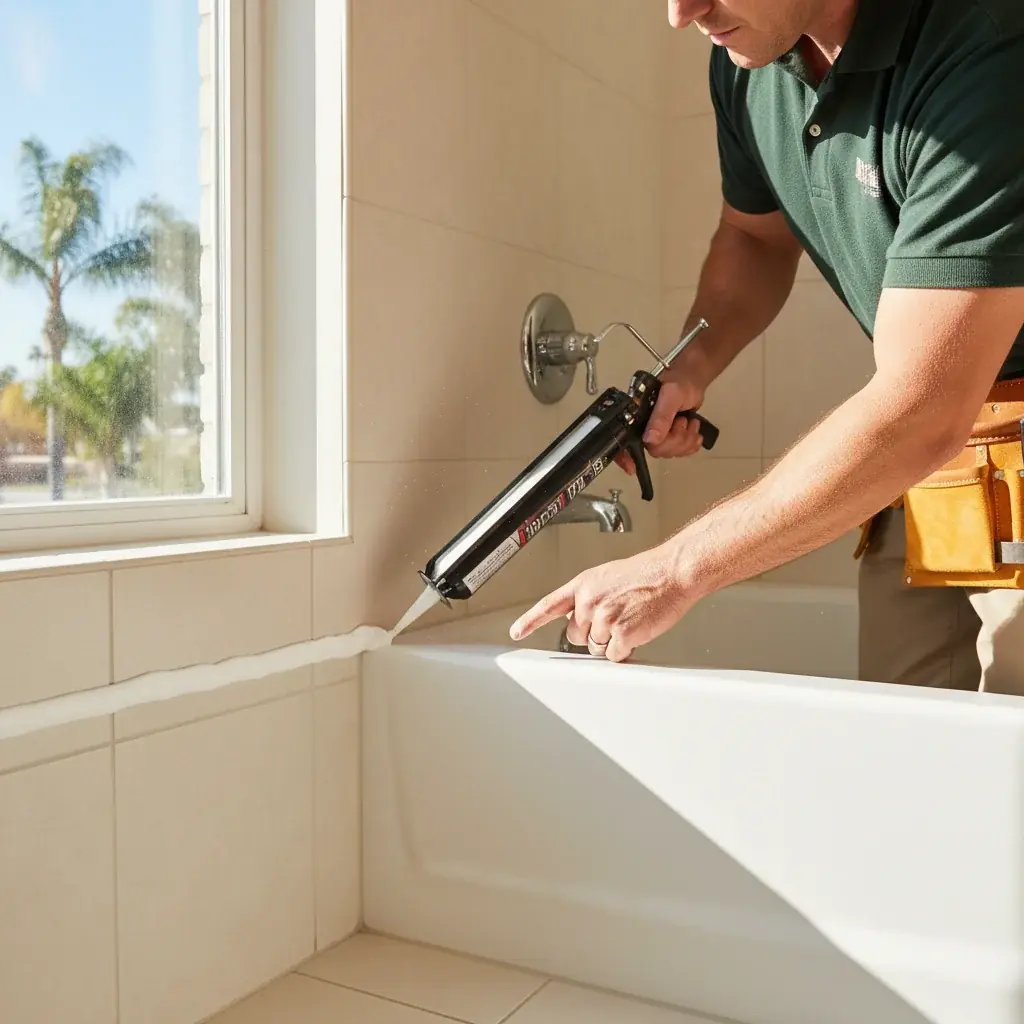
You’ve probably seen it: that ugly, mildew-stained caulk around your San Diego bathroom fixtures. Maybe you’ve even tried to fix it yourself, only to see it peeling or cracking again within months. Knowing when to recaulk a bathroom is just as important as understanding why your efforts might be failing in the first place.
How long bathroom caulk actually lasts in San Diego
A high-quality caulk, properly applied, should last between three to five years in a typical San Diego bathroom. However, many homeowners find their caulk failing much sooner. Our local climate plays a role, even if it’s not the primary culprit. While San Diego’s overall humidity is moderate, the humidity inside a bathroom during and after a shower can be extremely high. This intense, localized moisture creates an ideal environment for mold and mildew to thrive, especially if your bathroom lacks proper ventilation.
Frequent hot showers, combined with insufficient exhaust fan use, drastically shorten caulk lifespan. Instead of lasting years, some DIY recaulks give out in six months or even less. The type of caulk, the surface preparation, and the application technique all contribute to its longevity. Often, the quick fix doesn’t last because critical steps are skipped, making the problem resurface faster than expected. A truly durable caulk job protects your home from water damage and looks clean for years.
Mildew vs movement: two different reasons caulk fails
Caulk typically fails for one of two main reasons: persistent mildew or constant structural movement. Mildew is a common sight in San Diego bathrooms, appearing as black or pink discoloration on and behind the caulk. It’s often due to poor ventilation, which traps moisture, allowing mold spores to grow. Acrylic latex caulks, which are more porous, are particularly susceptible to mildew growth compared to silicone. If your caulk looks fuzzy, discolored, or smells musty, mildew is likely the issue.
Movement, on the other hand, leads to cracking, shrinking, or peeling. Showers, tubs, and even vanities expand and contract daily with temperature changes and weight shifts. If the caulk isn’t flexible enough to handle this movement, or if the adhesion isn’t strong, it will pull away from the surfaces. This is a common reason why DIY caulk jobs fail quickly. People often apply new caulk directly over old, mildewed beads or don’t allow sufficient dry time for the area to be completely moisture-free. This prevents proper adhesion and flexibility. Sometimes, the problem isn’t just the caulk but the underlying structure itself, like loose tiles or failing grout. For issues where the grout is also cracking or crumbling, you might need a tile repair specialist or a regrouting shower tile San Diego service to address the substrate before recaulking.
Tub, shower, vanity, and floor, different products for each
Not all caulk is created equal, and choosing the right product for each bathroom area is crucial for a lasting repair. For high-moisture, high-movement areas like bathtubs and showers, you need a highly flexible, waterproof, and mildew-resistant caulk. These areas endure daily water exposure and significant temperature fluctuations.
Vanities, while exposed to some splashing, generally experience less constant water saturation and less structural movement than a shower. Therefore, they might tolerate a different type of caulk, one that might be easier to clean or match specific aesthetics. For bathroom floors, especially around the base of the toilet or where the floor meets the wall, you’ll need caulk that can handle occasional moisture and foot traffic, often providing a clean finish between differing materials. The key is matching the caulk’s properties, flexibility, water resistance, mildew resistance, and paintability, to the specific demands of its location. Using a general-purpose caulk everywhere is a common mistake that leads to early failure.
Removing old caulk without scratching the tile
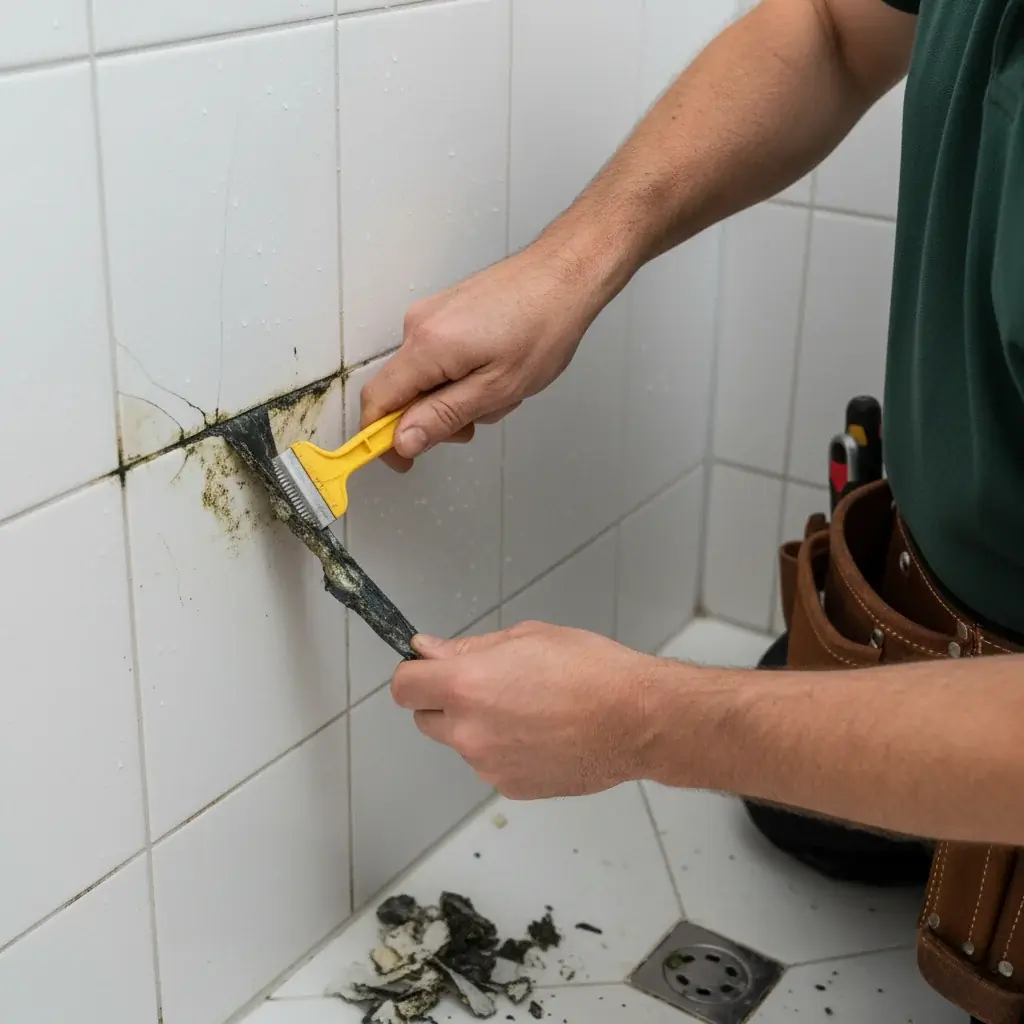
One of the most overlooked steps in bathroom recaulking is the thorough removal of old caulk. This step is essential but also where many DIYers rush, leading to scratched tiles or residue that prevents new caulk from adhering properly. A clean surface is paramount for a lasting seal. Start with a utility knife or a specialized caulk removal tool. Carefully score along both edges of the old caulk bead. Be gentle, especially if you have delicate ceramic or porcelain tiles that can scratch easily.
Once scored, use the removal tool or the knife blade at a shallow angle to lift and pull away the old caulk. For stubborn bits, mineral spirits or a dedicated caulk remover can help soften the residue. Always test these products in an inconspicuous spot first to ensure they don’t damage your tile or grout. After removing all physical caulk, clean the area thoroughly with rubbing alcohol or a bleach solution to eliminate any remaining mildew spores and ensure the surface is completely dry before applying new caulk. Any leftover moisture or debris will compromise the bond of your fresh caulk, setting you up for another premature failure.
100% silicone vs siliconized acrylic, when each one wins
The battle between 100% silicone and siliconized acrylic caulk often comes down to performance versus ease of use. Each has its strengths and ideal applications.
100% silicone caulk
Silicone is the gold standard for high-performance sealing in wet, high-movement areas like tubs, showers, and around sinks. It offers superior flexibility, allowing it to stretch and compress without cracking as fixtures shift. It’s also completely waterproof and highly resistant to mildew, making it a durable choice for San Diego bathrooms. The downside? Silicone is notoriously difficult to work with. It’s sticky, harder to tool smoothly, and cleanup requires mineral spirits. Once applied, it cannot be painted over, so you need to choose the color carefully.
Siliconized acrylic latex caulk
This hybrid caulk blends the ease of acrylic latex with some of silicone’s benefits. It’s much easier to apply, tools smoothly, and cleans up with water. Plus, most siliconized acrylic caulks are paintable, offering flexibility for color matching. However, they don’t match 100% silicone’s flexibility, water resistance, or mildew resistance. They are best suited for areas with less movement and less direct water exposure, such as around a bathroom vanity or where tile meets drywall above the splash zone. If you’re tackling a quick fix in a low-stress area, siliconized acrylic can be a good choice. For more comprehensive insights into various caulk types and their applications, check out our caulking guide for San Diego homes.
Cost: DIY tube vs handyman visit
When faced with failing bathroom caulk, many San Diego homeowners first consider the DIY route. A tube of caulk costs around $5-$15, and basic tools are inexpensive. However, the true cost of DIY often extends beyond the initial purchase. Many attempts fail within months due to improper removal, poor adhesion, or using the wrong product. This leads to repeated purchases, more wasted time, and the potential for water damage if the seal isn’t effective. Water seeping behind cracked caulk can lead to costly repairs for drywall, subflooring, or even structural elements.
Hiring a professional handyman for caulking and sealing service brings expertise and efficiency. While the upfront cost is higher than a single tube of caulk, you’re paying for a lasting solution. Professionals know the right products for each application, have the specialized tools for thorough removal, and understand proper application techniques for a durable, watertight seal. They complete the job quickly, correctly, and minimize the risk of costly future damage. Investing in a professional recaulk means peace of mind and a fresh-looking bathroom for years, not months.
When to call us
If your bathroom caulk issues are persistent, if you’re dealing with extensive mold, or if you suspect underlying water damage, it’s time to call in a professional. Expert sealing ensures a watertight barrier, protects your home from costly repairs, and leaves your bathroom looking fresh and clean. We’ll match you with a pro in our network to handle the detailed work, saving you time and frustration. Call us at (858) 400-4611 and we’ll set up a walkthrough and quote.
Would you rather hand this one to a pro than do it yourself? Call (858) 400-4611.
Request a quote