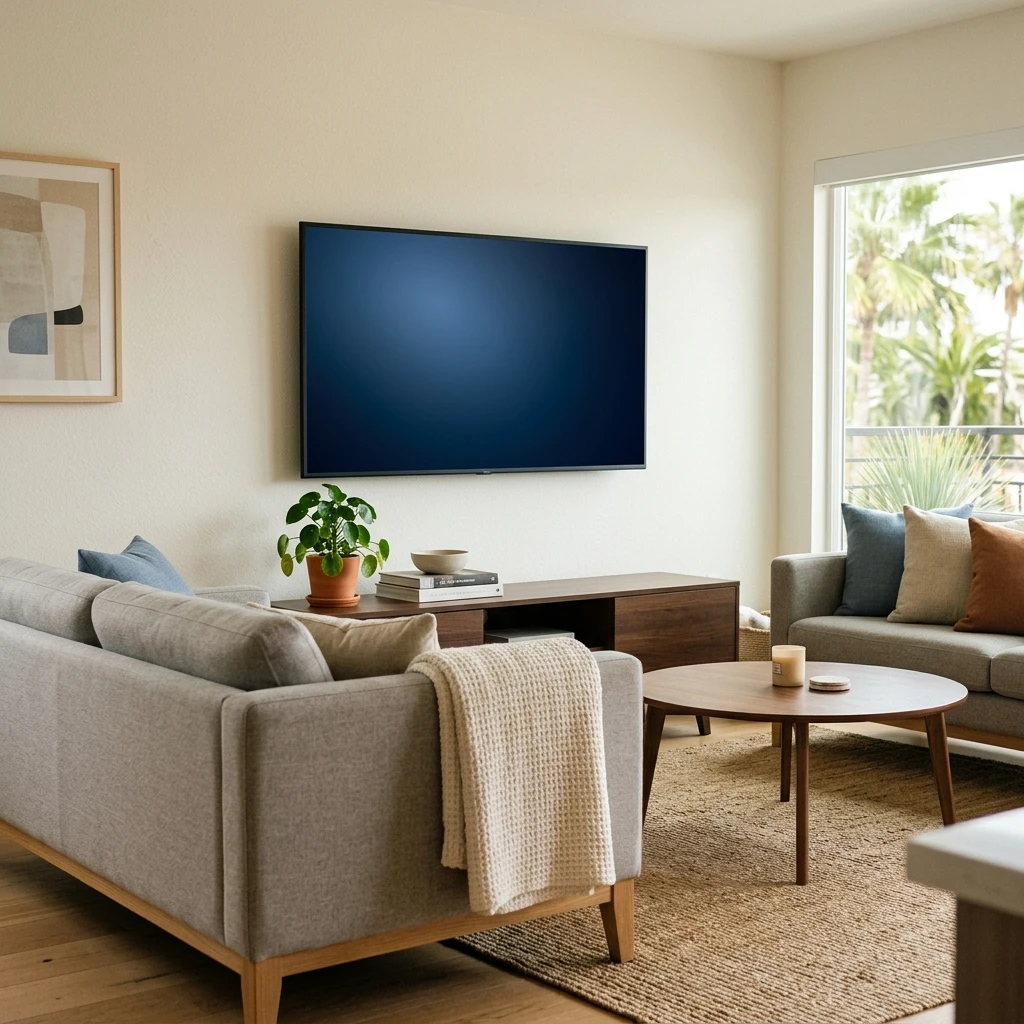
For a standard living room with a sofa, mount the center of the screen 42 to 46 inches from the floor. That’s roughly seated eye level for most adults, and it’s the single number that gets a TV mount right in the majority of San Diego living rooms. Bigger screens shift that number up a few inches, bedrooms and rooms with taller seating shift it up more, and a fireplace mount usually breaks the rule entirely.
That’s the short version. The right height actually depends on screen size, how far back you sit, and which room it’s going in. Here’s how to get it right before you drill.
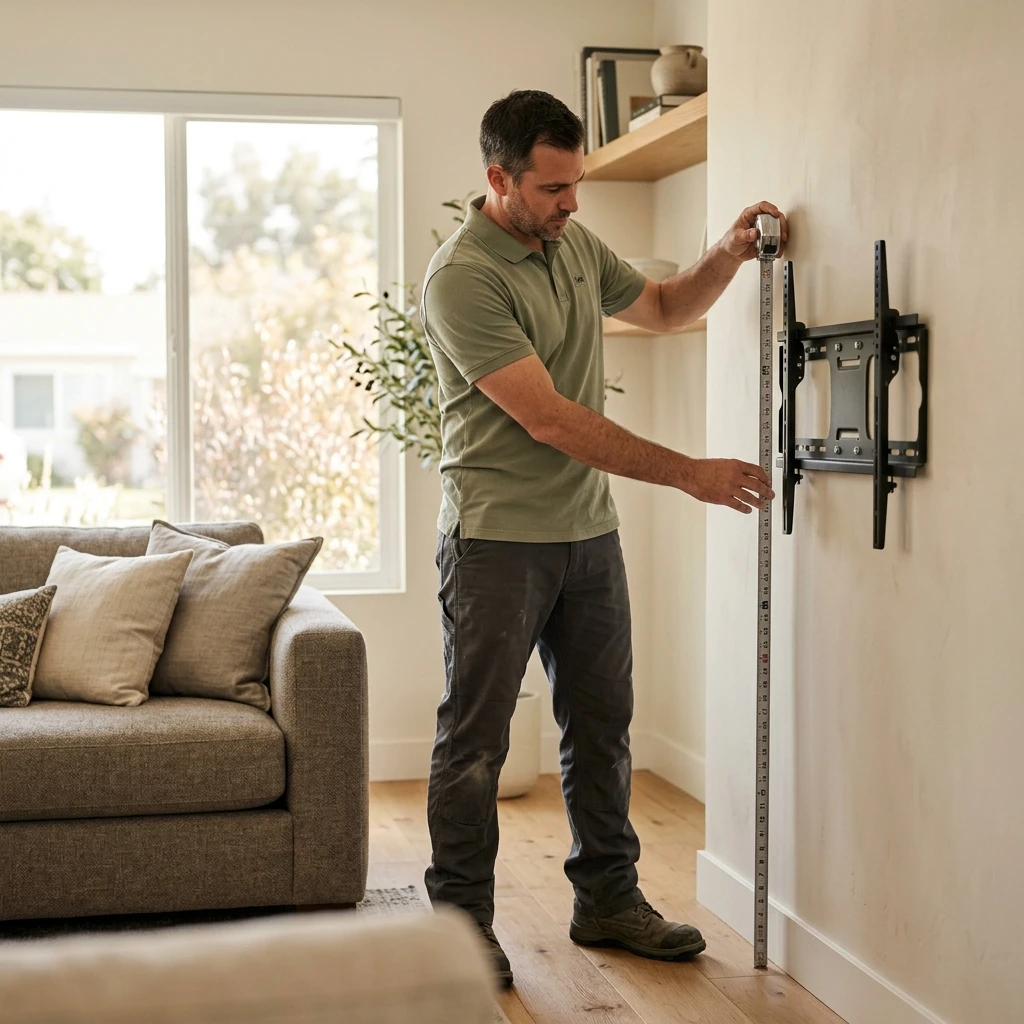
TV mounting height by screen size
These ranges assume a standard sofa (seat height around 17–18 inches) and a viewer sitting with a straight or slightly downward gaze at the middle of the screen. Measure from the floor to the center of the screen, not the top of the TV or the top of the mounting bracket.
| Screen size | Center height from floor | Typical viewing distance |
|---|---|---|
| 32–40 inches | 40–42 inches | 4–6.5 feet |
| 43–50 inches | 41–43 inches | 5.5–9 feet |
| 55–65 inches | 42–45 inches | 7–12 feet |
| 70–75 inches | 44–47 inches | 9–15 feet |
| 80–85+ inches | 46–49 inches | 11–18 feet |
Larger screens sit a little higher because the extra height gets absorbed into the picture itself. A 42-inch center height looks perfect under a 43-inch TV and noticeably low under an 85-inch one.
Why 42 to 46 inches works for most rooms
The logic is simple: your eyes should land near the middle of the screen when you’re sitting normally, not tilted up or craned down. A seated adult’s eye level on a standard sofa runs close to 42 to 44 inches off the floor. Aim the center of the screen there and most people never think about the height again.
Two things push that number around:
- Sofa height. A low-profile modern sofa (14–16 inch seat) drops eye level, so the TV can mount a couple inches lower. A taller sofa or a room with recliners pushes it up.
- Viewing distance. The farther back you sit, the more forgiving the height becomes, since a few inches of vertical offset matters less at 12 feet than it does at 6.
Adjusting for the room
Bedroom, facing the bed. Eye level while propped up against pillows runs higher than eye level on a sofa, often by 6 to 10 inches. Most bedroom TVs land in the 48 to 55 inch range depending on bed height and headboard style.
Kitchen or bar area. Counter stools sit higher than sofa seats, and sightlines often cross a counter or island. Kitchen TV height runs case by case more than any other room. We check the actual sightline on site rather than going off a chart.
Above a fireplace. This is the exception to the whole chart. Fireplaces force the TV higher than ideal eye level, which is the main reason a tilting or full-motion mount matters there. It’s a comfort trade, not a mistake, if the fireplace is the only realistic wall.
Covered patio or outdoor room. Outdoor seating varies more than indoor furniture, so measure your actual chair height on site instead of using the living room chart.
The most common mistake: mounting too high
The “hotel room” look, TV pushed up near the ceiling, is the single most common height mistake we see in San Diego homes. It happens for a couple of reasons: people leave room for a cable box or soundbar underneath, or they’re matching the height of a piece of furniture instead of eye level. Either way, it forces you to tilt your head back for every movie night, and it’s uncomfortable in a way most people don’t connect to the TV until it’s already mounted.
If cable management is the reason, the fix isn’t a higher TV, it’s routing the cables through the wall so the console and soundbar can sit lower without a tangle of visible cords.
Finding the right stud height before you commit
Getting the height right on paper doesn’t help if the studs aren’t where you need them. In older San Diego homes with stucco or lath-and-plaster walls, stud spacing is less predictable than in newer construction, and the ideal 44-inch mark sometimes lands between studs instead of on one. For anything 55 inches and up, that TV needs to anchor into real framing, not just drywall anchors. When the math doesn’t line up, adding a short horizontal blocking board between two studs gives the mount solid backing at exactly the height you want, instead of forcing a compromise on height to hit an existing stud.
If a previous mount is coming down and leaving holes at the wrong height, that’s a quick drywall patch before the new bracket goes up, not a separate visit.
Frequently asked questions
How high should I mount a 55-inch TV?
Center the screen 42 to 45 inches from the floor for a standard living room sofa. That puts the middle of a 55-inch screen close to seated eye level at a typical 7 to 12 foot viewing distance.
Is it better to mount a TV too high or too low?
Too low is more forgiving. A TV mounted a couple inches below eye level is a minor annoyance; one mounted too high forces you to tilt your head back for every viewing session, which causes real neck strain over time.
Should bedroom TV height be different from living room height?
Yes. Eye level while sitting up in bed against pillows runs 6 to 10 inches higher than eye level on a sofa, so most bedroom TVs mount in the 48 to 55 inch range instead of the living room’s 42 to 46.
Does TV mounting height change with a tilting mount?
A little. A tilting mount lets you angle the screen down, which is why TVs above a fireplace, mounted higher than ideal, still work: the tilt brings the picture back toward your eye line even though the physical height is wrong on paper.
How do I measure for TV mounting height myself?
Sit in your normal spot, have someone hold a tape measure at eye level against the wall, and mark that height. That’s your target for the center of the screen, adjusted a couple inches up for a larger screen or down for a smaller one.
Can a handyman remount a TV that’s at the wrong height?
Yes, and it’s a common call. Most remounts reuse the existing bracket, patch the old holes, and move to the corrected height in the same visit, assuming there’s a stud or blocking available at the new spot.
Getting the height right the first time saves a second hole in the wall later. The handymen in the Fix Pro San Diego network measure against your actual seating before drilling, not just a chart. Call (858) 400-4611 or request a quote and we’ll get it centered on the first try. For pricing across wall types, see our TV mounting cost guide.
Want a flat-rate quote for this instead of doing it yourself? Call (858) 400-4611.
Request a quote