A slider that catches in a Bressi Ranch kitchen is not the same job as a bedroom window that will not latch after a hot inland afternoon. Write down which opening failed, which part moved, and how a pro reaches it. Vague notes like “the door is broken” stall the quote.
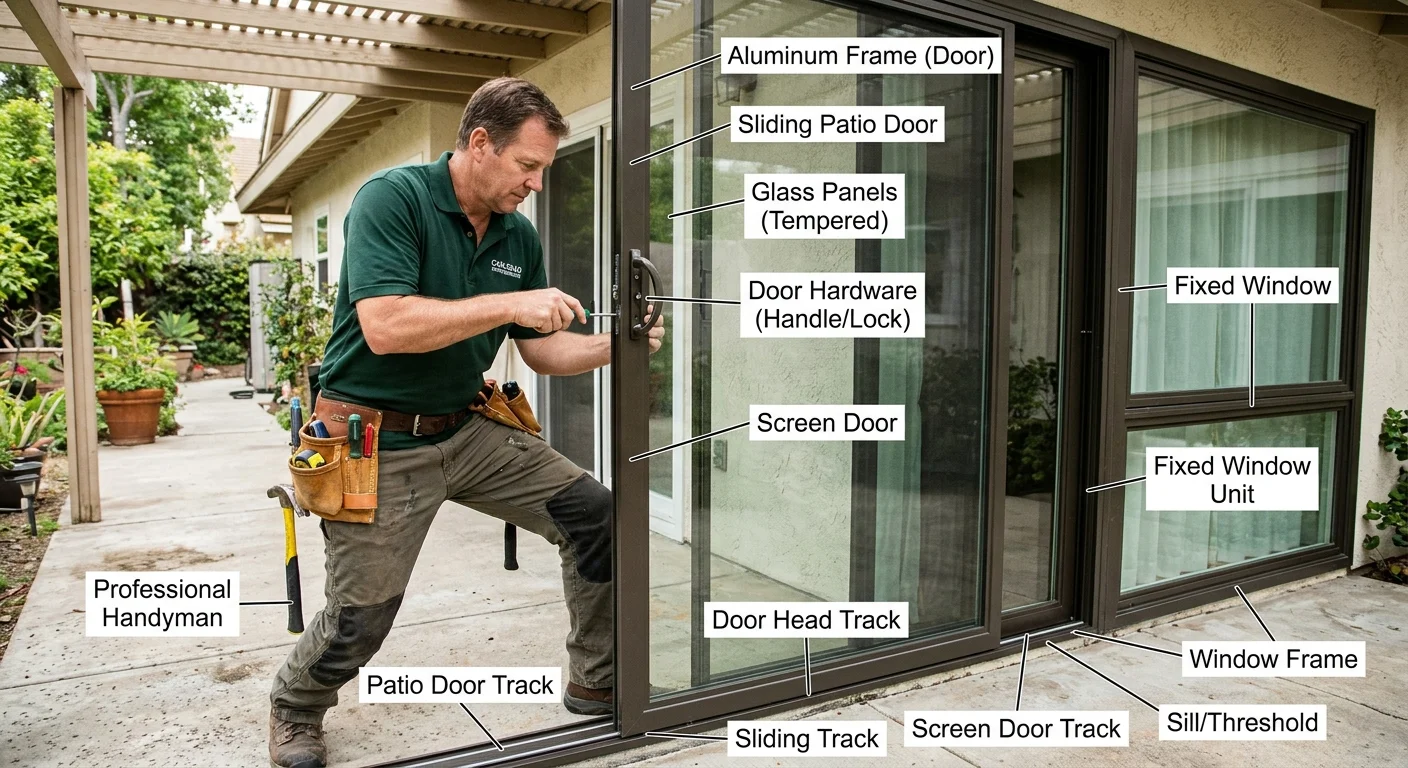
Identify the window, door, frame, and screen
Start with a room name and a wall. “Master bedroom, south wall, left of the closet” is usable. “Upstairs window” is not. Bressi Ranch homes often stack similar openings on two floors, so floor level belongs in the first line.
Then name the unit type in plain words. Hinged entry door. Interior bedroom door. Sliding patio door. Double-hung window. Slider window. Fixed picture window. Casement that cranks. If you are not sure of the catalog name, describe how it moves. A pro can work from “slides left to right” or “swings into the room.”
Split the parts on paper. The movable panel is the door slab or the window sash. The box around it is the frame. The mesh is the screen. The metal or vinyl channel the slider rides in is the track. Hardware is everything you touch: handle, lock, latch, strike, hinges, rollers, crank, or closer. When one of those is the only problem, say so. Mixing them into one complaint hides the real scope.
Count openings that act up, even if only one is urgent. A patio slider and a matching screen on the same wall are two items. A pair of flanking windows next to that slider is two more. Inland Carlsbad dust and heat often show up on several units at once. Listing them now keeps the visit from turning into a second trip for the “other one.”
Note indoor versus outdoor. A foyer door facing a Bressi Ranch sidewalk is not the same as a rear slider into a small yard. Write which side of the house you mean, and whether the unit sits over a patio, a balcony, or open dirt. That single line tells the pro whether they are quoting interior door repair, an exterior opening, or both.
If the screen is a separate panel, treat it as its own line. Screens fail on tracks, latches, and mesh while the glass still works. Our screen door repair notes walk through that split. Keep this page for the full opening: glass, frame, hardware, and access.
Skip brand guessing unless a sticker is still readable on the frame. A faded label helps. A guessed manufacturer does not. Photograph the sticker if you find one, then move on to symptoms.
Record sticking, gaps, hardware, and glass issues
Symptoms are the quote. Write what the opening does, when it does it, and what you already tried.
Sticking: does the panel bind at the top, bottom, latch side, or hinge side. Does it stick only in the afternoon, when inland Carlsbad heat expands vinyl and aluminum, or all day. Does it scrape the threshold, the head jamb, or the strike. A door that rubs the floor after new flooring is a different note than a sash that will not drop into the lock.
Gaps: look at daylight around the closed unit. Note the corner where you see light. Check the weatherstrip. Is it torn, flattened, missing, or still in place but not touching. Do not diagnose the cause. Record the gap and the room. Morning marine air still reaches parts of Carlsbad even east of the villages, so a kitchen slider that leaks air may show up as dust on the track as much as a draft.
Hardware: test the lock, latch, and handle separately from the panel. A latch that will not throw with the door fully closed is a hardware note. A latch that misses the strike because the door sagged is a door-and-frame note. Write which one you think you have, and admit if you are unsure. List loose screws, a spinning handle, a crank that turns without moving the sash, or rollers that rumble in the track.
Glass: cracked, fogged between panes, chipped at a corner, or loose in the gasket. Fog between panes is a sealed-unit issue, not a wipe-clean film. A single hairline crack still belongs on the list. Do not press on damaged glass. Stand back and photograph it.
Water stains on the sill, swollen wood at the bottom rail, or rust on a screw line are worth a sentence each. Bressi Ranch sits inland, so salt air is milder than on Carlsbad’s beach blocks, but irrigation spray on a patio slider still soaks the sill. Note whether the wet side faces a sprinkler, a roof downspout, or open sky.
If you already called about window repair in San Diego for a different house, do not reuse that write-up. This visit needs this opening, this wall, and this access path.
Separate repair from full replacement requests
Say what you want the opening to do when the visit ends. “Make this slider roll and latch” is repair. “Take this unit out and put a new one in the same hole” is replacement. Those are different requests. Mixing them in one sentence forces the pro to guess.
Repair usually means the existing frame stays. The pro services rollers, latches, hinges, weatherstrip, a screen, a closer, or a damaged stop. Replacement means a new door or window in the current opening, or a larger conversation about changing the hole. Changing the size of an opening is not a small hardware job. Treat it as its own request.
Write the age only if you know it. “Original to the house” is enough if you have no year. Do not invent a product line or an energy rating. If a prior owner left a receipt, photograph it. If they did not, skip the history.
Ask yourself whether the frame is part of the complaint. A slab that hangs wrong on sound hinges is one scope. A frame that is split, rotten, or pulled from the stucco is another. Patio sliders in two-story inland tracts often fail at rollers first. Frames fail later, after water sits in the track. Your notes should say which one you can see.
Permit questions belong to the City of Carlsbad, not to a guess. Same-size door and window replacement is treated one way in the City of San Diego’s published bulletins. That bulletin does not govern Carlsbad. A Carlsbad-specific rule for this exact job could not be confirmed here. If you plan to change the opening, replace the unit, or do work that may need a permit, call Carlsbad Development Services and ask before anyone starts. California also requires a licensed contractor once the aggregate price for labor, materials, and everything else reaches $1,000, or when the job needs a permit, per Business and Professions Code section 7048. Price alone does not make a job legal to hand to an unlicensed person.
Keep cosmetic wants on a separate line. New grids, a different handle color, or a fresh screen color are finish choices. A roller that will not carry the panel is a repair. Splitting those lines keeps the quote honest.
Note patio, second-story, and parking access
Access changes the visit as much as the broken part. Write how a person reaches the opening with tools.
Patio: is the slider on a slab, a covered loggia, or a narrow side yard. Can someone stand outside the unit to lift a panel, or is the exterior blocked by a table, a grill, or a low wall. Bressi Ranch lots are often compact behind the house. A six-foot path of clear patio is useful to mention. A jammed dining set is useful too.
Second-story: name the room and how you get to it. Interior stair, hallway width, and whether the window is over a roof, a patio cover, or open air. Exterior work on an upstairs sash may need a ladder set on level ground. Say if the ground outside is slope, planter, or hardscape. Do not assume a pro will step onto a tile roof. If the only way to the exterior of that window is over a roof, write that down.
Parking: Bressi Ranch streets near Palomar Airport Road and El Camino Real can leave little curb space. Note whether a work vehicle can sit in the driveway, on the apron, or must unload from the street. Gated inner courts, if you have one, need a gate code or a plan to meet the pro. Do not invent HOA parking rules. Copy the rule from your own packet if it affects a truck, or write “confirm parking with the association” if you are unsure.
Pets, kids’ rooms, and alarm sensors on a door or window belong in the same access block. A sensor on the slider is not a repair note, but the pro needs to know it is there before they pull the panel.
If you already keep a broader Carlsbad punch list, park this opening on it and point to our Carlsbad handyman overview for other rooms. Keep this page focused on the window and door set.
Photograph each opening before requesting repair
Photos carry the notes. Take them before anyone touches the unit.
Shoot one wide photo of the whole opening from inside, then one from outside if you can do it safely from the ground. The wide shot shows the room, the wall, and nearby furniture. Then shoot close: latch and strike together, track with the door open a few inches, bottom roller if you can see it without prying, torn screen corner, cracked glass from a distance, and any sticker on the frame.
Hold a ruler or a dollar bill in one close shot if a gap is the complaint. Scale beats adjectives. “About a pencil width at the top latch side” plus a photo is enough.
Do not stand on a chair for a second-story exterior. Ground-level photos and interior close-ups still help. If the problem only shows when the sun hits the frame, take that photo at that time of day and say so in the filename or the text.
Label files with the room and the part: “bressi-master-slider-track.jpg” is clearer than “IMG_3481.” Put the same labels in your written list so the photos and the notes match.
Send the list and the photos together when you request a match. The independent local pro quotes from that packet, then confirms on site. Fix Pro San Diego does not repair windows or doors. We connect you with a licensed independent pro who does.
When to call us
Call when an opening will not latch, glass is damaged, a slider is off its rollers, or you cannot tell repair from replacement from the ground. Skip the guesswork on second-story access and on any job that may need a permit or a licensed contractor under the $1,000 threshold. Call us at (858) 400-4611 and we’ll match you with a local pro who quotes the job before starting.
Would you rather hand this one to a pro than do it yourself? Call (858) 400-4611.
Request a quote