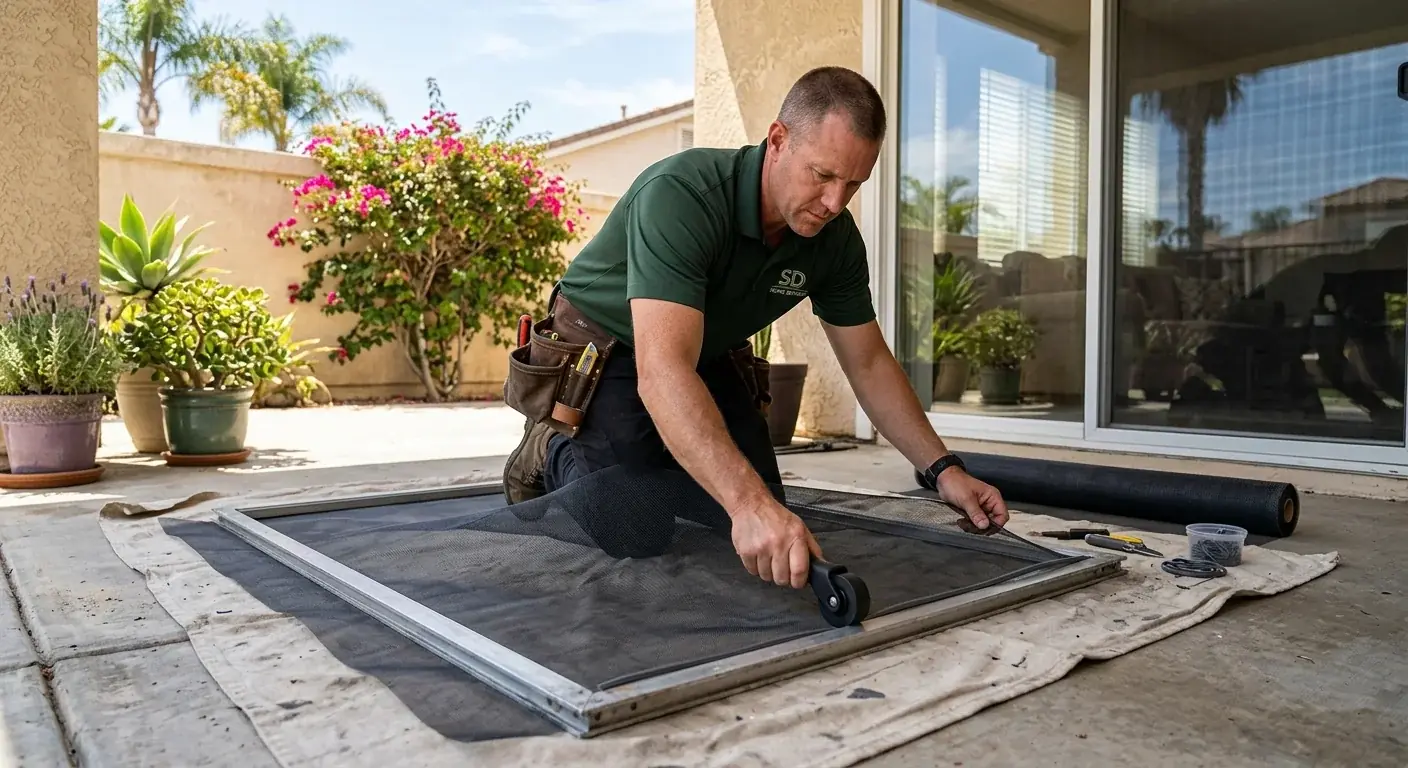
Your screen doors and window screens take a beating from the San Diego sun and salty air. Over time, they sag, tear, and become more of an annoyance than a barrier against bugs. Deciding whether to simply replace the mesh, repair the frame, or upgrade to a more durable screen can be tricky, especially with our unique coastal climate.
When to rescreen vs replace the whole frame
When your screen isn’t doing its job, the first question is always: can the pros we send fix the fabric, or does it need a whole new unit? It largely depends on the condition of the screen’s frame. If you’re dealing with small tears, holes, sagging mesh, or sun-faded fabric, rescreening is often the simplest and most cost-effective solution. This involves removing the old screen material and replacing it with new mesh, using the existing frame. It’s a great option when the aluminum or vinyl frame itself is still strong, straight, and free from significant damage.
However, if your screen’s frame is bent, warped, corroded, or has broken corners and hardware, simply rescreening might not be enough. A compromised frame means the new mesh won’t sit properly, leading to continued issues with air gaps, sticking, or even the screen falling out. San Diego’s coastal climate can be particularly hard on aluminum frames, causing corrosion and weakening over time. When you see rust, significant dents, or feel instability, it’s usually time to consider a full replacement. This gives you a fresh start with a sturdy frame, new rollers, and hardware, ensuring smooth operation and a long-lasting barrier. Sometimes, a frame replacement also presents an opportunity to upgrade the entire screen system, perhaps moving from a swing-out to a sliding model, or changing the type of screen material. Our door repair experts can assess your specific situation and recommend the best path forward.
Standard fiberglass vs pet-resistant vs solar screen
Not all screen mesh is created equal, especially when you consider San Diego’s unique needs. The most common choice is 18x16 standard fiberglass mesh. It’s affordable, offers good airflow, and provides decent visibility. However, as we’ll discuss, standard fiberglass isn’t always the most durable choice for our intense coastal sun. For those living near open spaces or with a particular problem with tiny insects, 20x20 no-see-um mesh offers a tighter weave. This fine mesh keeps out even the smallest gnats and “no-see-ums,” though it slightly reduces airflow and visibility compared to standard screens.
If you have pets, you know their claws can be a screen’s worst enemy. That’s where pet-resistant screen mesh comes in. Made from a much thicker, more durable vinyl-coated polyester, it stands up to scratches and pushes without tearing. While it’s a bit more expensive and slightly darker than standard fiberglass, the longevity it offers for pet owners is invaluable. Finally, for homes that get a lot of direct sun, solar screen mesh can be a game-changer. These screens are designed to block a significant percentage of UV rays and solar heat gain, helping to keep your home cooler and potentially lowering energy bills. They do reduce visibility and airflow more noticeably, but the energy savings and comfort can be worth the trade-off. We can help you pick the right mesh for your specific windows and doors, ensuring you get the performance and durability you need for your San Diego home.
Window screen repair, pet screen repair, and screen replacement
Same craft, three different jobs, and the words people use for them are not interchangeable.
Window screen repair is a rescreen: the frame stays, the mesh comes out, new mesh goes in with fresh spline. It is the cheapest option and it is right whenever the frame is still square and the corners are tight.
Pet screen repair means rescreening in pet-resistant mesh rather than repairing the pet damage, because once a claw opens standard fiberglass the tear only grows. Vinyl-coated polyester is the material worth paying for here, and it is worth doing on the doors and lower windows only rather than the whole house.
Window screen replacement is a new frame, and it is the call when the corners have opened up, the frame is bowed, or the spline channel has split. A bent aluminum frame can sometimes be squared, but a frame that has been out in the sun for fifteen years usually will not hold a new spline.
If you are not sure which one you have, push gently on the mesh at a corner. If the mesh moves but the frame stays square, you need a rescreen. If the whole corner flexes, you need a frame.
Screen repair in Rancho Peñasquitos, Scripps Ranch, and Santee
Rancho Peñasquitos and Scripps Ranch are 1980s to 2000s HOA tracts with a lot of sliding patio screens on two-story family homes. Canyon dust packs the tracks. Dogs use the slider as a lookout, so the lower panel fails first. Rescreen in pet-resistant mesh when the aluminum frame is still square. Replace the frame when the corners have opened or the spline channel has split. Retractable motorized patio systems and security screen doors are a licensed screen-shop product. The handyman work is mesh, spline, rollers, and a bent frame, quoted as one visit if you have several windows.
Santee adds East County heat. Fiberglass goes brittle faster inland than it does at the beach. Pet screens on sliders are the usual call. Same test: mesh moves, rescreen. Corner flexes, new frame.
HOA paperwork for a visible exterior screen swap is the homeowner’s to file. The matched pro can photograph the existing unit and the replacement so the committee has something to look at.
Sliding screen door rollers and tracks
A screen door is only as good as its movement. For sliding screen doors, the rollers and tracks are critical components that often fail before the mesh does. San Diego’s environment, with its coastal dust, sand, and even salt spray, means these parts can degrade quickly. Rollers, typically made of nylon or plastic, wear down over time, becoming flat, cracked, or simply seizing up. When this happens, your screen door will drag, stick, or even fall off its track, making it a frustrating hassle to use.
The tracks themselves also accumulate debris. Dirt, pet hair, leaves, and other grime pack into the channels, creating resistance and further stressing the rollers. Over time, the aluminum tracks can also corrode or bend, especially if the door is frequently forced open. Fixing these issues is a key part of what the pros we send handle. They clean out the tracks, replace worn-out rollers with new, smooth-gliding ones, and make any necessary adjustments or repairs to the track itself. This ensures your screen door slides effortlessly, restoring convenience and prolonging its life. While it’s a different beast than a heavy sliding glass door repair, the principles of smooth operation are much the same, ensuring both function and peace of mind.
Why coastal screens degrade in 3 years, not 10
It’s a common frustration for San Diego homeowners: why do screen manufacturers claim screens last 10-15 years, when yours seem to fail after just a few? The answer lies in our unique coastal environment. The intense California sun, with its powerful UV radiation, is a primary culprit. Standard fiberglass mesh, while durable in milder climates, becomes brittle and weak under constant UV exposure. You’ll notice it fading, losing its elasticity, and eventually developing small cracks or tears much faster than expected. This process can significantly reduce a screen’s lifespan from a decade to as little as three to five years here in San Diego.
Beyond UV, our proximity to the ocean brings another factor: salt air. The microscopic salt particles carried inland can contribute to the corrosion of aluminum frames and hardware, further weakening the entire screen assembly. Even if the mesh itself holds up, a corroded frame or sticking rollers will make the screen unusable. This accelerated degradation means that proactive maintenance and material choice are even more important here. Opting for higher-grade meshes like pet-resistant or solar screens often provides better UV protection and overall longevity, standing up better to the specific challenges of our sunny, salty region. Regular inspections can help catch issues early, before a small tear becomes a full-blown screen replacement project.
Rescreening cost vs new frame cost in 2026
When deciding between rescreening and a full frame replacement, cost is often a major factor for San Diego homeowners. As of 2026, rescreening a typical window or door generally costs less than replacing the entire frame. For rescreening, you’re primarily paying for the new mesh material and the labor to install it. The type of mesh you choose will impact this cost significantly. Standard fiberglass is the most economical, while pet-resistant or solar screens will be a higher investment due to their specialized materials. If your existing frame is in good condition, rescreening offers an excellent value, extending the life of your screen at a fraction of the cost of a new unit.
However, if your frame is compromised (bent, corroded, or with broken hardware that can’t be easily repaired), a full frame replacement makes more sense in the long run. While the upfront cost is higher, it includes the new frame, rollers, hardware, and fresh mesh. This ensures a completely new, fully functional screen that will last. Factors like the size of the screen, the material of the new frame (e.g., aluminum, vinyl), and the complexity of the installation will influence the total price. It’s always wise to get a professional assessment. Fix Pro San Diego can match you with an experienced local handyman who will explain the benefits of each option and quote the job, helping you make an informed decision for your home maintenance budget. You can easily check a contractor’s license status on the CSLB website.
Bundling screen work with slider and weatherstrip jobs
When you’re looking at screen repairs, it’s often a sign that other door-related maintenance might be due. San Diego homeowners can save time and money by bundling screen work with other common door and window tasks. For instance, if your sliding screen door is struggling, chances are your main sliding glass door could benefit from a check-up too, perhaps needing roller or track adjustments. Similarly, many homes have swing-out screen doors that often need closer adjustments to ensure they close smoothly and completely, preventing pests from entering.
We’ve found that screen repairs are frequently requested alongside weatherstripping projects. Damaged weatherstripping around doors and windows can lead to drafts, higher energy bills, and allow dust and moisture into your home. It’s smart to address both screens and weatherstripping in one visit, as these are often interconnected issues affecting your home’s comfort and efficiency. The pros we send specialize in a wide range of door repair services, including fixing sticking doors, replacing weatherstripping, and handling various general repairs around your property. By consolidating these tasks into a single service appointment, you streamline the repair process, reduce overall labor costs, and get your home back in top shape faster.
When to call us
Screen and door issues can seem minor, but ignoring them often leads to bigger problems or reduced home comfort. If you’re tired of torn screens, sticky sliding doors, or wondering which mesh type is right for your San Diego home, it’s time to call a professional. Precise rescreening, full frame replacements, and comprehensive door adjustments are all standard scopes for the pros Fix Pro San Diego sends.
Call us at (858) 400-4611 and we’ll match you with a pro who can quote the job.
Would you rather hand this one to a pro than do it yourself? Call (858) 400-4611.
Request a quote