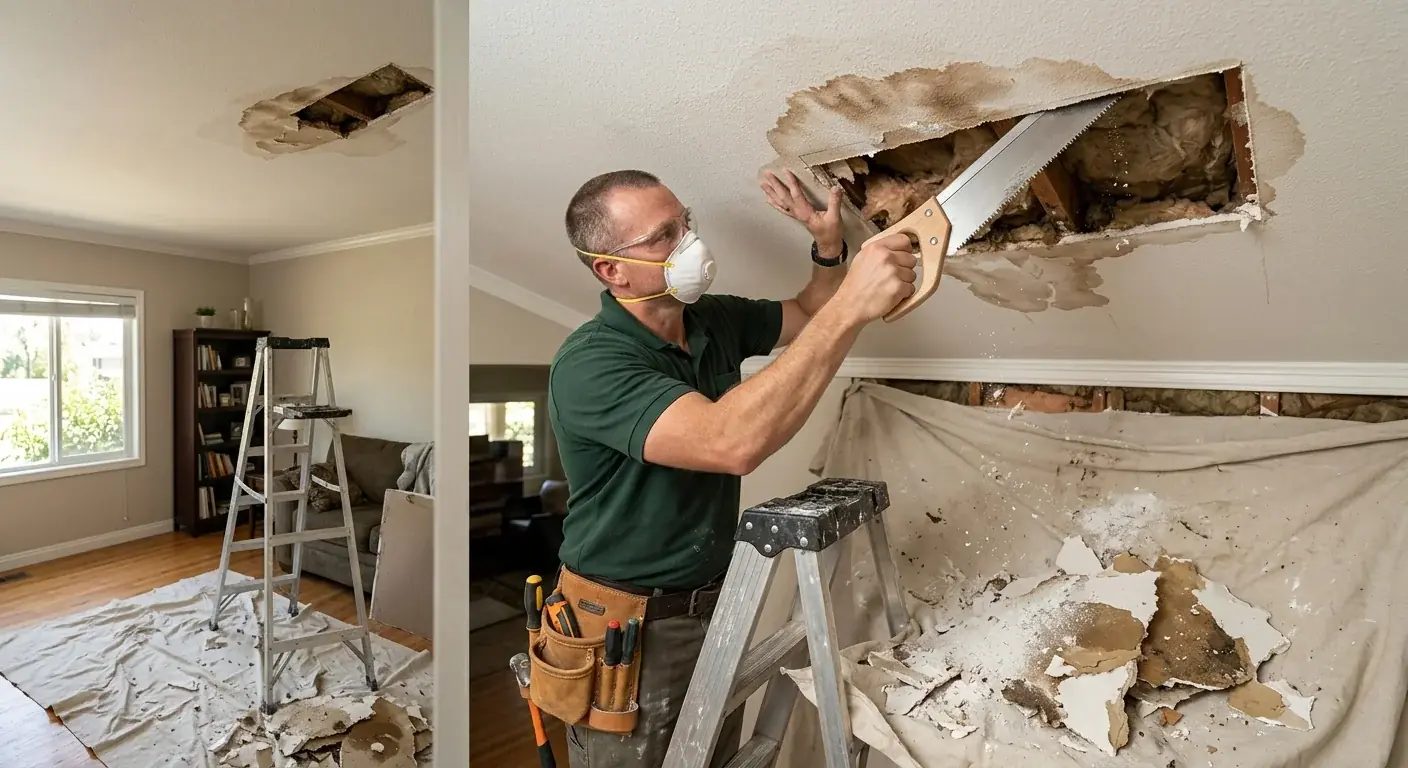
Finding an unexplained brown stain on your ceiling or a soft spot on your wall can be alarming. In San Diego, water damage isn’t just a rainy season issue; it can pop up year-round from various sources. Understanding these signs and where the water comes from is the first step toward getting your home back in shape.
What a brown ceiling stain is actually telling you
That distinct brown or yellowish stain spreading across your ceiling or down a wall is more than just an ugly mark. It’s a clear signal that water has infiltrated your home’s structure at some point. The discoloration comes from water dissolving and carrying various materials it encounters along its path: dust, dirt, rust from pipes, or even insulation particles. As the water evaporates, it leaves these residues behind, creating the tell-tale stain.
The shape and location of the stain can offer clues about the leak’s origin. A large, irregular blotch on a ceiling might point to a roof leak or an overflowing attic-mounted AC unit. A vertical streak on a wall could indicate a plumbing leak inside the wall cavity. Don’t mistake these stains for a purely cosmetic problem. Even if the leak has seemingly stopped, the presence of a stain means moisture was there, and potentially, mold has already started to grow in unseen areas. Ignoring a stain is risking further damage to your home’s integrity and air quality.
Soft drywall, bubbling paint, and bowed ceilings
While a stain is a first alarm, other signs indicate more advanced or severe water damage to your drywall. These symptoms show that the water has been present long enough to compromise the material itself.
- Soft Drywall: When drywall gets saturated with water, its gypsum core loses its rigidity. If you gently press on a suspect area and it feels spongy, squishy, or easily gives way, you’re likely dealing with water-damaged drywall. This means the structural integrity of that section is compromised, and it needs immediate attention before it crumbles or falls apart.
- Bubbling or Peeling Paint: Water can get trapped between the drywall surface and the paint layer. This breaks the bond between the paint and the wall, causing the paint to bubble outwards. As the water evaporates or continues to leak, the paint might then start to peel and flake off. This is a clear indicator of moisture behind the finish, even if a visible stain hasn’t fully formed yet.
- Bowed or Sagging Ceilings: This is one of the most serious signs of water damage. A bowed or sagging ceiling means a significant amount of water has accumulated above the drywall, or the drywall itself has absorbed so much moisture that it can no longer support its own weight. This poses a serious risk of collapse and should be addressed by professionals immediately to prevent injury or further structural damage.
Any of these signs mean you need to find and fix the water source fast, then assess the extent of the drywall damage.
Three common SD water sources: roof, slab leak, AC condensate
In San Diego County, homeowners deal with specific types of water damage sources that often lead to drywall issues. Knowing these common culprits can help you pinpoint the problem more quickly.
Roof leaks
Even with our generally sunny climate, San Diego experiences rain, especially during El Niño years. Older roofs, cracked tiles (common in Spanish-style homes found throughout neighborhoods like North Park or La Mesa), or worn-out flashing around chimneys and vents can allow water to seep in during heavy downpours. These leaks often manifest as ceiling stains in the room directly below the compromised roof section, or as streaks down walls if the water travels along rafters or studs. Regular roof inspections are key to preventing these issues.
Slab leaks
These are particularly notorious in San Diego’s many 1970s tract homes, found in areas such as Clairemont, Mira Mesa, and El Cajon. These homes often have copper plumbing lines embedded directly in the concrete foundation slab. Over decades, these pipes can corrode due to soil conditions, chemical reactions, or even minor seismic activity. A slab leak can be tricky to detect, as water might travel beneath the floor or inside walls before becoming visible. Look for unexplained warm spots on your floor, unusually high water bills, the sound of running water when no faucets are on, or mysterious damp spots on lower walls and baseboards.
AC condensate lines
While less dramatic than a burst pipe, issues with your air conditioning unit’s condensate drain line can cause significant drywall damage. AC units remove humidity from the air, producing condensate (water) that should drain away. If the drain line clogs with algae or debris, or if it breaks, water can overflow. This typically happens in the attic where the AC unit is often located, leading to ceiling stains directly below the unit or along walls if the water finds a path downward. Regular AC maintenance, including clearing the condensate line, can prevent these slow-drip disasters.
Drying first, repairing second, why order matters
When dealing with water damage, the sequence of operations is critically important. Jumping straight to drywall repair without proper preparation is like painting over rust; it’s a temporary cover-up that will lead to bigger problems down the road.
First and foremost, the source of the water must be found and fixed. This could involve a licensed plumber for a slab or pipe leak, a roofer for a roof breach, or an HVAC technician for an AC condensate issue. Until the leak is completely stopped, any drywall repair efforts are futile and will be re-damaged.
Once the leak is sealed, the affected area needs to be thoroughly dried out. This is a non-negotiable step. Moisture trapped within walls or ceilings is a breeding ground for mold and mildew, which can cause health problems and further degrade building materials. Drying often requires specialized equipment like dehumidifiers and industrial fans, particularly for larger areas.
It’s important to understand Fix Pro San Diego’s scope: the pros we send step in after the water source has been fixed and the affected area is completely dry. Fix Pro San Diego is not a water mitigation or mold remediation company. If your home has extensive water damage, standing water, or significant mold growth, you’ll need to call a specialized water damage restoration company first. They will dry out your property and remediate any mold. Once that process is complete and your home is safe and dry, the pro we send can begin the drywall repair to restore its appearance. Skipping the drying step risks the recurrence of mold, structural decay, and the need for more extensive and costly repairs later on.
Patch, replace, or call a restoration company
The severity and nature of the water damage dictate the appropriate repair strategy. It’s not always a one-size-fits-all solution.
For small, localized stains or soft spots (typically less than a few square feet) where the damage is superficial and the underlying drywall structure remains sound, a simple patch often suffices. This involves carefully cutting out the damaged section, installing a new piece of drywall, applying joint compound (mud), taping, sanding smooth, and then priming the area for paint. This method is cost-effective and efficient for minor issues.
If you’re dealing with larger sections of damaged drywall, areas that have significantly lost their structural integrity, show noticeable bowing, or had extensive mold growth (which must be professionally remediated first), then a full replacement of the affected drywall sheets is necessary. This is a more involved process that ensures a stable and lasting repair. The handymen in our network are skilled at fitting new drywall so it matches your existing walls and ceilings.
However, if the water damage is truly extensive, meaning entire rooms are affected, there’s significant standing water, multiple walls or ceilings are compromised, or there’s widespread mold, you should call a specialized water damage restoration company. These companies are equipped to handle large-scale drying, dehumidification, and mold remediation. They often work directly with insurance companies. Fix Pro San Diego connects you with pros whose expertise is in the precise drywall repair that follows these initial restoration efforts, returning your home to its pre-damage condition once the environment is stable and dry.
Cost ranges for handyman drywall repair after a leak
The cost to repair water-damaged drywall in your San Diego home can vary significantly based on several factors. It’s tough to give a precise number without seeing the specific damage, but we can provide some general ranges and explain what influences the price.
Factors affecting the cost include:
- Size of the damaged area: A small patch (a few square feet) will naturally cost less than replacing an entire drywall sheet or a larger section of a ceiling.
- Location of the damage: Ceiling repairs are generally more complex and labor-intensive than wall repairs. Working overhead requires more effort, specialized equipment, and often takes longer.
- Type of drywall finish: Matching existing textures, whether smooth, knockdown, or orange peel, adds complexity and time to the job. Popcorn ceiling textures can be particularly challenging to blend, and sometimes, removal of the entire ceiling texture is a better option.
- Inclusion of painting: Once the drywall repair is complete, the area will need to be primed and painted to blend in with the rest of your room. This is often a separate service, or an added component to the drywall repair. The pros in our network can help with interior painting to ensure a perfect finish.
For minor water damage repairs, you might expect costs in the hundreds of dollars. For larger, more complex repairs involving significant sections of drywall replacement and texture matching, costs can extend into the low thousands. For a more detailed breakdown of typical expenses, you can refer to our general drywall repair cost guide in San Diego. Always remember that an in-person assessment provides the most accurate estimate for your specific situation.
When to call us
If you’ve addressed the leak source and the affected area is thoroughly dry, Fix Pro San Diego is ready to match you with a pro. The pros in our network specialize in expert drywall repair that makes water damage disappear, leaving your walls and ceilings looking new again. Call us at (858) 400-4611 and we’ll match you with a pro who can quote the job after taking a look.
Would you rather hand this one to a pro than do it yourself? Call (858) 400-4611.
Request a quote