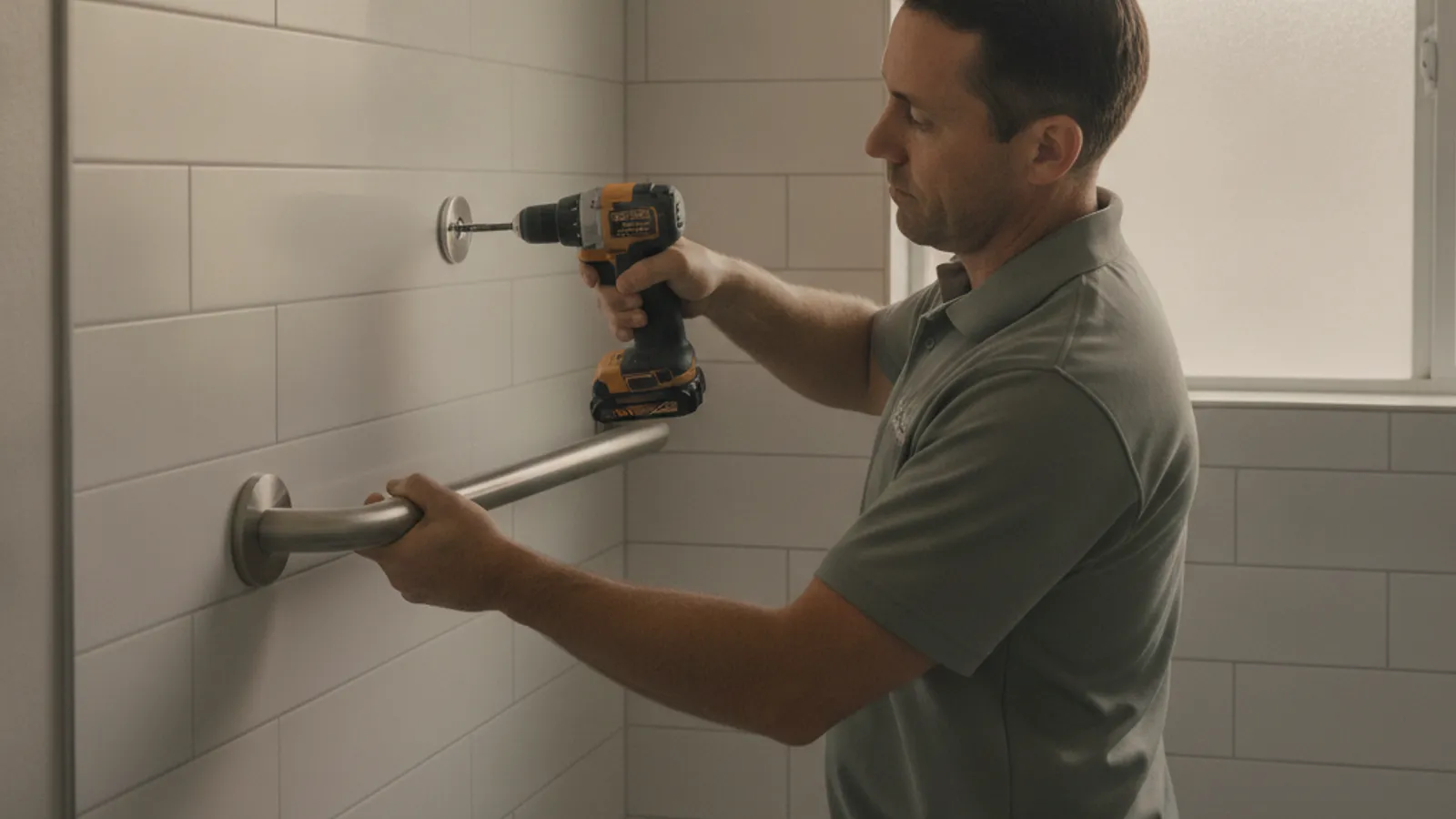
Installing a grab bar in a San Diego bathroom typically costs $85 to $250 per bar, depending on whether it anchors straight into an existing stud or needs added blocking behind tile or drywall first. Most homeowners install two to four bars in a single visit, inside the shower, along the tub, and next to the toilet, which usually fits inside the $400 to $800 visit minimum most local handyman pros already charge for a standard punch-list call.
That’s the short answer. What actually moves the price is what’s hiding behind your wall, whether you’re drilling through tile or bare drywall, and how many bars you’re doing in one trip. Here’s how it breaks down across San Diego County.
How much does grab bar installation cost in San Diego?
Use these 2026 ranges as a starting point for bathroom grab bar work in San Diego County:
- One bar into an open stud, drywall or plaster: $85 to $150
- One bar where blocking has to be added first: $150 to $250
- One bar drilled through ceramic or porcelain tile: $125 to $225
- Three to four bars in one visit (shower, tub, toilet): often folds into the standard $400 to $800 visit, since most pros price the trip, not each bar individually
A single bar rarely justifies its own service call once you add the trip charge most companies apply to any handyman visit. The better move, and the one most San Diego pros recommend, is doing the whole bathroom’s accessibility upgrades in one mobilization: shower grab bars, a bar beside the toilet, and a vertical bar at the shower entry.
Where should grab bars go in a bathroom?
Placement matters as much as the bar itself. Inside the shower or tub, bars typically go 33 to 36 inches above the floor, angled slightly to match how someone actually reaches for support while stepping in or standing up. A vertical bar at the shower entry gives a stable handhold for the step over the threshold, which is where most bathroom falls happen. Beside the toilet, a horizontal bar mounted 33 to 36 inches high, positioned so a seated person can push straight down rather than pull sideways, gives the most support.
These heights follow the same guidelines used in ADA-compliant construction, though a home installation doesn’t need to meet ADA code to be safe and useful. What matters is matching bar height and position to the person using them, which is why a good installer walks through the bathroom with you before drilling anything.
Do grab bars need to be anchored into a stud?
Yes, and this is where a lot of bathroom falls get traced back to. A grab bar screwed only into drywall or tile backer board, with nothing behind it but a hollow cavity, can pull loose the first time someone puts real weight on it. That’s not a hardware problem. It’s an anchoring problem.
Many San Diego homes built between the 1960s and 1990s, especially the tract housing that makes up most of the county’s inland neighborhoods, were framed with standard 16-inch stud spacing and no extra blocking behind tub or shower walls, since accessibility upgrades weren’t part of the original build. That means the stud you need often isn’t exactly where the bar needs to go. A handyman with a stud finder and some basic carpentry work can add a short section of solid blocking behind the wall, cut into the drywall, screw in a wood or plywood backer between the studs, then patch and match the surface before mounting the bar. That extra step is most of what separates the $85 to $150 range from the $150 to $250 range.
Installing grab bars through tile without cracking it
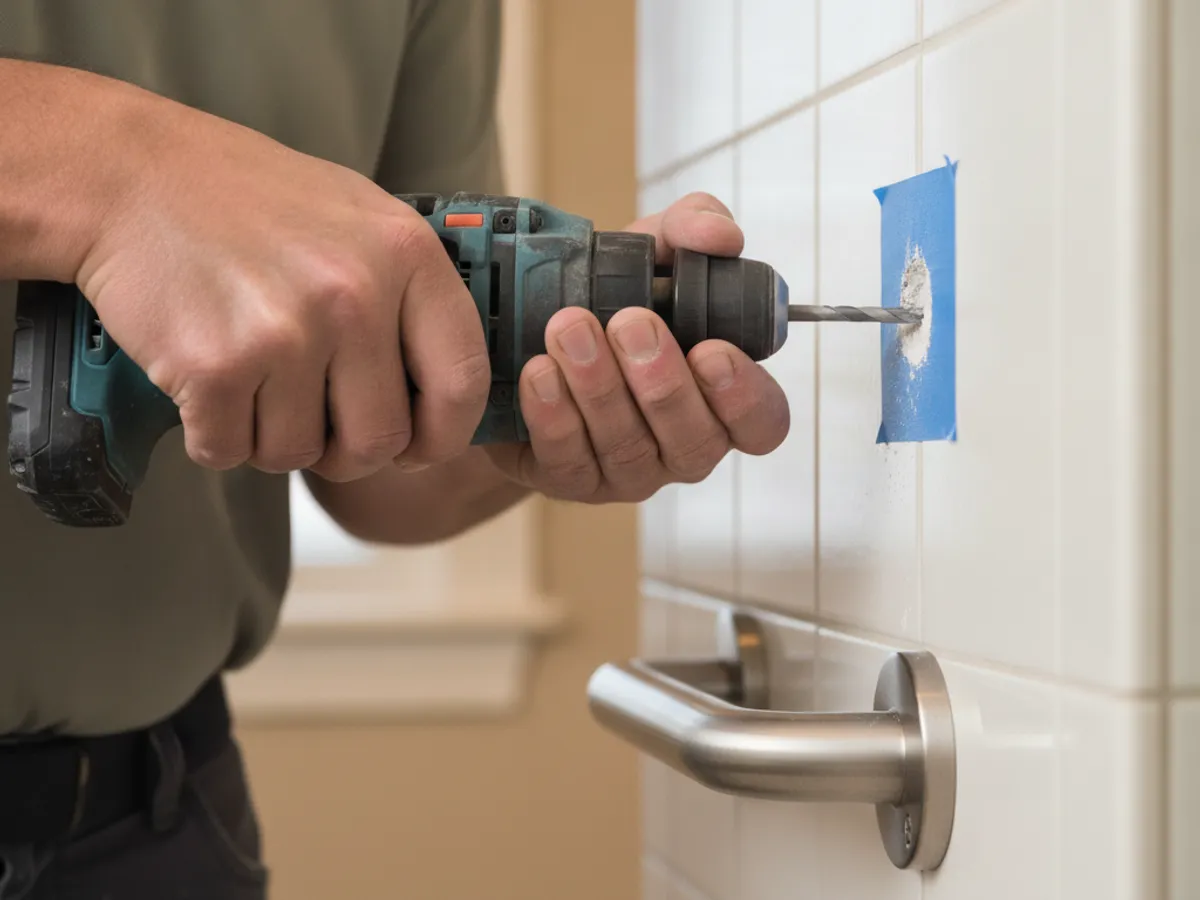
Bathroom walls finished in ceramic or porcelain tile add a real risk if you drill wrong. Standard drill bits chip or crack tile almost every time. The right approach uses a carbide or diamond-tipped bit, a slow drill speed, and painter’s tape over the drill point to keep the bit from wandering on the glazed surface. Each hole gets drilled individually and checked before moving to the next, since a cracked tile mid-job means a tile repair or full tile replacement before the bathroom looks finished again.
If your shower or tub surround is original tile from an older remodel, tell your installer before the visit. Matching grout color and finding a replacement tile if one cracks takes more time than a straightforward drywall install, and a pro who knows this going in will price and pace the job accordingly.
Coastal vs inland: does San Diego’s climate change the hardware?
Yes, more than most homeowners realize. Standard chrome-plated grab bars hold up fine inland, but within a mile or two of the coast, in places like La Jolla, Coronado, Encinitas, and Solana Beach, salt air and constant bathroom humidity corrode chrome plating within a few years. Pitting starts at the mounting screws first, which is exactly where you don’t want weakness in a bar someone’s leaning on. Marine-grade stainless steel or powder-coated bars cost a bit more upfront, usually $20 to $40 more per bar, but they hold up for the life of the bathroom instead of needing replacement.
Inland communities deal with less corrosion and more thermal cycling. Standard stainless bars perform well in Poway, Escondido, El Cajon, and similar inland areas without the upgrade.
Which San Diego communities see the most demand for this?
Accessibility work tracks closely with where San Diego’s established, longer-tenured homeowners live. Rancho Bernardo, with its large 55-and-over population across Oaks North, The Trails, and the surrounding master-planned communities, generates some of the steadiest grab bar and aging-in-place requests in the county. Tierrasanta, where many owners are second or third generation in the same home, sees a similar pattern as original owners stay put rather than move.
Multigenerational households in National City and El Cajon drive a different version of the same demand, adding accessibility features for an aging parent or grandparent moving in rather than for the original homeowner. The scope is the same either way: solid anchoring, correct height, and hardware that matches the bathroom’s exposure.
DIY vs hiring a pro
A single grab bar installed straight into a stud, in a drywall bathroom with no tile to drill through, is a realistic weekend project for a confident DIYer with a stud finder and a drill. The bar itself runs $20 to $60 at a hardware store.
The math changes once tile, missing studs, or an older wall assembly enters the picture. Guessing at stud location behind tile, or mounting a bar into drywall alone because the stud wasn’t where you expected, is how bars fail under real weight later. If the person using the bar has limited mobility or balance concerns, that’s not a place to guess. A pro brings a stud finder rated for tile and plaster, the right bit for your wall surface, and blocking materials on hand if the stud spacing doesn’t line up.
Frequently asked questions
How much does it cost to install a grab bar in San Diego?
A single grab bar runs $85 to $150 when it anchors straight into an existing stud, or $150 to $250 when blocking has to be added first. Bars through ceramic or porcelain tile typically run $125 to $225. Doing three or four bars in one visit usually costs the same as the standard $400 to $800 handyman visit.
Can grab bars be installed without studs?
Not safely for long-term use. A bar needs to anchor into a stud, added blocking, or a specialty toggle-bolt system rated for the exact wall material. Screwing directly into hollow drywall or tile backer with standard anchors is the most common reason grab bars fail under weight.
What height should a grab bar be installed at?
Most shower, tub, and toilet-area bars go 33 to 36 inches above the floor, following the same range used in ADA guidelines. The exact position should match how the person using the bar actually reaches for it, so a walkthrough before installation matters more than a fixed number.
Do grab bars near the coast need different hardware?
Yes. Homes within a mile or two of the ocean, in areas like La Jolla, Coronado, and Encinitas, should use marine-grade stainless steel or powder-coated bars instead of standard chrome. Salt air corrodes chrome plating at the mounting screws within a few years, right where you need the most strength.
Can I install grab bars through tile myself?
It’s possible with a carbide or diamond bit, slow drill speed, and painter’s tape to keep the bit from sliding on the glaze, but the risk of cracking tile is real. If the tile is original or hard to match, a pro who does this regularly is the safer bet.
Ready for a quote?
Whether you need one bar by the toilet or a full bathroom accessibility upgrade, the handymen in the Fix Pro San Diego network anchor every bar into a stud or solid blocking, never just drywall or tile backer alone. Call (858) 400-4611 or request a quote and we’ll connect you with a vetted local pro. For the rest of the punch list, our handyman cost guide covers typical pricing, and how to choose a handyman walks through what to ask before you book.
Would you rather hand this one to a pro than do it yourself? Call (858) 400-4611.
Request a quote