
A San Diego home maintenance year has four jobs in it that most national checklists never mention: clear the roof and gutters after the December-to-March rain, cut back fuel and check vents before Santa Ana season, renew exterior caulk and UV-damaged finishes through the summer, and watch for clay-soil movement in doors and drywall as the ground dries and swells. Freezing pipes and furnace prep, the two items national calendars lead with, do not apply here.
San Diego home maintenance tasks
These are the actual tasks, not a national calendar with the furnace swapped out:
- After rain: attic stains, window fog, pooling at the foundation, doors that now stick
- March to April: exterior caulk, deck stain, weatherstripping, visual roof check from the ground
- June gloom: bathroom caulk and grout, exhaust fans, closet mold on coastal blocks
- July to September: brush clearance in the five-foot zone, ember-resistant vents, UV-failed paint and caulk
- Santa Ana season: gate hardware, fence posts, and anything that can blow
- Fall: clay-soil door and drywall movement inland, slider tracks, smoke and CO detectors
The month-by-month calendar below is built around those four. Generic home maintenance advice doesn’t fit San Diego well. Most home maintenance calendars are written for places with hard winters and humid summers, they tell you to winterize your pipes and check your furnace before the first freeze. San Diego homeowners don’t deal with freezing pipes, but they deal with marine layer mold, Santa Ana wind fire risk, clay soil movement, and intense UV that degrades exterior surfaces faster than almost anywhere else.
Here’s a 12-month maintenance calendar built for San Diego County specifically.
January–February: post-rain assessment
San Diego’s rain season runs December through March. After any significant rainfall, do a quick assessment.
Inside:
- Walk through attic or check ceiling for any new water stains
- Look at window seals, any new fogging between panes indicates the seal has failed
- Check under sinks for slow drips that have worsened from pressure changes
Outside:
- Inspect stucco for new cracks, rain infiltration makes hairline cracks visible as dark lines
- Walk the perimeter of the house where it meets the ground. Any new pooling or drainage issues?
- Check fence posts and deck ledger boards for water infiltration signs after saturation
Doors and windows:
- After extended rain periods, note which doors stick, these are the humidity-sensitive ones that need sealing or adjustment in spring
March–April: pre-summer prep
March and April are the sweet spot for exterior work, dry enough to paint or seal, cool enough to be comfortable working outside.
Deck and fence:
- Do your annual deck inspection (see our full deck maintenance guide)
- Apply stain or sealer to any wood deck or fence that passed inspection but is due for a coat
- Check patio covers and shade structures for any winter damage
Exterior caulk and seals:
- Re-examine all exterior window and door caulk, this is the ideal time to replace any that cracked or pulled away over winter
- Check exterior hose bib connections and any irrigation valve boxes for leaks
Roof (visual from ground):
- Look for any displaced or missing tiles visible from grade level
- Check for debris buildup in valley areas
- For anything you can’t see from grade, book a professional roof inspection, since a roofer catches lifted flashing and cracked underlayment before the rains find it
May–June: marine layer season begins
The “June gloom” and marine layer season brings elevated humidity, particularly within five to ten miles of the coast.
Moisture and mold:
- Check bathroom caulk and grout for any mold growth that’s starting, the early season is easier to address than late summer
- Look in closets and behind furniture near exterior walls for early mold spots
- Ensure bathroom and kitchen exhaust fans are working (test by holding a tissue to the grille, it should hold against the suction)
Doors:
- Wood doors that began sticking in January may need minor adjustment now as humidity increases
Gutters:
- Clean any debris from winter if you haven’t already
July–August: peak summer
The driest months in most San Diego communities, ideal for any outdoor project that needs dry conditions.
Fire season prep:
- Clear dead vegetation and brush from the five-foot zone around the home foundation
- Clean pine needles and dry leaves from roof valleys, gutters, and under decks
- Check that any wood fencing within 10 feet of the structure is in good condition with no dry rotting sections (dry rot creates perfect tinder)
- Ensure your dryer exhaust vent isn’t obstructed, lint fires spike in summer when machines run harder for laundry
Exterior painting:
- If you planned any exterior touch-ups, July and August give you the driest conditions. Don’t paint during Santa Ana wind advisories.
Tip: In fire-prone areas of San Diego (Rancho Bernardo, Ramona, Julian, Alpine, Lakeside, Jamul), the State Fire Safe Regulations require clearance zones around structures. Check CalFire’s current requirements, they’ve been updated several times in recent years.
September–October: Santa Ana season
Santa Ana events typically start in September and peak in October–November. Extremely low humidity and high winds are the defining conditions.
Before any Santa Ana event:
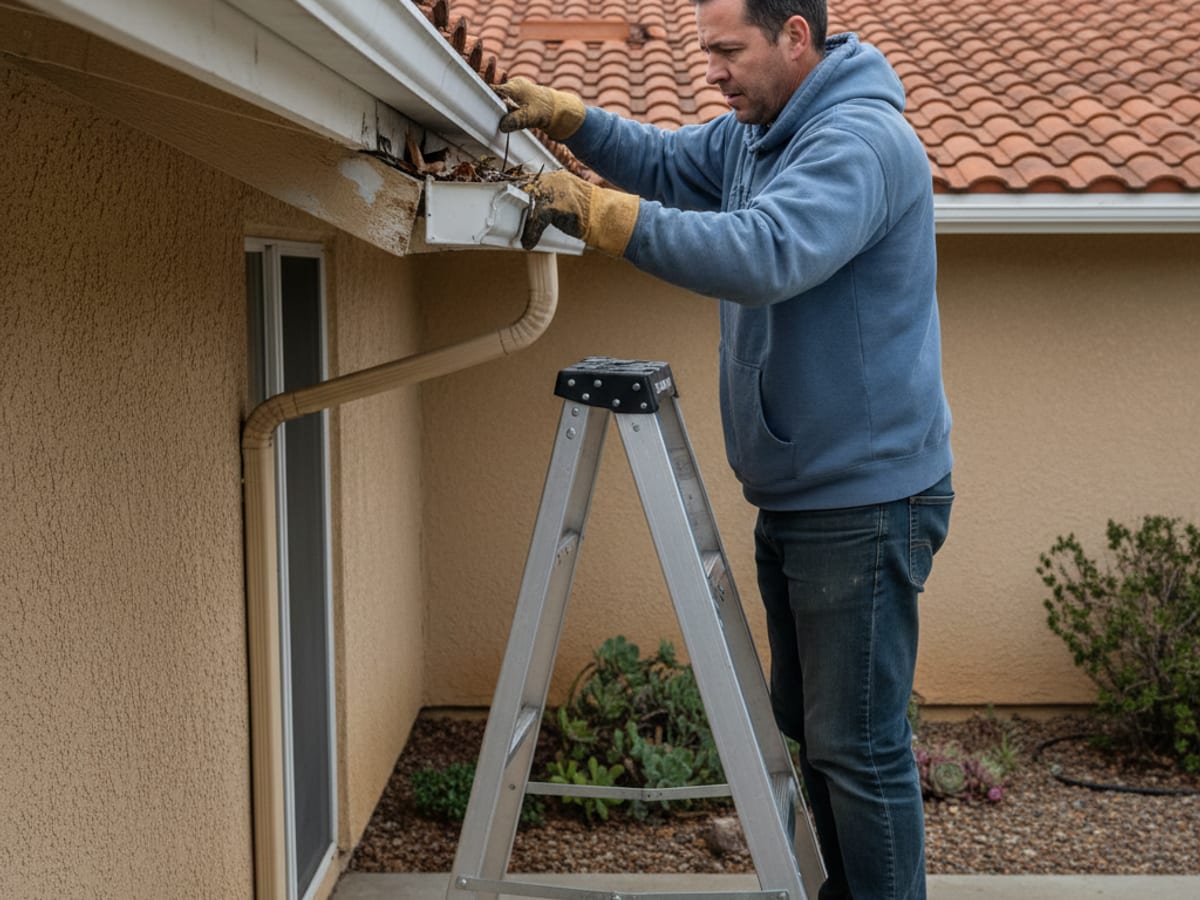
- Clear debris from roof and gutters
- Move loose patio furniture or decorative items into the garage, Santa Ana winds regularly top 40–60 mph
During Santa Ana conditions:
- Don’t do any grinding, welding, or outdoor burning
- Check garage door seals, wind-driven debris can damage seals and create gaps
After Santa Ana season:
- This is the ideal time to pressure wash driveways, paths, and fences, the dry conditions that caused dust buildup in summer are over, and the weather is still warm enough to work comfortably.
November–December: pre-rain prep
The goal in November is to make sure the home is sealed and ready before the rain arrives.
Roof and drainage:
- Clean gutters, this is the most important single task before rain season
- Check downspout extensions, they should direct water at least two feet from the foundation
Exterior sealing:
- Any exterior caulk or flashing repairs should be done by mid-November before the rains start
- Check window weep holes (the small slots at the bottom of window frames), clear them if clogged with debris
Interior prep:
- Check smoke and CO detectors, replace batteries annually, replace units over 10 years old
- Test GFCI outlets in bathrooms, kitchen, garage, and exterior locations, press the test button, confirm the outlet loses power, press reset
Two upgrades worth folding into the annual list: replacing smoke alarms over ten years old (see smoke and CO detector installation for what California requires) and swapping a tired thermostat for a programmable one (our thermostat replacement guide covers the C-wire issue in older homes).
Fix Pro San Diego handles all of these maintenance tasks, from caulking and sealing to deck repair, door adjustments to pressure washing. If your annual checklist is turning into a backlog, call (858) 400-4611 for a maintenance assessment and a quote from the pro.
What does an annual home maintenance checklist for San Diego cover?
Ten tasks, spread across the year rather than done in one weekend. If you want the short version of everything above, this is it.
| When | Task | What it protects |
|---|---|---|
| January to February | Post-rain walkthrough, inside and out | Catches water intrusion while it is still a stain rather than a repair |
| March to April | Exterior caulk, seal, and paint touch-up | The dry window before UV and heat make the work harder |
| March to April | Deck and fence inspection for soft wood | Dry rot found early is a board, not a structure |
| May to June | Moisture and mold check in bathrooms and north-facing rooms | Marine layer season is when it starts |
| May to June | Clean and reseal grout and shower caulk | Stops water getting behind tile |
| July to August | Fire clearance and vent screening | The highest-risk months in the county |
| July to August | Check exterior wood for sun and heat damage | UV degrades finishes here faster than almost anywhere |
| September to October | Santa Ana prep: secure loose trim, fencing, and gates | Wind finds whatever is already loose |
| November | Gutters, downspouts, and window weep holes | The single most important task before the rain |
| November to December | Smoke and CO detectors, GFCI test, thermostat | The annual safety pass |
Which maintenance tasks cost the most to skip?
This is the part most San Diego maintenance checklists leave out, because most of them are written by people who do not do the repairs. Ranked by what the deferred version costs:
- Clogged gutters and blocked weep holes. Water that cannot leave finds a way in. The repair is drywall and water damage work plus whatever the framing behind it needs, against an afternoon of clearing.
- Failed exterior caulk. The cheapest job on the list, and the one whose failure quietly feeds every other problem. See caulking and sealing.
- Soft wood ignored on a deck, fence, or fascia. Dry rot spreads and it does not stop; our dry rot repair guide covers what it costs at each stage.
- Stucco hairline cracks left through a rain season. Small now, structural later; the stucco repair guide explains which cracks matter.
- A door that sticks after every rain. Usually a hinge or a strike plate, and it stays that way only if you deal with it. Left long enough the frame itself moves.
Everything on that list is handyman scope while it is small. That is the whole argument for a calendar.
Frequently asked questions
What are the most important San Diego home maintenance tasks?
The highest-priority San Diego home maintenance tasks are seasonal: clear gutters and check drainage before the December-to-March rains, create fire clearance and check for dry rot in summer, and re-caulk windows and doors before each rainy season. These three protect against the local risks that actually cause expensive damage here, water intrusion, fire, and rot.
How is San Diego home maintenance advice different from generic checklists?
Most home maintenance advice is written for hard winters and humid summers, so it tells you to winterize pipes and service a furnace. San Diego homeowners don’t deal with freezing, but they deal with marine layer mold, Santa Ana fire risk, clay soil movement, and intense UV. The right San Diego maintenance calendar swaps freeze prep for moisture control, fire clearance, and sun-damage repair.
What should a San Diego home maintenance checkup include?
A yearly checkup should cover the five things that actually fail here: drainage, exterior sealant, wood in contact with weather, the moisture-prone rooms, and the safety devices. In practice that means walking the roofline and gutters, checking every exterior caulk joint, probing decks, fences, fascia, and windowsills for soft wood, looking behind and under the bathrooms and any north-facing wall for moisture, and testing smoke alarms, CO alarms, and GFCI outlets. Anything found in that pass is small. Anything found a year later usually is not.
When should I schedule each home maintenance task in San Diego?
Time tasks to the local seasons: post-rain inspection in January and February, exterior sealing and deck work in March and April, mold and moisture checks in May and June, fire clearance in July and August, Santa Ana prep in September and October, and gutter cleaning before the rains in November. The month-by-month guide above lays out each task in order.
Would you rather hand this one to a pro than do it yourself? Call (858) 400-4611.
Request a quote