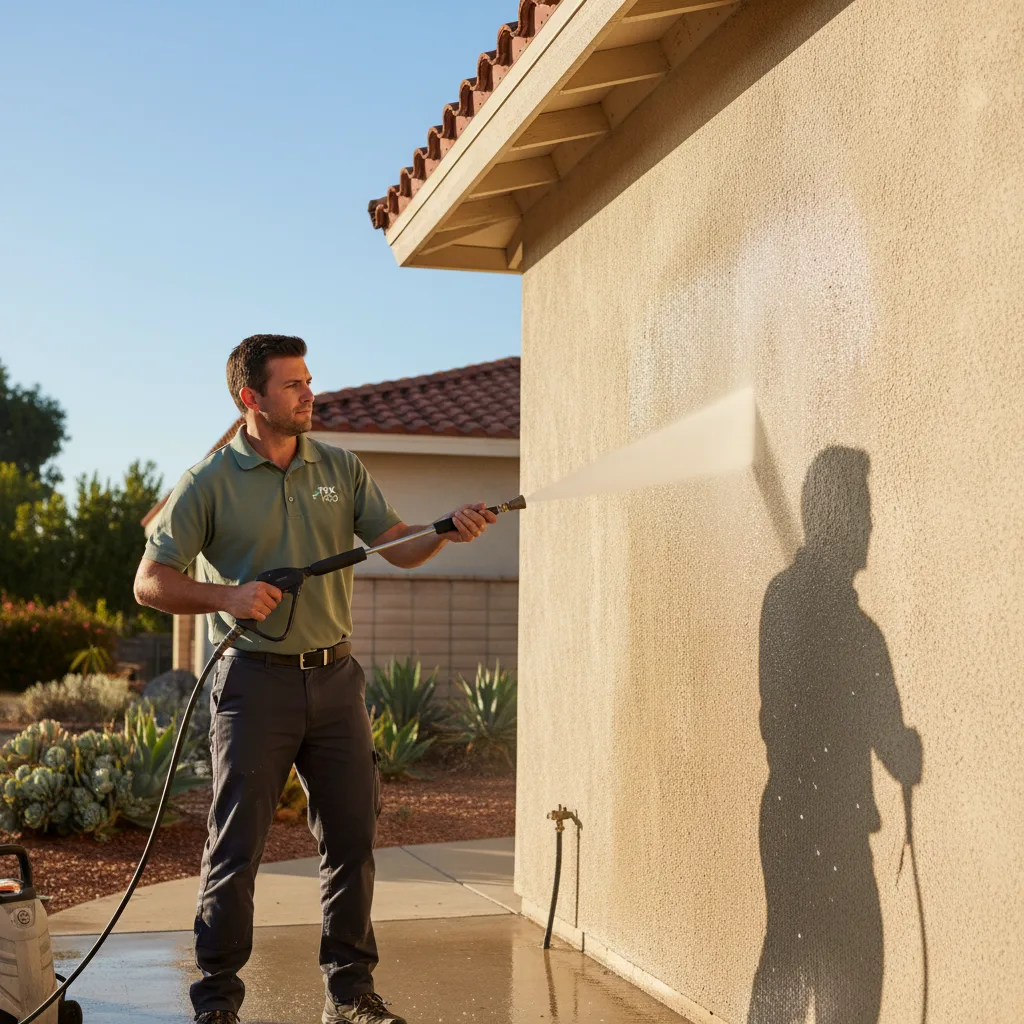
Most stucco patch jobs in San Diego run $75 to $350 for a handyman handling hairline cracks, small holes, and isolated damage up to a few square feet. Larger structural cracks, widespread map cracking, or a full re-stucco on a whole wall push costs to $400–$800 or more and may need a licensed stucco contractor rather than a general handyman.
Stucco covers roughly 80 percent of single-family homes in San Diego County. It handles the climate well. But it does crack, and knowing which cracks matter is what separates a quick patch from a costly repair.
The crack types you’ll see on San Diego stucco
Not every crack is the same problem. The width, pattern, and location tell you what’s actually happening.
Hairline cracks are less than 1/16 inch wide. They’re almost universal on older San Diego homes, especially those built in the 1960s and 70s. Stucco shrinks as it cures, and decades of seismic micro-movement add more. These are cosmetic in most cases. A flexible paintable caulk or elastomeric filler seals them cleanly. A handyman can knock these out quickly, often as part of a broader prep job before repainting.
Map cracking (also called spider cracking or alligator cracking) looks like a web of connected lines across a section of wall. It usually means the scratch coat or brown coat cured too fast, or the stucco system lost flexibility over time. On San Diego homes that face full south or west sun all afternoon, this pattern is common on walls that have never been re-coated. Small isolated patches of map cracking can be filled and textured. If it covers most of an elevation, that wall likely needs re-stucco.
Structural cracks run diagonally from window corners, door frames, or foundation transitions. They’re typically wider than 1/8 inch and may reopen after repair. These follow settlement patterns and shouldn’t just be filled and painted over. A stucco contractor or structural handyman should assess whether the underlying cause is still active before patching.
Holes from removed fixtures are among the most common San Diego calls. Satellite dishes, cameras, and old security hardware leave holes that go straight through the stucco coat. Clean, straightforward repair: bonding agent, patch compound, texture match, paint.
Water intrusion damage shows as soft or hollow-sounding stucco, brown staining, or paint bubbling near window perimeters. The stucco damage is a symptom. The cause is usually failed caulk at the window frame or a missing weep screed. Fix the water source first, or the patch fails again in 18 months.
What stucco repair costs in San Diego in 2026
San Diego handyman labor runs $75–$125 per hour. Most small repairs take one to two hours. Materials add $30–$70.
| Repair type | Typical cost estimate |
|---|---|
| Single hairline crack (caulk + touch-up) | $75–$125 |
| 2–4 cracks, one visit | $125–$200 |
| Satellite dish hole (1–3 inch) | $150–$275 |
| Multiple holes or large patch | $250–$450 |
| Map cracking on one wall section | $350–$600+ |
| Full wall re-stucco (licensed contractor) | $800–$2,500+ |
Final cost depends on access, texture complexity, and whether the full wall needs repainting afterward. San Diego’s sun fades stucco unevenly, so a patched area rarely matches perfectly without painting the full wall. Set that expectation before the job, not after.
What does stucco crack repair cost in San Diego?
A single hairline crack runs $75 to $125, and two to four cracks handled on one visit run $125 to $200. Stucco crack repair is the cheapest work on this page and the most worth doing on time, because a crack that goes through one rain season stops being a caulk job. The rates above are the same ones in the table; what moves them is access, how complex the texture is, and whether the wall needs repainting after.
Crack repair is also where the handyman line sits most clearly. Hairline and moderate cracks are patch-and-texture work. Map cracking across a whole wall section, cracks wider than a pencil, or cracks that step diagonally from a window corner are telling you something structural, and those go to a licensed stucco or general contractor rather than a patch.
Handyman vs. stucco contractor: where the line is
A handyman is the right call for isolated repairs: hairline cracks, fixture holes, small patches up to a few square feet, and water-damaged areas once the source is fixed. One visit, no specialty licensing needed.
A licensed stucco contractor is the right call when cracks keep reopening after repair, damage covers more than 10–15 percent of a wall, or the stucco has failed at the lath level and needs a tear-off. When in doubt, get both a handyman look and a specialty quote before deciding.
How San Diego’s climate stresses stucco
Inland valleys, El Cajon, Santee, Ramona, see 35–40 degree swings between summer afternoons and winter nights. That thermal cycling creates map cracking over time. Coastal neighborhoods like Ocean Beach and Pacific Beach face marine layer moisture instead, which breaks down caulk at window joints faster. Both patterns require attention. A well-maintained stucco home can go 30–50 years without major work. Ignored cracks that let in winter rain water compress that timeline fast. If you’re prepping for a repaint, our exterior paint prep guide for San Diego stucco homes covers the full sequence.
Holes from removed fixtures: texture matching is the real challenge
Outdoor lights, TV mounts, cameras, and satellite dishes all leave holes. The patch is straightforward: bonding agent, stucco mix, cure, paint. Texture matching is where it takes skill. A flat patch in a skip-trowel finish will show through paint. See our TV mounting on stucco guide if you need both a new mount and a repair from the old one.
When to act and when to watch
Hairline cracks less than 1/16 inch with no change over one rainy season can be monitored. Mark the ends with a pencil and check after the next rains. Act right away on: any crack wider than 1/8 inch, any crack at a window corner, soft or hollow-sounding stucco near a window perimeter, and any hole going through the stucco layer. Our San Diego home maintenance checklist includes a stucco inspection in the fall, timed right before the rainy season.
For stucco patch calls across San Diego County, reach Fix Pro San Diego at (858) 400-4611 and we’ll match you with a pro who can take a look.
Frequently asked questions
How much does stucco crack repair cost in San Diego?
Most handyman stucco crack repairs in San Diego run $75 to $350 for one to several hairline or moderate cracks in a single visit. Larger patches, map cracking across a wall section, or repairs that require scaffolding for a two-story wall push costs to $350–$600 or more. Full wall re-stucco by a licensed stucco contractor starts around $800 and goes up from there depending on square footage and finish type.
Can a handyman patch stucco, or do I need a licensed stucco contractor?
A handyman handles isolated patches: hairline cracks, fixture holes, and small damaged areas up to a few square feet. You need a licensed stucco contractor when cracks keep reopening after repair, damage covers a large portion of a wall, or the repair requires a full tear-off. If the damage is under 10–15 percent of a wall and there’s no active structural movement, a handyman is the right call and usually the faster and cheaper one.
Why does stucco crack so much in San Diego?
San Diego stucco cracks from a combination of the original curing shrinkage, decades of seismic micro-movement, and thermal cycling. Inland areas like Santee and El Cajon see 35–40 degree temperature swings between summer afternoons and winter nights, which expands and contracts the stucco repeatedly over years. Coastal areas face marine layer moisture that softens joints. Most hairline cracking on older SD homes is cosmetic and normal, not a sign of structural failure.
How do you match the texture when patching stucco?
Texture matching is the hardest part of stucco repair. Most San Diego homes have one of a few finishes: skip trowel, dash, Santa Barbara smooth, or sand. A handyman with stucco experience can match most common finishes by hand with a pre-mixed patch compound. Color is a separate challenge, since sun fades stucco unevenly over time. A patched area rarely matches perfectly without repainting the full wall. Most homeowners plan to repaint after patching if an invisible result matters.
How do I know if a stucco crack is letting in water?
Watch for brown staining around window frames after rain, paint bubbling near the crack, soft or hollow-sounding stucco when you tap around it, or interior wall staining that lines up with the exterior crack. Any of these moves the repair from “monitor” to “fix now” because water damage to the wall assembly costs far more than a timely patch.
How long does a stucco patch last?
A properly done patch using compatible materials lasts 10–20 years with normal maintenance. The main variables are material compatibility with the existing coat, texture matching so the patch doesn’t flex differently than the surrounding stucco, and whether the underlying cause was addressed. Patches on actively settling walls will reopen no matter what product you use.
Would you rather hand this one to a pro than do it yourself? Call (858) 400-4611.
Request a quote