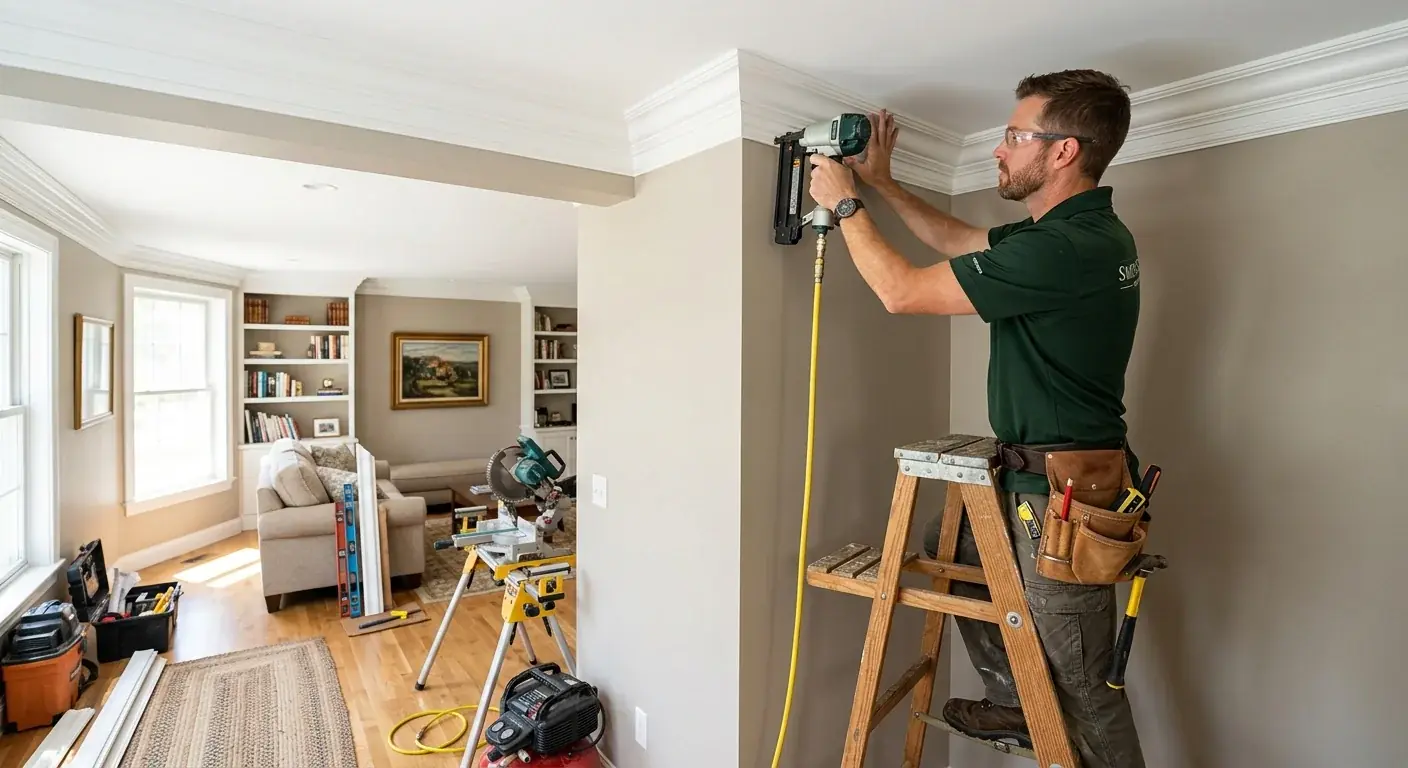
A trim carpenter in San Diego typically charges $8–$18 per linear foot for baseboard or crown molding installed, or $110–$150 per hour for finish carpentry work. For a full room of baseboards, that usually runs $300–$700 depending on room size, corners, and whether old trim needs to come out first. Door and window casing runs $100–$250 per opening. Those ranges cover the bulk of what San Diego homeowners actually call about.
What is a trim carpenter (and what do they do)?
Trim carpentry, sometimes called finish carpentry, is the work done after framing, drywall, and paint are done. The goal is to cover the raw edges where walls meet floors, ceilings, and door frames, and to add architectural detail that makes a room feel finished.
Common trim work in San Diego homes includes:
- Baseboards, the most common call. Covers the gap between drywall and flooring.
- Crown molding, where ceiling meets wall. It adds visual height and is harder to install cleanly than most homeowners expect.
- Door and window casing, the frame trim around every opening.
- Chair rail, horizontal trim at roughly chair-back height, common in dining rooms.
- Wainscoting, paneled lower-wall treatment. Traditional in older craftsman and Spanish-style homes across North Park, Mission Hills, and Kensington.
- Built-in shelving and cabinetry trim, the finish trim that makes a built-in look intentional rather than installed.
- Stair trim, skirt boards, newel posts, handrail details.
A trim carpenter focuses specifically on this finish layer. They’re not framing walls or doing structural work. They’re making the visible parts look clean and intentional.
What trim work costs in San Diego (2026)
| Job | Typical price range |
|---|---|
| Baseboard installation | $8–$14 per linear foot |
| Crown molding installation | $10–$18 per linear foot |
| Door casing (per opening) | $100–$250 |
| Window casing (per opening) | $90–$200 |
| Chair rail | $6–$12 per linear foot |
| Wainscoting | $18–$35 per square foot |
| Built-in trim and shelving | $200–$600+ depending on scope |
| Stair skirt and trim | $300–$800 |
For a full breakdown of baseboard and crown molding costs specifically, see our baseboard installation cost guide and crown molding installation guide.
Labor alone on hourly work runs $110–$150 per hour for dedicated finish carpentry. A general handyman handling simpler trim repairs or installs runs $85–$120 per hour. Most have a one-hour minimum.
What moves the price in San Diego specifically
San Diego homes have a few quirks that affect trim work more than people expect.
Coastal humidity. Near the coast, wood absorbs moisture differently than in drier inland areas. That matters on paint-grade trim because MDF, the most common and affordable material, can swell over time in humid environments closer to the water. A finish carpenter working in Pacific Beach, Ocean Beach, or La Jolla will often recommend a different material or profile than they’d use in El Cajon or Santee. Primed finger-jointed pine holds up better near the coast.
Stucco and older homes. Spanish-style homes built in the 1920s through 1950s, common across Mission Hills, Kensington, and South Park, often have walls that aren’t perfectly plumb or flat. That means more shimming, scribing, and caulk work to get trim to sit flush. A straight-run install quote on a new construction home is faster and cheaper than the same scope in a 1940s craftsman with undulating walls.
Bullnose drywall corners. Many San Diego homes built in the 1980s and 1990s have rounded drywall corners instead of square ones. Installing casing or returns around those takes longer because standard trim profiles don’t sit flush against a bullnose edge. That slows the work and adds to labor cost.
Paint-over-paint on old trim. In a lot of older SD homes, baseboard has been painted over six or eight times. Removing it without tearing the drywall is slow, careful work. If the drywall behind it is damaged, that needs to be addressed before new trim goes in. For significant drywall damage, check what drywall repair adds before budgeting the trim install.
Trim carpenter vs. handyman: which do you need?
This is the question that saves or wastes the most money.
A handyman handles most of the trim work homeowners actually need. Basic baseboard installation, door and window casing, chair rail, simple repairs. The rate is lower and for straight-forward rooms with square walls, the result is the same. If you’re painting the trim anyway, paint-grade work handled by a skilled handyman is more than good enough.
A finish carpentry specialist is worth the higher rate when the work is stain-grade (the trim will be stained, not painted, so every seam and joint shows), when the scope is an entire floor of complex crown molding with inside and outside corners, or when you’re matching existing detailed millwork in a craftsman or colonial home where the profiles are specific. Built-in cabinetry with fitted trim also tends to call for a specialist.
Most San Diego homeowners fall into handyman territory. A full room of painted baseboard, a couple of door casings, some chair rail in the dining room, those don’t need a craftsman charging finish-carpentry rates. Fix Pro San Diego connects you with pros for both through our carpentry and trim service, and we’ll tell you plainly if a job calls for a specialist instead.
Where to save and where not to
Bundle visits. The single best way to reduce cost on trim work is to stack multiple tasks into one visit. Trip fees and setup time get charged once. If you have baseboard going in, two doors to case, and a piece of chair rail, doing them on the same day beats three calls by a meaningful margin.
Don’t skip caulk and paint. A clean trim install that isn’t caulked at the seams and touch-painted still looks unfinished once the room is lit. Budget an extra $1–$2 per linear foot if you want the finish coat included, or plan to do it yourself immediately after. Deferring it means the job reads as half-done until you get back to it.
Spend on material at the right spots. MDF baseboard is fine for paint-grade work in most of the house. For bathrooms and kitchens where moisture is a real factor, solid wood or PVC trim resists warping better. That’s where the material upgrade is worth it; not necessarily everywhere.
Ready to get a quote on trim work? Call us at (858) 400-4611 for handyman and trim carpentry service across San Diego County. For a full picture of what carpentry work runs in San Diego, see our carpenter cost guide for 2026.
Frequently asked questions
What does a trim carpenter do?
A trim carpenter installs the finish-layer woodwork in a home: baseboards, crown molding, door and window casing, chair rail, wainscoting, stair trim, and built-in shelving trim. This is the work done after drywall and paint, covering raw edges and adding architectural detail. It’s distinct from rough carpentry, which involves framing and structural work.
How much does trim carpentry cost in San Diego?
Most trim carpentry in San Diego runs $8–$18 per linear foot for baseboard or crown molding installed, and $100–$250 per door or window opening for casing. Hourly rates for finish carpentry run $110–$150 per hour. A single room of baseboard typically costs $300–$700 depending on room size, number of corners, and whether old trim needs removal.
What’s the difference between a trim carpenter and a finish carpenter?
The terms are used interchangeably in San Diego. Both refer to carpenters who focus on the visible, detail-oriented woodwork installed after the structural and drywall phases are done. Some people use “finish carpenter” more broadly to include cabinetry installation; “trim carpenter” tends to emphasize moldings, casing, and architectural trim specifically.
Can a handyman install trim, or do I need a specialist?
For most painted trim work, a handyman is the right call. Basic baseboard installation, door casing, chair rail, and simple repairs don’t require a finish-carpentry specialist. A specialist earns the higher rate on stain-grade trim, complex crown molding across an entire floor, or work that needs to match intricate existing millwork.
Why does trim work cost more in older San Diego homes?
Older homes often have walls that aren’t perfectly plumb or flat, trim that’s been painted over many times (making removal slow and careful), and drywall conditions that need prep before new trim can sit flush. Spanish-style and craftsman homes across North Park, Kensington, and Mission Hills commonly have these characteristics, and the extra labor shows in the quote.
How long does baseboard or crown molding installation take?
A single room of baseboard (roughly 50–80 linear feet) typically takes two to four hours for a skilled installer, including corners and caulking. Crown molding takes longer because of the compound angles involved. Expect four to six hours for a single standard-size room. Larger homes or rooms with complex ceiling profiles take more time.
Would you rather hand this one to a pro than do it yourself? Call (858) 400-4611.
Request a quote