Searching for an Alpine handyman often starts with several unrelated repairs. The clearest request groups those tasks by location, records access details, and shows each problem in photos. That preparation helps a local pro understand the full list before discussing the job.
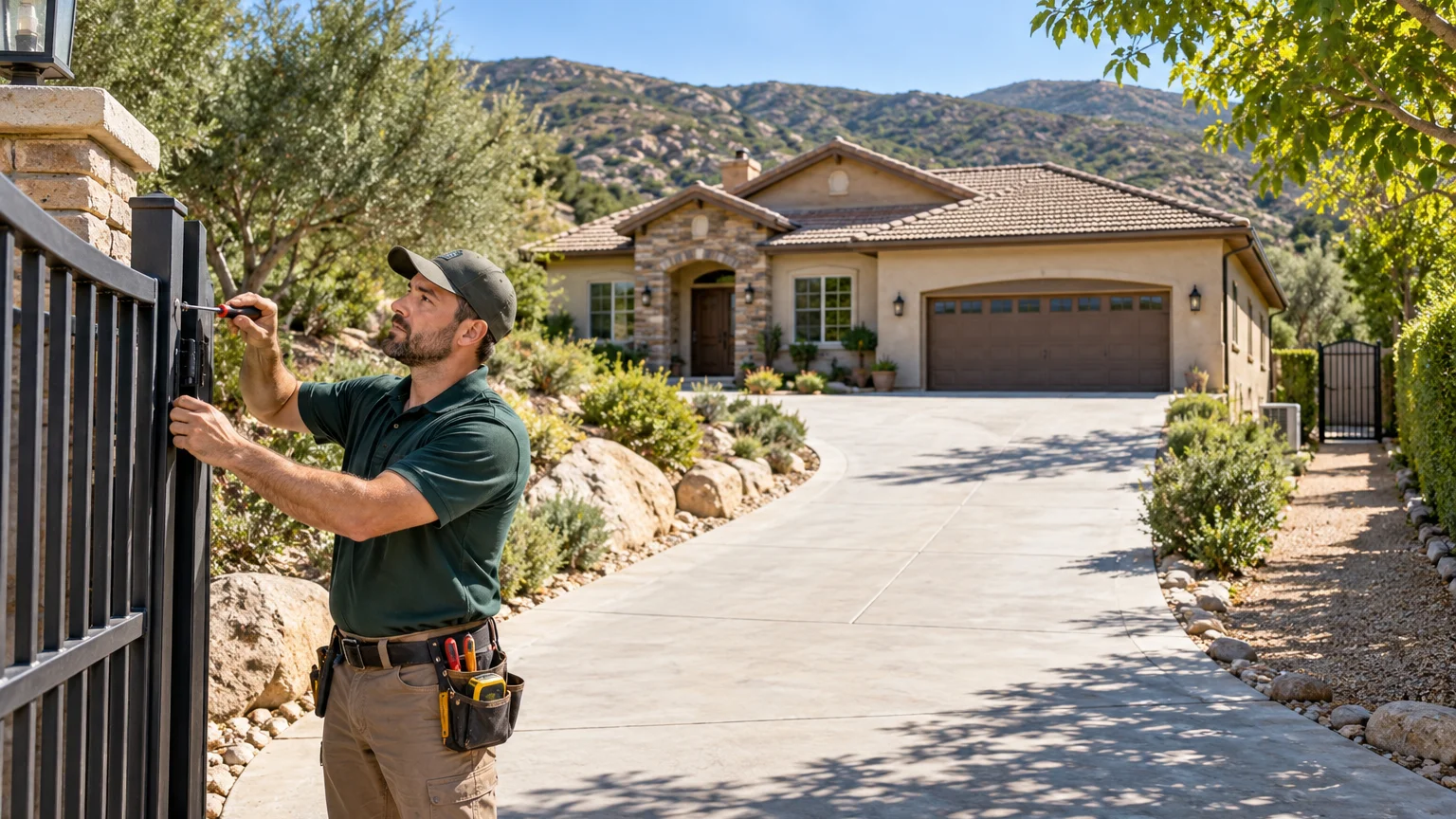
Group repairs by house, yard, and outbuilding
Start with three headings: house, yard, and outbuilding. Place every repair beneath the location where the pro will work. This simple division keeps a loose punch list from becoming confusing.
The house group can include sticking doors, loose trim, drywall damage, cabinet hardware, and separated caulk. Record the room beside every item. “Loose hinge” lacks context. “Loose upper hinge on the hallway closet door” gives the pro a usable starting point.
Use the yard group for gates, fence sections, exterior fixtures, and other outdoor items. Add a landmark when the location isn’t obvious. The side near the driveway is clearer than “back fence.” If plants, stored materials, or furniture block the area, show that in a wider photo.
Treat a detached shed, workshop, or other outbuilding as its own work area. Don’t fold those repairs into the house list. Note whether it has a separate entrance and whether the route crosses dirt, gravel, steps, or a narrow gate. These details describe access. They don’t diagnose the repair.
This structure also helps reveal which tasks may belong together. Several loose trim pieces could fit one carpentry discussion. A damaged gate and an unrelated wall patch may need different preparation. The general home repairs service covers the matching process for varied punch lists.
Keep uncertain items on the list. Label them “needs review” instead of naming a cause. A stain isn’t proof of an active leak. Soft-looking wood isn’t a confirmed diagnosis from a photo. The pro should inspect the condition before defining the work.
Record sun-facing wood, trim, and hardware separately
Alpine’s inland East County heat makes sun exposure worth documenting. It’s a reason to photograph exposed wood, trim, and hardware, not a diagnosis. Photos can show what you see without claiming why it happened.
Begin with the side receiving direct sun. Record each visible condition separately. Useful descriptions include peeling finish, an open joint, a loose fastener, a gate that drags, or trim that feels soft. Avoid labels such as rot, structural failure, or heat damage unless a qualified pro confirms them.
Take one wide photo that places the item on the property. Follow it with a close photo showing the surface, joint, or hardware. Include an ordinary object for visual scale when helpful, but don’t cover the damaged area. Photograph the same item from another angle if glare hides the surface.
Keep wood, trim, and hardware as separate list entries. A gate can have a worn board, loose hinge, and misaligned latch. Combining them as “fix gate” leaves too much unresolved. Separate entries let the pro assess whether the items share one repair scope.
If wood has discoloration, softness, cracks, or missing material, record exactly that. Our guide to dry rot repair in San Diego explains why visible wood conditions need a closer inspection before choosing a repair approach.
Don’t assume every exterior problem comes from sun exposure. The photo set should document direction and appearance only. Note whether the surface faces morning or afternoon sun if you know. If you don’t know, mark the side of the property instead. “Driveway side” is more useful than a guess.
Note driveway length, gates, and parking
Access belongs in the repair request because it changes how a pro approaches the work area. In Alpine, Interstate 8 may shape the drive to the property. Mention it only when directions, an exit, or a turn from the highway would otherwise be unclear.
Once the pro reaches the property, the driveway and gates matter more. Say whether the work area is visible from the parking spot. If it isn’t, describe the route. Include turns, steps, slopes, loose surfaces, and narrow passages in the photos.
Don’t estimate driveway measurements unless you’ve measured them. A wide photo from the entrance and another from the parking area can provide better context. If a gate limits access, photograph it open and closed. Show the latch, the ground below it, and the path beyond it.
Write down any access decision the homeowner controls. That might include where a pro may park, which gate to use, and whether pets need separation before entry. Don’t promise street availability or assume a vehicle can clear a gate. Let the images and measurements answer those questions.
For work near a shed or rear fence, trace the complete route. A clear path at the final work area doesn’t show what comes before it. Photograph the narrowest point between parking and the repair. Mention whether materials must pass through the house.
Nearby planning examples can also help. The Lakeside handyman guide shows another East County approach to organizing repair requests. Use it for list structure, then keep your Alpine directions tied to the actual property. Specific access notes are more useful than broad statements about the area.
Keep small repairs separate from specialty work
A household list can contain simple adjustments beside work needing a different trade or permit review. Don’t assume one Alpine handyman should handle every line. Separate routine repairs from electrical, plumbing, mechanical, structural, or permit-related questions.
California’s minor-work exemption applies only to casual, minor, or inconsequential work below $1,000, including labor, materials, and all other items. It also has no-permit and other conditions. Price alone doesn’t determine whether someone may perform the work. Projects requiring a permit, using employee labor, or costing $1,000 or more require a licensed contractor, according to CSLB guidance.
Don’t split a larger project into smaller list items to place each piece below the threshold. The exemption doesn’t apply when work forms part of a larger operation or is divided to evade licensing requirements. The right contractor classification also depends on the actual scope.
Create a “specialty review” group for anything that may involve those issues. Describe the symptom without prescribing the solution. “Switch plate feels warm” records an observation. It doesn’t tell a handyman to replace wiring. ESFI recommends a qualified licensed electrician for home electrical work.
Before hiring, use the CSLB license check to verify the professional’s current license status. Match the license information to the person and proposed scope. Ask the pro whether a permit or specialty classification applies before work begins.
Fix Pro San Diego is a referral service. We match homeowners with licensed, independent local handyman professionals. The customer contracts with and pays the professional directly. The matched pro reviews the repair list and determines which items fit that pro’s scope.
Build one photo set before requesting a match
Build one photo set after organizing the written list. Use the same order in both places: house, yard, outbuilding, access, then specialty-review items. Matching the sequence makes the request easier to follow.
Give every repair a short label. “H1 hallway closet hinge” works better than a folder full of unnamed images. Use that label on the wide photo, close photo, and written entry. If several images show one item, keep them together.
Start each location with an orientation photo. Then photograph each condition closely. Finish with the route from parking to the work area when access isn’t obvious. The goal isn’t polished photography. It’s a set that answers where the item is, what’s visible, and how someone reaches it.
Include measurements only when you took them. Identify what each measurement covers, such as the gate opening or trim length. Don’t estimate from memory. If you can’t reach an item safely, take a wider ground-level photo and say that close access wasn’t available.
Remove duplicate images and blurry shots before sending the set. Keep one clear view of each important angle. Our guide to photographing home repairs before quotes provides a practical sequence for building that record.
Add a short note for anything a photo can’t show. A door may bind only when closing. A hinge may move when the gate swings. Describe the action and location without declaring a cause.
The finished request should let a matching service distinguish a grouped repair list from a specialty project. It should also show parking, gates, and the path to each work area. That context helps Fix Pro San Diego match the homeowner with an independent local pro suited to the stated scope.
When to call us
Hand the list to a pro when repairs span several areas, access needs explanation, or the correct trade isn’t clear. Fix Pro San Diego can match you with a licensed, independent local professional who reviews the scope directly.
Call us at (858) 400-4611 and we’ll match you with a local pro who quotes the job before starting.
Would you rather hand this one to a pro than do it yourself? Call (858) 400-4611.
Request a quote