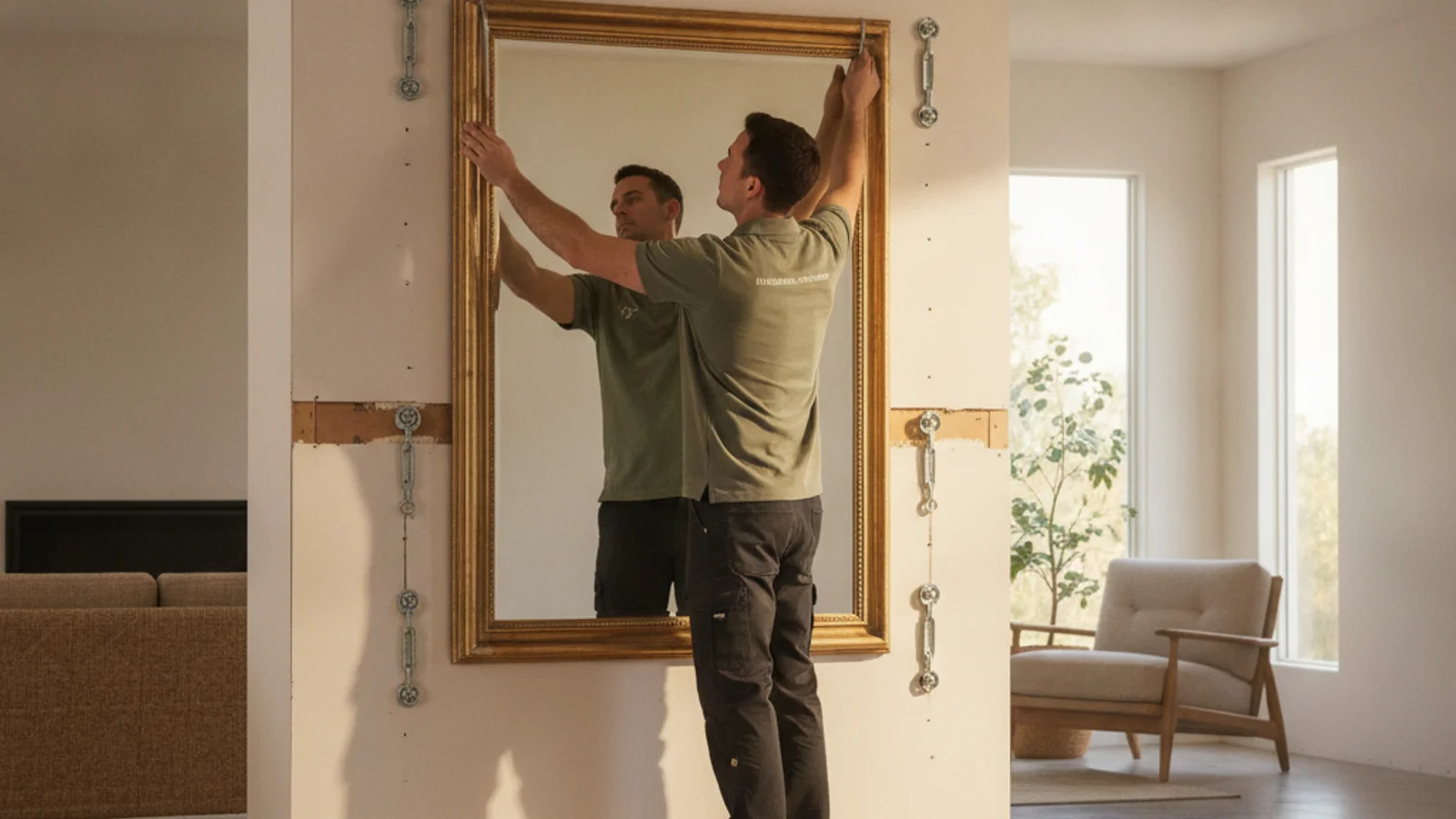
Picture and mirror hanging in San Diego typically costs $75 to $200, depending on the size of the piece and what’s behind your wall. A single small frame on a standard drywall wall sits at the low end. A heavy mirror, a large art piece, or a full gallery wall on stucco, plaster, or lath construction sits toward the higher end. The wall type matters more here than most homeowners expect, and it’s the main reason two similar-looking jobs can price out differently.
Why size and weight change the approach
Not every hanging job uses the same hardware, and that’s the biggest cost driver after wall type. A lightweight frame under a few pounds can often go up on a simple picture hook driven into drywall, which takes just a few minutes. Anything heavier, especially mirrors, which are dense and fragile at the same time, needs proper anchors rated for the actual weight, not just a nail and a hope.
A large framed mirror can weigh 20, 30, or more pounds depending on the frame material and glass thickness. Hanging that safely means locating a stud, or using a heavy-duty drywall anchor rated for the load if a stud isn’t available in the right spot. Get this wrong, and the risk isn’t just a fallen picture. A heavy mirror coming off a wall is a real safety hazard, especially in a home with kids or pets nearby.
Gallery walls take more than multiplying one hanging job
A gallery wall, meaning a cluster of multiple frames arranged together, sounds like it should just be several small hanging jobs stacked up. In practice, the layout planning takes as much time as the hanging itself.
Getting a gallery wall to look intentional rather than random means measuring spacing between frames, keeping a level sightline across pieces of different sizes, and often working from a template or a taped-out layout on the wall before a single nail goes in. This planning step is where a lot of the labor time on a gallery wall project actually goes, which is why it costs more than the sum of hanging each piece individually somewhere else on the wall.
Why stucco and plaster walls need different anchors
San Diego’s building stock leans heavily on stucco exteriors, and a meaningful share of older homes, particularly those built before the 1970s, have plaster and lath interior walls rather than modern drywall. Both surfaces change how a picture or mirror needs to be anchored.
Drywall takes standard picture hooks for light items and drywall anchors for heavier ones, and it’s forgiving if you need to adjust a hole slightly. Plaster is a much harder, more brittle surface. Drilling into it without the right bit or technique risks cracking a chunk of plaster around the hole, which then needs a repair before the piece can even go up. Stucco, when it shows up on an interior accent wall or a converted garage or sunroom, needs masonry anchors entirely, since standard drywall hardware won’t hold in it at all.
For homes with plaster or lath walls, locating a stud accurately is also harder, since standard stud finders can give false readings through the denser plaster layer. A proper hanging job on these walls starts with confirming stud location by a more reliable method before committing to a hole.
What a proper hanging job involves
- Confirming the weight of the piece and the wall type before choosing hardware.
- Locating studs where possible, or selecting the correct heavy-duty anchor rated for the piece’s weight if a stud isn’t available in the right spot.
- For gallery walls, measuring and laying out the full arrangement before any hanging starts.
- Drilling with the appropriate bit for the wall material, whether drywall, plaster, or stucco.
- Leveling each piece precisely, both individually and relative to others in a gallery arrangement.
- A final check that the piece is secure under a reasonable amount of pressure, not just resting on the hook.
This kind of work overlaps closely with our general repairs service, especially when a wall needs a small patch or touch-up after locating the right anchor point.
When picture hanging overlaps with TV mounting
If you’re hanging heavy items and also considering mounting a television, the two jobs share a lot of the same skill set. Both involve finding secure anchor points, working around stud spacing, and choosing hardware rated for real weight rather than a decorative hook. If you’re planning both projects, it’s often worth bundling them into one visit. Our guide to TV mounting costs covers the anchoring side of that job in more detail, including how stud location and wall type factor into TV mount pricing the same way they do for a heavy mirror.
DIY vs. calling a pro
A single lightweight frame on a standard drywall wall is a fine DIY project for most homeowners with a hammer and a level. The stakes are low if the hole ends up slightly off, since patching a small nail hole is simple.
Heavy mirrors, large art pieces, and gallery walls raise both the difficulty and the consequences of getting it wrong. A heavy piece falling off a poorly anchored wall isn’t just an inconvenience, it’s a real hazard. Stucco and plaster walls add another layer of difficulty, since a cracked patch of plaster or a botched masonry hole is harder to fix cleanly than a drywall mistake. If your piece is heavy, your wall isn’t standard drywall, or you’re planning a gallery arrangement, it’s worth having someone experienced handle the anchoring.
Frequently asked questions
How much does it cost to hang a heavy mirror?
Depending on the mirror’s size and weight and your wall type, hanging a heavy mirror typically runs toward the $150 to $200 end of the $75 to $200 range, since it requires locating a stud or using a properly rated heavy-duty anchor.
Why does a gallery wall cost more than hanging one picture?
A gallery wall involves layout planning, spacing, and keeping a level sightline across multiple frames, not just repeating the same hanging step several times. That planning time is what adds to the cost.
Can I hang a picture on a stucco wall myself?
It’s possible with the right masonry anchors and drill bit, but stucco is unforgiving if you drill wrong, since a cracked area can be hard to patch cleanly. For interior stucco accent walls, it’s often worth having a pro handle it.
Does my wall type affect whether a stud finder will work?
Yes. Standard stud finders work reliably on drywall but can give false readings through plaster or stucco due to the material’s density. Confirming stud location on these walls sometimes needs a more careful or manual method.
Ready to get your art, mirrors, or gallery wall hung securely and level? Call Fix Pro San Diego at (858) 400-4611 and we’ll bring the right anchors for your walls.
Want a flat-rate quote for this instead of doing it yourself? Call (858) 400-4611.
Request a quote