Most wall cracks in San Diego homes are cosmetic, and wall crack repair costs $85 to $500 for a handyman to patch one properly. A hairline drywall crack runs $85 to $200. A wider settling crack that needs tape, mud, texture, and paint runs $200 to $500. Stucco cracks on an exterior wall cost $150 to $600, since they need cleaning, filling, and sealing against the weather. A crack that points to a foundation problem is a different story, and it needs a structural look before anyone patches it.
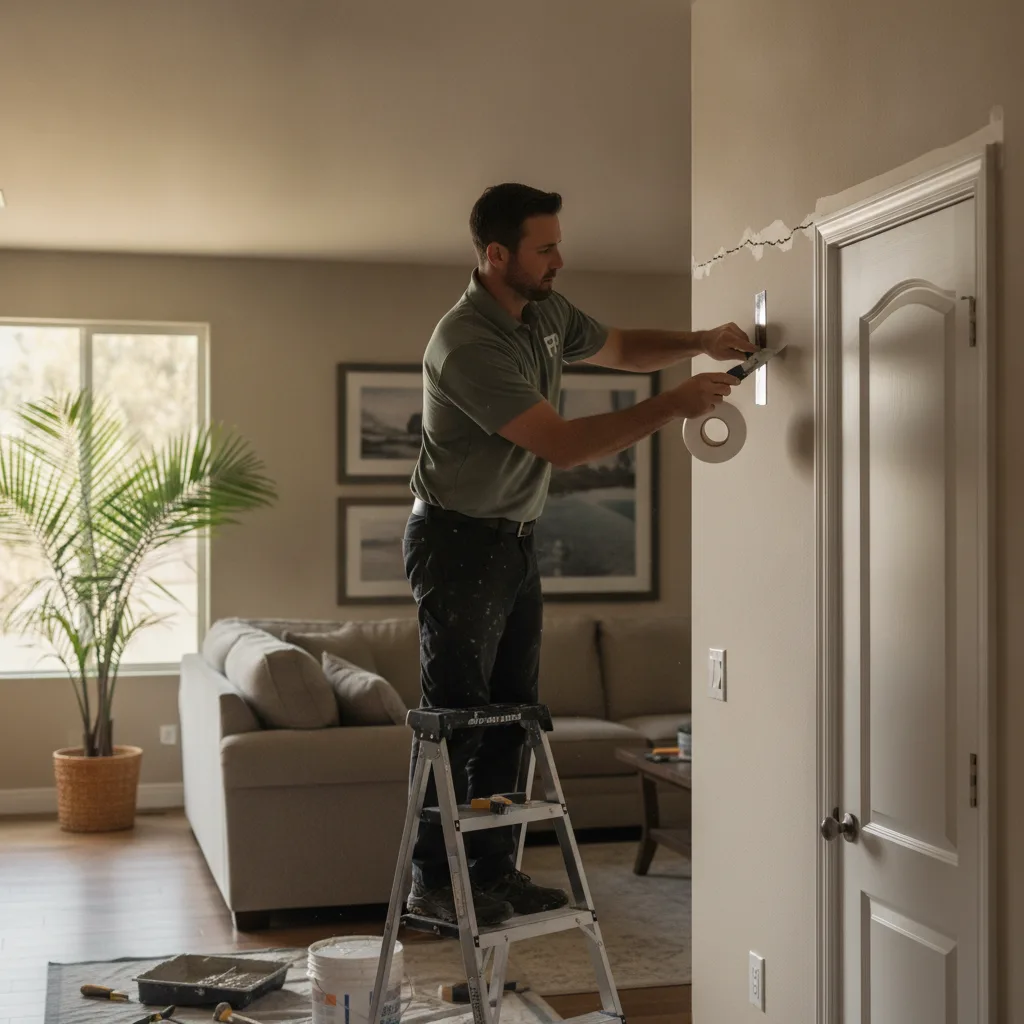
Cracks worry homeowners more than almost any other repair, and it’s easy to see why. A line running up your living room wall could be nothing, or it could be the first sign of something bigger. Below is how to tell the difference, what each type costs to fix, and why San Diego homes crack in the first place.
How much does wall crack repair cost in San Diego?
For most homes, wall crack repair in San Diego costs $85 to $500 in labor, depending on the crack’s size and the wall material. A short hairline crack is a quick patch. A long settling crack that keeps coming back needs the joint taped and re-mudded, which takes longer and costs more. Exterior stucco cracks cost more again, because they have to be sealed so coastal moisture can’t get behind the wall.
Here’s how the common San Diego jobs break down:
| Crack type | What it takes | Labor cost |
|---|---|---|
| Hairline drywall crack | Fill, sand, spot-paint | $85 to $200 |
| Settling or recurring drywall crack | Tape the joint, mud, texture, paint | $200 to $500 |
| Stucco crack (exterior wall) | Rout, fill, seal, color-match | $150 to $600 |
| Multiple or long cracks across a room | Full re-tape and refinish | $500 to $1,200 |
| Cracks tied to foundation movement | Structural assessment first | Priced after inspection |
At Fix Pro San Diego, we quote the labor up front, so you know the number before any work starts. Most handymen in the network charge $85 to $120 an hour, and a single cosmetic crack is often a one-hour job.
Is the crack cosmetic or structural?
Most wall cracks are cosmetic, but a few signs mean you should stop and get a professional look. The width and shape of the crack tell you most of what you need to know.
Cosmetic cracks are usually thin, under about an eighth of an inch, and they run straight up, straight across, or out from a corner of a door or window. Those corners flex the most as a house moves with the seasons, so they crack first. A hairline crack like that is a patch, not a warning.
Watch for these signs that a crack is more than cosmetic:
- The crack is wider than a quarter inch or you can slide a coin into it.
- It runs at a 45-degree angle, especially in a stair-step pattern through stucco or block.
- One side of the crack sits higher than the other, so the wall is no longer flush.
- Doors or windows nearby stick or won’t latch the way they used to.
- The same crack keeps returning within weeks of every patch.
If you see any of those, the fix isn’t spackle. It’s finding out why the wall is moving, which can mean a foundation or drainage issue. Our general handyman repairs team can take a first look and tell you honestly whether it’s a patch or a job for a structural engineer.
Why do walls crack in San Diego homes?
San Diego walls crack for a handful of local reasons, and most of them come down to a house moving a little as the ground and the weather change. It’s normal, and it’s rarely an emergency.
The biggest driver is soil. Much of the county sits on clay-heavy soil that swells when it’s wet and shrinks when it dries. That seasonal push and pull moves foundations a fraction of an inch, and drywall shows it first at door and window corners. Our long dry summers and short wet winters make that swing sharper than it is in steadier climates.
Two other things add to it. New and remodeled homes settle for a year or two after the work, so fresh cracks in a newer house are usually just settling. And near the coast, the marine layer keeps humidity high, so wood framing takes on moisture and releases it, which flexes the drywall attached to it. None of that is a defect. It’s a house living in a San Diego climate.
How do you fix a drywall crack so it doesn’t come back?
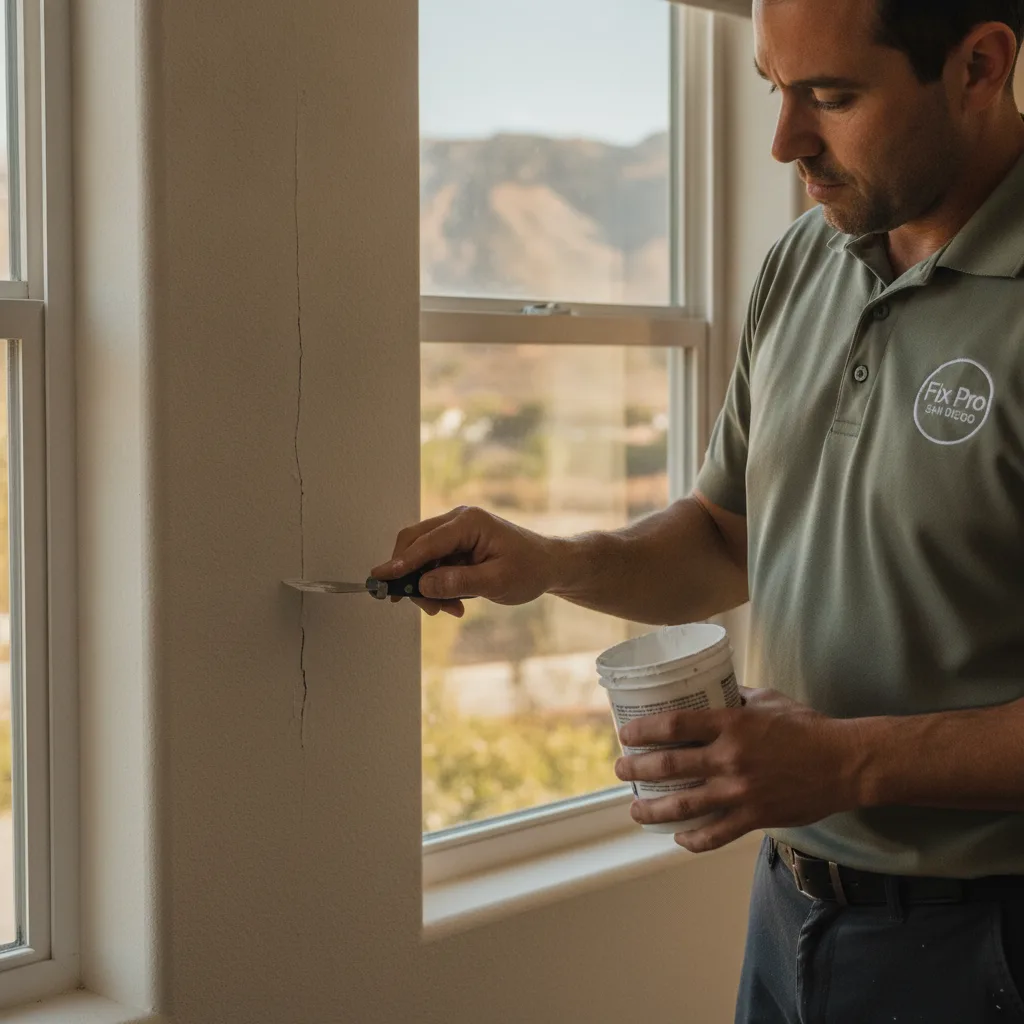
The trick to a crack that stays fixed is tape, not just filler. A crack sits over a seam or a stress point that’s still moving, so filling it with spackle alone leaves a rigid patch that splits again at the next seasonal shift.
A lasting repair cuts out the old, loose material, bridges the crack with mesh or paper joint tape, then covers the tape with two or three thin coats of joint compound. Each coat gets sanded flush before the next. The last step matches the wall’s texture so the patch disappears, which is its own skill on a knockdown or orange-peel finish. Our drywall repair crew handles the tape-and-mud work, and our drywall texture matching guide shows why blending the finish is what makes a patch invisible.
If a crack keeps returning in the same spot after a proper repair, the wall is telling you it’s still moving. That’s the point to look past the drywall at what’s underneath. For a fuller map of interior wall problems, our guide to types of drywall damage breaks down what each pattern means.
How are stucco cracks on an exterior wall repaired?
Stucco cracks are fixed from the outside in, and they have to be sealed, not just filled. An exterior crack that stays open lets rain and marine moisture track into the wall, which leads to dry rot and staining behind the stucco.
The repair widens the crack slightly so the filler has something to grip, cleans it out, then packs it with a flexible, paintable sealant or a patching stucco that moves with the wall. A rigid filler in a flexing stucco wall just cracks again. The last step matches the color and texture so the patch blends with the surrounding coat. Our stucco repair guide walks through how the exterior patch should be layered, and our carpentry crew checks the framing behind a bigger crack when moisture may have already gotten in.
When should you call a professional instead of doing it yourself?
A single hairline crack is a fair do-it-yourself job if you’re comfortable sanding and painting. Anything beyond that is usually worth a professional, because the finish is where a patch succeeds or fails.
Call a pro when the crack keeps coming back, when it’s on a textured or high wall you can’t reach safely, when it’s in stucco that needs color-matching, or when you see any of the structural warning signs above. A handyman fixes a recurring crack the right way the first time, which costs less than patching the same spot three times. If you’d rather compare the wider price picture first, our drywall repair cost guide lays out what patching runs across San Diego.
Frequently asked questions
How much does it cost to fix a crack in a wall in San Diego?
Wall crack repair in San Diego costs $85 to $200 for a hairline drywall crack, and $200 to $500 for a wider settling crack that needs tape, mud, texture, and paint. Exterior stucco cracks run $150 to $600 because they have to be sealed against moisture. Most handymen charge $85 to $120 an hour.
Are wall cracks a sign of foundation problems?
Usually not. Most wall cracks are cosmetic and come from normal seasonal movement in San Diego’s clay soil. Worry only when a crack is wider than a quarter inch, runs at a 45-degree or stair-step angle, leaves one side of the wall higher than the other, or comes with sticking doors and windows. Those signs are worth a structural look.
Why do my walls keep cracking in the same spot?
A crack that returns in the same place means the wall is still moving there, and filler alone can’t hold it. A lasting repair bridges the crack with joint tape before the compound goes on. If it still comes back after a proper tape-and-mud repair, the movement is coming from the framing or foundation, not the drywall.
Can a handyman fix wall cracks?
Yes. Patching drywall and stucco cracks is standard handyman work, from cutting out the loose material to taping, mudding, texturing, and painting. The one time to bring in a specialist is when a crack points to foundation movement, which needs a structural engineer to assess before anyone patches the wall.
What is the difference between a stucco crack and a drywall crack?
A drywall crack is on an interior wall and is fixed with tape and joint compound. A stucco crack is on an exterior wall and has to be filled with a flexible sealant, then sealed and color-matched so coastal rain can’t get behind it. Stucco cracks cost more because the sealing and matching take extra steps.
How wide does a crack have to be before it’s serious?
A crack under about an eighth of an inch that runs straight or out from a door or window corner is almost always cosmetic. A crack wider than a quarter inch, or one you can slide a coin into, is worth a professional look, especially if it runs diagonally or the two sides no longer sit flush.
Have a crack you’re not sure about? Call Fix Pro San Diego at (858) 400-4611 for a straight answer and an up-front quote on wall crack repair anywhere in San Diego County. Start with our general handyman repairs page, browse handyman services across San Diego, including handyman work in Poway, or read our stucco repair guide if the crack is on an exterior wall.
Want a flat-rate quote for this instead of doing it yourself? Call (858) 400-4611.
Request a quote