Window caulking repair in San Diego costs $85 to $200 per window for a handyman to strip out the old bead and recaulk it, and $400 to $1,200 to redo every window on a typical single-story home. Materials are cheap, a tube of exterior sealant runs $5 to $15. What you’re actually paying for is labor, and handymen in the network bill $85 to $120 an hour for this kind of detail work.
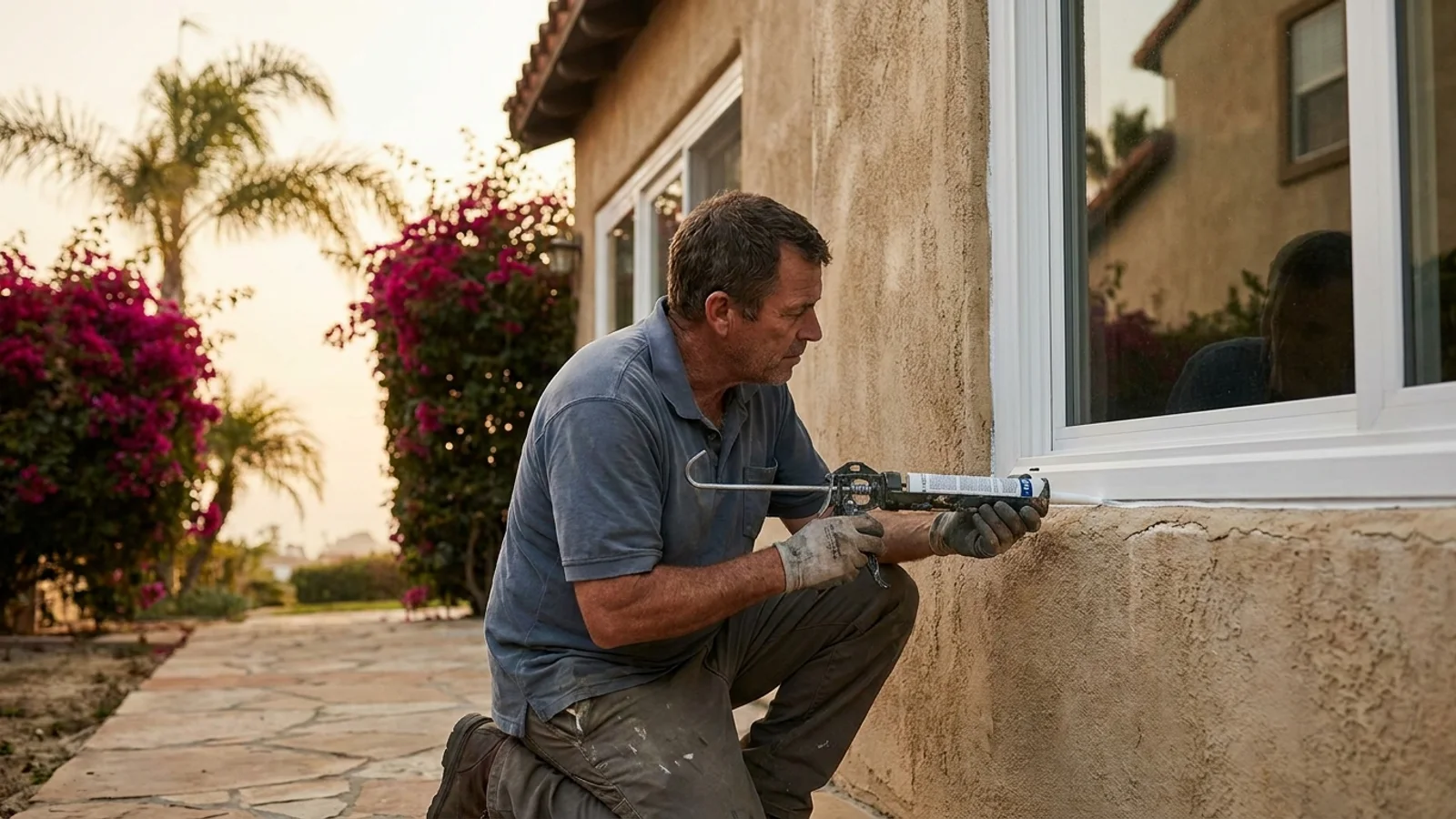
Caulking looks like a five-minute job until you’re the one on a ladder trying to get a clean, straight bead into a gap that’s three different widths. Here’s what it actually costs, why San Diego windows fail faster than you’d expect, and how to tell when it’s a caulk problem versus something bigger.
How much does window caulking repair cost in San Diego?
A single window recaulk costs $85 to $200, and the price moves with access, how much old caulk has to come out, and how wide the gap is. Ground-floor windows with a straightforward stucco-to-frame joint sit at the low end. Wide gaps, double beads, or a window that’s been caulked over three times before will land closer to $200.
| Job | Typical cost |
|---|---|
| Single window recaulk | $85-$200 |
| Whole single-story house (all windows) | $400-$1,200 |
| Two-story home with ladder work | $600-$1,800 |
| Stucco-to-frame joint resealing (add-on) | $25-$60 per window |
| DIY caulk tube | $5-$15 |
A whole single-story house runs $400 to $1,200 depending on window count, and that price assumes a normal recaulk, not a full re-flash of failed weatherproofing. Two-story homes push the range up to $600 to $1,800 because ladder setup and safety add time to every window, not just the ones upstairs. If the stucco-to-frame joint has separated from the wall (a different problem than the caulk bead itself), that’s an add-on, not part of the base recaulk price.
Why San Diego windows need recaulking sooner than you’d think
San Diego’s coastal air breaks down caulk faster than a drier inland climate would. Salt in the air and constant UV exposure dry out acrylic caulk and make it brittle within a few years, especially on west- and south-facing windows. The June marine layer keeps joints damp for weeks at a time, which is exactly the environment mold and caulk separation both like. Winter rains find every gap that opened up over the dry months, and Santa Ana winds do the opposite job, drying and shrinking old beads until they crack.
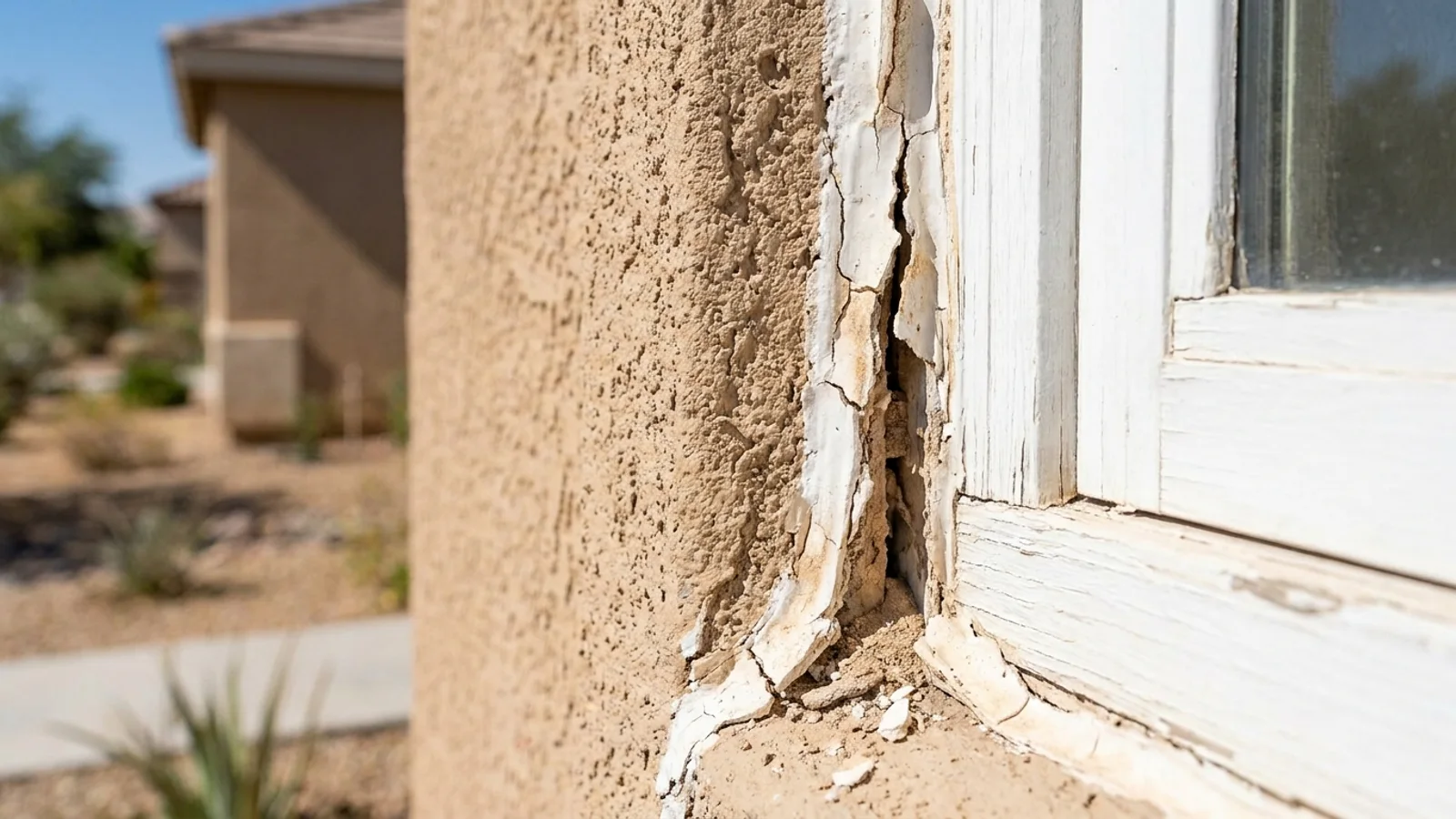
Stucco homes have it worse. The joint where stucco meets the window frame is the number-one leak path on a San Diego house, because stucco and window frames expand and contract at different rates. That constant flexing is what breaks a caulk seal years before the caulk itself would otherwise fail.
Signs your window caulk has failed
The most obvious sign is a bead that’s visibly cracked, peeling, or pulling away from the frame. Run a finger along the joint. If it’s hard, chalky, or has gaps you can see daylight through, it’s done. Drafts around a closed window are another tell, especially if you can feel air movement on a windy day.
Water staining on the drywall below the sill means water has already gotten past the seal, and that’s not a wait-and-see situation. Water-stained drywall below a leaking sill needs to be addressed alongside the caulk fix, or you’re just resealing over a problem that’s already inside the wall. A jump in your AC bill with no other explanation can also trace back to failed caulk letting conditioned air leak out around the frame.
One honest distinction worth making here: a foggy, cloudy double-pane window is a failed glass seal, not a caulking problem. Caulk seals the frame to the wall. It does nothing for moisture trapped between two panes of glass. If that’s what you’re seeing, the fix is window repair or replacement, not a new bead of caulk.
DIY vs hiring a recaulking service
DIY makes sense for one accessible, ground-floor window where you’re comfortable cutting a clean line and the old caulk isn’t too far gone. A tube of sealant and a caulk gun cost less than a service call, and it’s a reasonable weekend task for one window.
Where a professional caulking and sealing service earns its cost is everything past that single easy window. Stripping old silicone completely matters, because new caulk won’t bond to old silicone residue and the fix fails within months. Wide stucco gaps need backer rod set behind the bead before caulking, something most DIY jobs skip. Color-matched, paintable exterior sealant looks right against your trim instead of showing a bright white stripe. And second-story windows mean ladder work most homeowners shouldn’t be doing solo.
What a handyman does during a window recaulking visit
The process starts with cutting out the old bead completely, usually with a utility knife or a caulk-removal tool, not just scraping the surface. Next comes cleaning and drying the joint fully, since caulk applied over dust or moisture won’t hold. The handyman tapes off the edges for a clean line, then sets backer rod into any gap wider than about a quarter inch so the new caulk has something to bond to on both sides instead of bridging an open cavity.
For exterior work, that means a polyurethane or high-grade silicone sealant rated for sun and moisture, not the interior-grade tube from under the kitchen sink. The bead gets tooled smooth with a finger or a tool before it skins over, then it needs cure time, typically 24 to 48 hours before it’s fully weather-ready, before the tape comes off.
Frequently asked questions
How often should windows be recaulked in San Diego?
Plan on every 5 to 10 years for most homes, and closer to 5 years for anything within a mile of the coast. Salt air and constant UV cut the lifespan of exterior caulk significantly compared to inland neighborhoods, so a Pacific Beach or La Jolla window won’t hold up as long as one in Poway or Santee.
Can you caulk over old caulk?
No. New caulk doesn’t bond well to old caulk residue, especially old silicone, and the fresh bead will separate again within months. The old bead has to be fully removed and the joint cleaned down to bare material before a new bead goes on.
What’s the difference between interior and exterior window caulking?
Interior caulking is mostly cosmetic and seals small gaps around the trim where dust and minor drafts get in. Exterior caulking is structural weatherproofing that keeps water and air out of the wall cavity, so it uses a different sealant rated for sun and moisture exposure and needs to be done correctly the first time.
How long before it can rain after caulking?
Give fresh exterior caulk at least 24 hours of dry weather before rain hits it, and 48 hours is safer if the joint is wide or the caulk is a slower-curing polyurethane. Rain on uncured caulk can wash it out or keep it from bonding properly to the frame.
Does recaulking lower energy bills?
It can, if the old caulk had failed enough to let conditioned air leak around the window frame. Sealing that gap stops the leak, but recaulking a window that was never the source of the draft won’t move your bill much. It’s a fix for a specific leak, not a blanket energy upgrade.
At Fix Pro San Diego, we connect you with handymen who cover all of San Diego County, from handyman service in Carlsbad to inland neighborhoods, and every quote is upfront on labor before anyone touches your windows. Related reading: our caulking guide for San Diego homes, bathroom caulking replacement, and weatherstripping for doors and windows. If a window frame needs more than caulk, our door repair network handles frame and threshold issues too.
Call (858) 400-4611 or request a quote online, and we’ll connect you with our handyman service across San Diego County for a real number on your windows.
Want a flat-rate quote for this instead of doing it yourself? Call (858) 400-4611.
Request a quote