Bathroom exhaust fan installation in San Diego usually costs $120 to $250 in labor for a straight swap, where a handyman replaces an old fan with a new one using the existing duct and wiring. A brand-new install that needs fresh wiring and ducting runs $250 to $600 or more. The fan unit itself adds $20 to $150, depending on the model you pick.
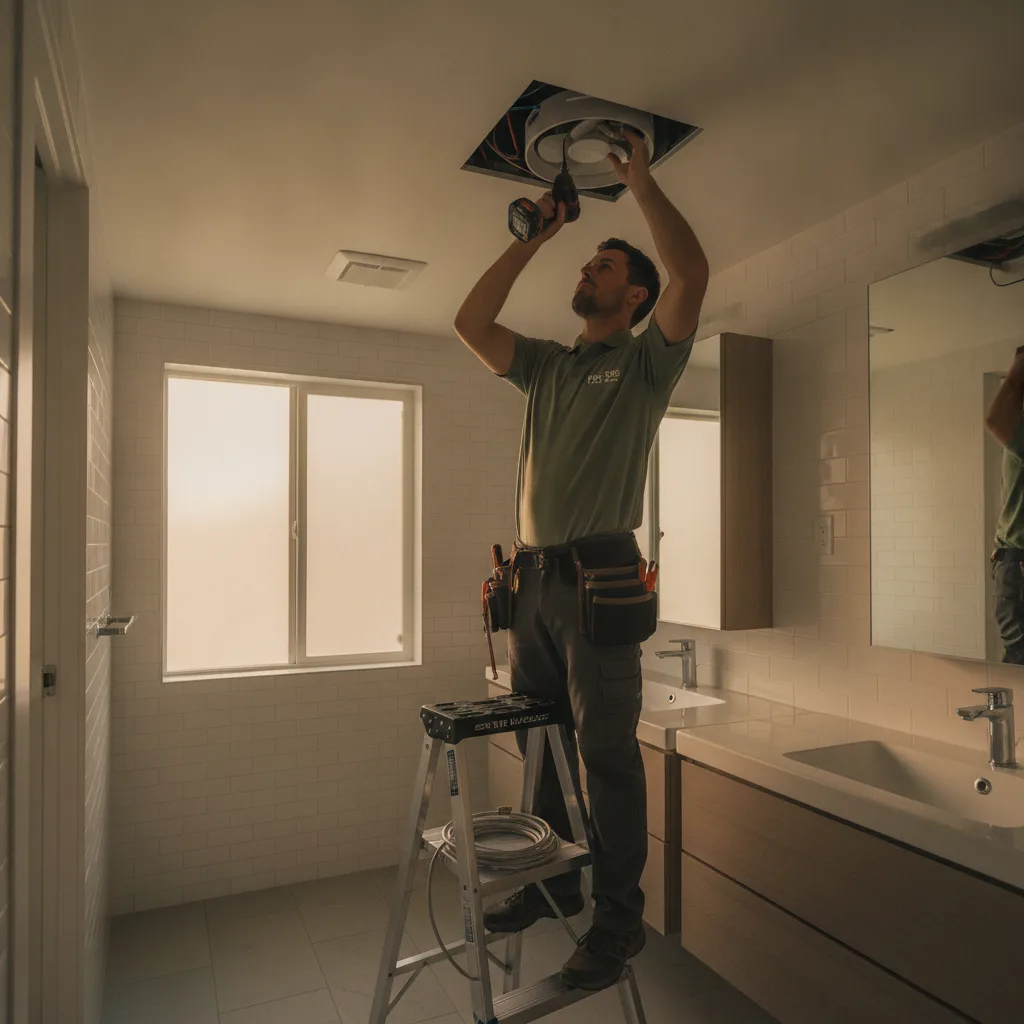
A good bath fan pulls moisture out of the room before it turns into mold and peeling paint. That matters a lot near the coast, where humidity sits high for months. Below is what you can expect to budget, what changes the price, and where the line falls between a handyman job and licensed electrical work.
What does bathroom exhaust fan installation cost in San Diego?
For most homes, bathroom exhaust fan installation in San Diego costs $120 to $250 in labor when a handyman swaps a new fan into an existing spot. That price assumes the ceiling opening, duct, and wiring are already there and in decent shape. It covers pulling the old unit, mounting the new housing, connecting the duct and wire, and testing airflow.
The fan itself is a separate cost. A basic builder-grade fan runs about $20 to $50. A quiet, higher-CFM model with a light or humidity sensor runs $80 to $150. When you call Fix Pro San Diego, we give you a clear quote for the labor up front, so there are no surprises once the work starts.
Here is how the common jobs break down:
- Like-for-like swap (existing fan): $120 to $250 in labor.
- New fan where a light or nothing existed: $250 to $600 or more, because it needs new wiring, a new duct run, and a roof or wall vent.
- Upgrading to a larger or quieter unit: $150 to $300, since the opening may need resizing.
- Adding a fan with a heater or a smart humidity sensor: $200 to $450, depending on the wiring.
Replacing an old fan vs. installing a new one
Replacing an old fan is the fast, affordable job. The duct, the vent cap on the roof or wall, and the electrical are already in place, so a handyman just fits the new unit and connects it. Most swaps take about one to two hours.
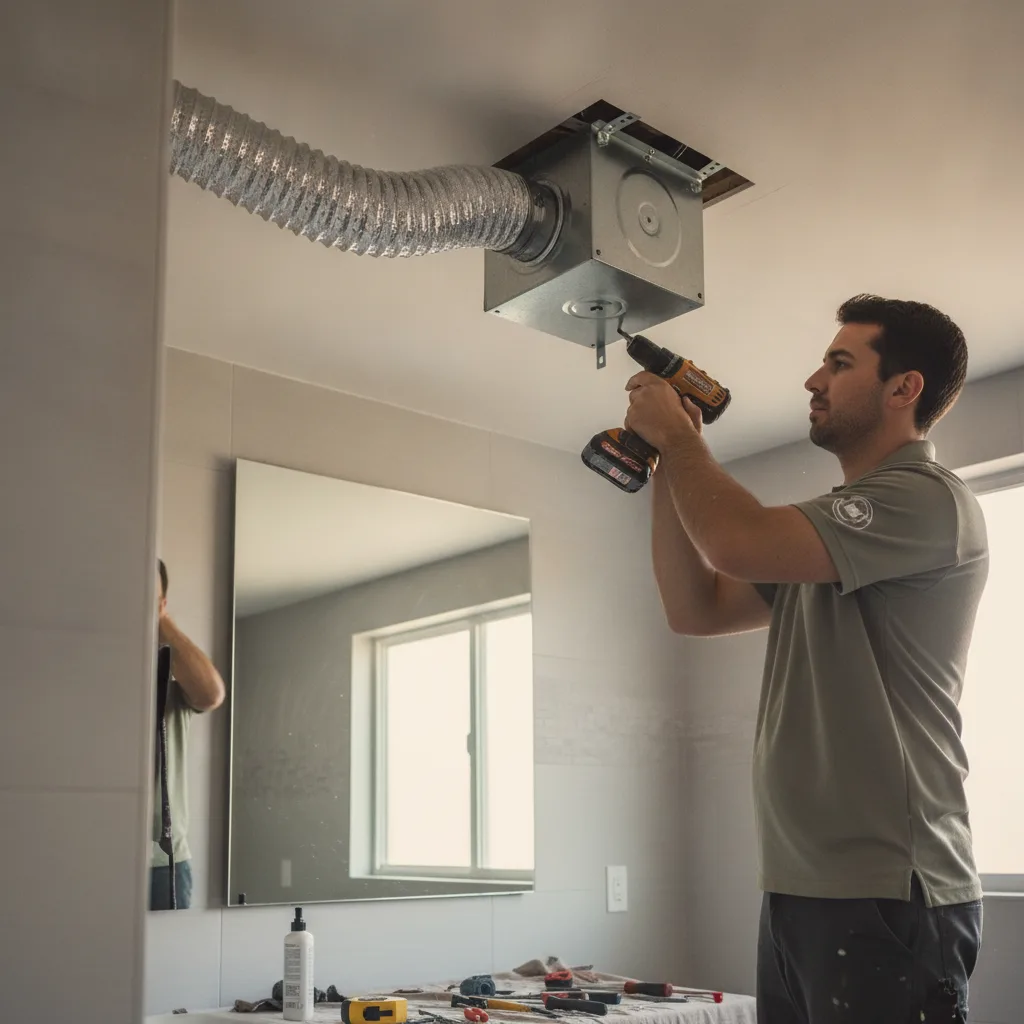
Installing a fan where none existed is a bigger project. It means cutting a new opening in the ceiling, running a duct all the way outside, adding a vent cap, and pulling new wiring to a switch. That work often needs a licensed electrician for the circuit and a permit from your city. It costs more because of the extra labor, the new materials, and the code steps involved.
One thing we always check is where the old fan vented. A surprising number of older San Diego homes have a fan that dumps warm, wet air straight into the attic instead of outside. That traps moisture in the roof structure. Rerouting the duct to a proper exterior vent adds cost, but it protects the house.
Can a handyman install a bathroom exhaust fan, or do you need an electrician?
A handyman can install or replace a bathroom exhaust fan when the wiring and duct are already there, which covers almost every swap. This is a like-for-like job that uses the existing circuit, so it does not need new electrical work or a permit. Our general handyman repairs team handles these fan swaps across San Diego County.
You need a licensed electrician when the job requires a new circuit, new wiring, or moving the fan to a spot with no existing box. Cutting into ceiling drywall, adding a dedicated switch, or wiring a fan-heater combo that draws more power all cross into electrical-permit territory. The same rule applies to swapping a ceiling light for a vented fan-light combo where the wiring changes. If you are also updating the room’s lighting, see our light fixture installation page for how that work is priced.
We are upfront about this line on every quote. If a job needs an electrician, we tell you before we start, so you can plan the budget and the permit.
Why bathroom ventilation matters in San Diego’s climate
San Diego’s coastal air keeps indoor humidity high for much of the year, and a weak or missing bath fan lets that moisture settle into walls and ceilings. Over time that shows up as black mold along the grout, bubbling paint, and a musty smell that never fully clears. A working fan pulls the wet air out before it can cause damage.
California’s energy code also requires mechanical ventilation in bathrooms. Under the state’s ventilation standard, an intermittent bath fan needs to move at least 50 cubic feet of air per minute, and it has to vent to the outside, not into the attic. When a remodel or a new fan install is inspected, that is one of the items a building department checks.
Good ventilation pairs with good sealing. If your bathroom already has moisture damage around the tub or window, our caulking and sealing service closes the gaps that let water in, and our drywall repair team patches any ceiling that a leaking old fan left stained. You can also read our guide to bathroom caulking replacement for the sealing side of moisture control.
How to choose the right bathroom exhaust fan (CFM and noise)
Two numbers decide whether a bath fan actually works: airflow and noise. Get both right and the fan clears steam fast and quietly. Get them wrong and it either does nothing or roars every time you flip the switch.
Airflow is measured in CFM. A simple rule from the Home Ventilating Institute is one CFM per square foot of bathroom floor, with 50 CFM as the floor for any bath. So a 60-square-foot bathroom needs a 60 CFM fan, and a large master bath with a separate shower and toilet may need 100 CFM or more. Undersizing is the most common mistake we see.
Noise is measured in sones. A rating under 1.0 sone is very quiet, close to a soft hum. A rating of 1.0 to 2.0 sones is still comfortable. Cheap builder fans often sit at 3 to 4 sones, loud enough that people avoid using them, which defeats the point.
If you want extras, a built-in humidity sensor turns the fan on by itself when steam builds, and a fan-light combo saves a fixture. Both add a little to the cost but pay off in a bathroom that stays dry on its own. This kind of upgrade is similar to a ceiling fan installation, and the same crew can handle it. While a pro is on the roof checking your vent, it is also a smart time to book dryer vent cleaning, since both lines vent to the outside.
Frequently asked questions
How much does it cost to install a bathroom exhaust fan in San Diego?
A handyman in San Diego charges roughly $120 to $250 in labor to replace a bathroom exhaust fan where the duct and wiring already exist. The fan itself adds $20 to $150. A brand-new install that needs fresh wiring, a new duct, and an exterior vent runs $250 to $600 or more.
Can a handyman replace a bathroom exhaust fan?
Yes. Swapping an old fan for a new one in the same spot is a standard handyman job, because it uses the existing circuit and duct. You only need a licensed electrician when the work calls for new wiring, a new circuit, or moving the fan to a location with no existing box.
How long does bathroom exhaust fan installation take?
A like-for-like fan swap usually takes one to two hours. A full new install, with a new opening, duct run, exterior vent, and wiring, can take most of a day and may involve an electrician for the circuit.
What size bathroom exhaust fan do I need?
Match the CFM rating to your bathroom’s floor area, at about one CFM per square foot, with 50 CFM as the minimum for any bath. A 60-square-foot bathroom needs a 60 CFM fan, and a large master bath often needs 100 CFM or more to clear steam quickly.
Does a bathroom fan have to vent outside in California?
Yes. California’s energy code requires bathroom fans to vent to the outdoors, not into the attic or a wall cavity. Venting into the attic traps moisture in the roof and can cause mold and rot, so a proper install always runs the duct to an exterior vent cap.
Do I need a permit to replace a bathroom exhaust fan?
Replacing an existing fan in the same spot does not require a permit, since you are using wiring and a duct that are already there. Adding a fan where none existed, running new wiring, or cutting a new vent does require a permit, and that work should be done by a licensed electrician.
Ready to clear the steam for good? Call Fix Pro San Diego at (858) 400-4611 for a straightforward quote on bathroom exhaust fan installation anywhere in San Diego County. Not sure what your bathroom needs yet? Browse our handyman services across San Diego, including handyman work in Oceanside and every coastal city where humidity hits hardest.
Want a flat-rate quote for this instead of doing it yourself? Call (858) 400-4611.
Request a quote