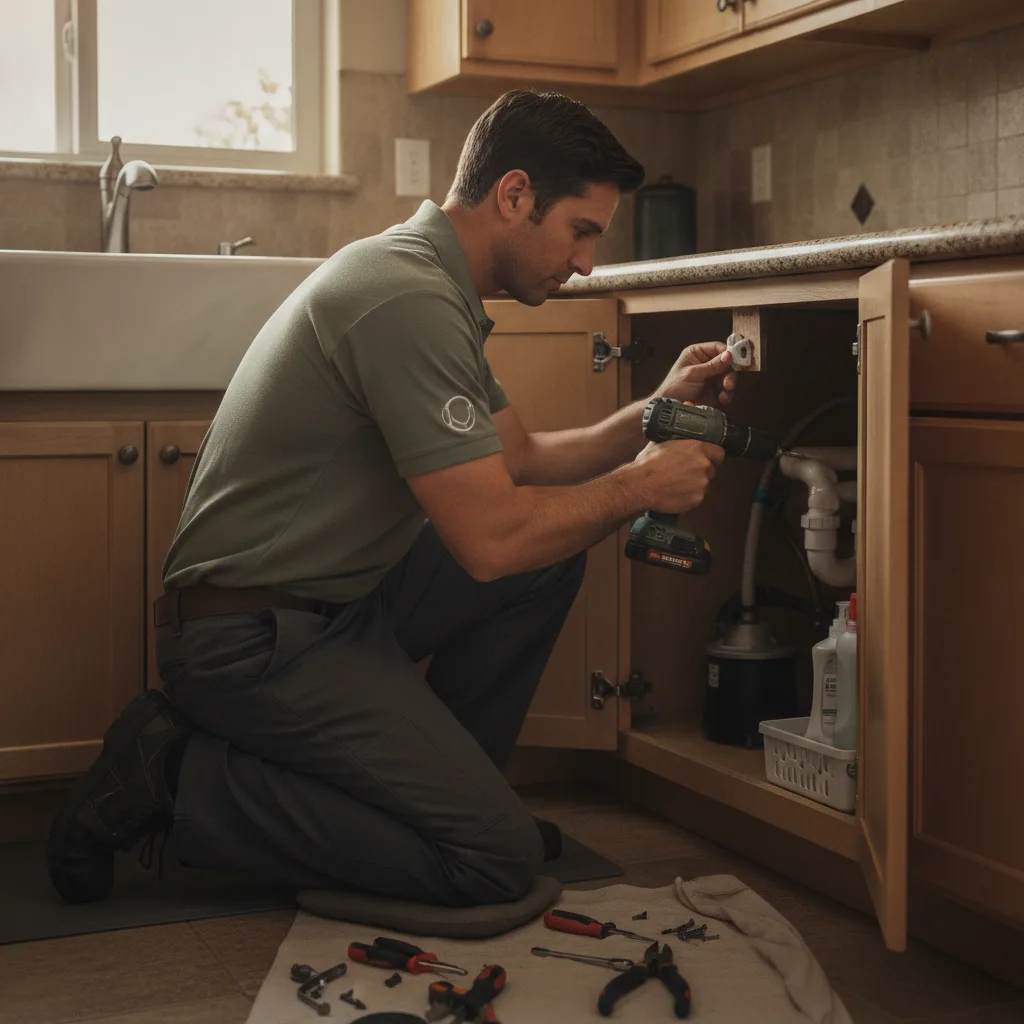
Childproofing a San Diego home typically costs $170 to $250 for a basic two-hour visit, covering outlet covers, a handful of cabinet locks, and corner guards on sharp edges. A full-house pass, every room, stair gates, and furniture anchored to the wall, usually runs $350 to $650. Hardware is billed separately in most cases. Some families buy a childproofing kit ahead of time, others have the handyman pick one up and add it to the invoice.
That’s the short version. What actually moves the price is how many rooms you’re covering, whether a gate needs to go in at the top of a staircase, and how much furniture needs anchoring so it can’t tip. Here’s how a professional visit breaks down.
How much does childproofing cost in San Diego?
Use these 2026 ranges as a starting point for a professional childproofing visit in San Diego County.
| Scope | Typical San Diego cost |
|---|---|
| Basic visit: outlet covers, a few cabinet locks, corner guards (2-hour minimum) | $170 – $250 |
| Full-house pass: kitchen, bathrooms, stairs, living areas | $350 – $650 |
| Stair or doorway safety gate, hardware-mounted | $85 – $150 per gate |
| Furniture anti-tip anchoring (dresser, bookshelf, armoire) | $25 – $45 per piece |
| TV wall-mount anchoring, if the TV isn’t mounted yet | Starts at $120 |
| Window guard or blind cord cleat | $20 – $35 per window |
A single task rarely justifies its own visit once you add the standard trip charge most handyman companies apply. The better move, and the one most San Diego pros recommend, is walking through the whole house room by room and knocking out the full list in one trip instead of calling back every time you notice one more hazard.
What’s included in a professional childproofing visit?
A thorough visit covers more ground than the outlet-cover-and-cabinet-lock kit most parents grab at the store. A handyman working through a full childproofing pass typically handles:
- Outlet covers on every accessible outlet, not just the ones at eye level for a toddler
- Cabinet and drawer locks in the kitchen and bathrooms, especially under the sink where cleaning supplies live
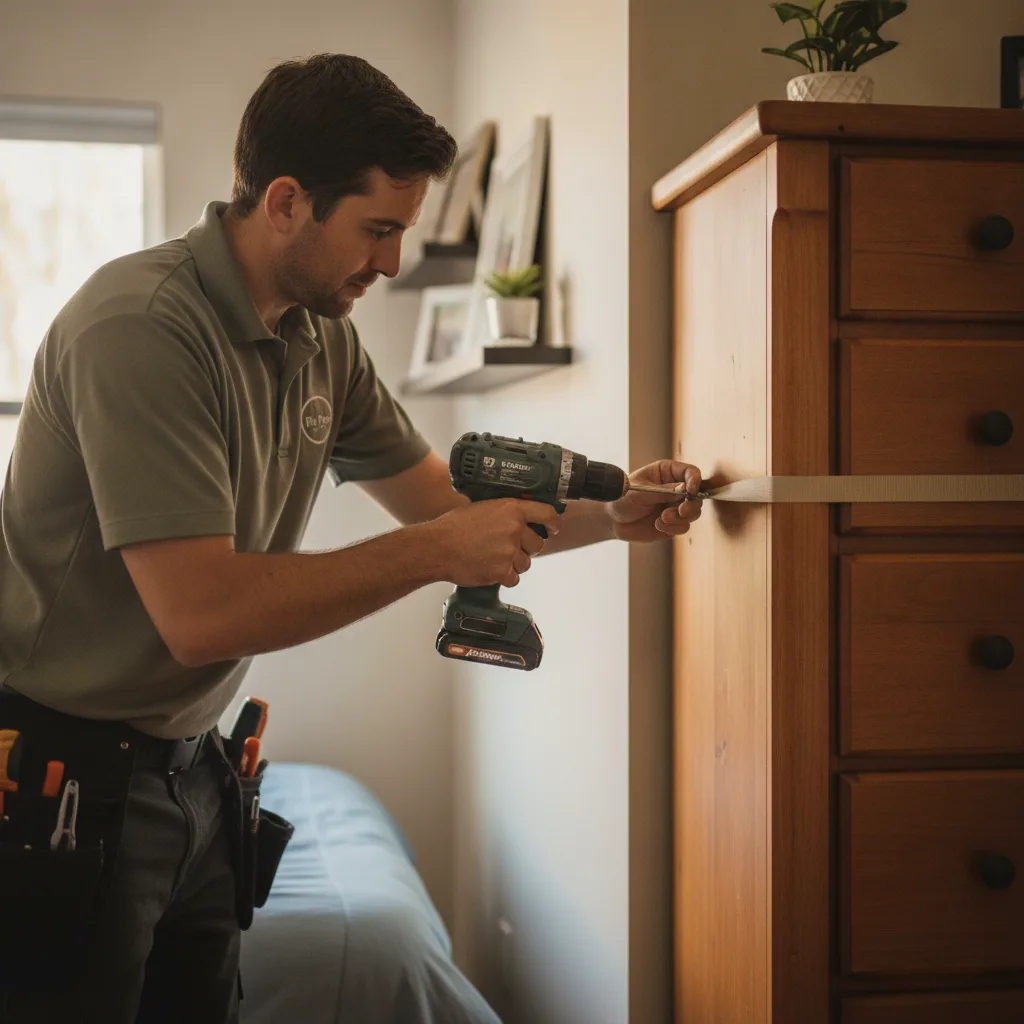
- Anti-tip anchoring for dressers, bookshelves, and armoires, screwed into a stud, not just the drywall behind it
- Hardware-mounted safety gates at the top and bottom of stairs (pressure-mounted gates aren’t built to hold against a real fall and shouldn’t go at the top of a staircase)
- Corner and edge guards on coffee tables, fireplace hearths, and other sharp furniture edges
- Cord cleats for blinds and curtains, keeping loops out of reach
- Door knob covers or door slam guards on rooms you want off-limits
- Toilet lid locks and, where needed, securing a wall-mounted TV that isn’t already anchored
Fix Pro’s general repairs service covers this exact kind of running list well: one visit, multiple small tasks, priced for the scope instead of billed separately for every item.
Why anchoring matters more than the hardware
The part that actually keeps a kid safe isn’t the strap or the lock. It’s what’s behind the wall. An anti-tip strap screwed only into drywall, with nothing solid behind it, holds fine until a toddler climbs the bottom drawer like a ladder and puts real weight on it. The same is true for a stair gate mounted into a banister or wall with hollow anchors instead of a stud or solid blocking.
This is the same principle that shows up in our grab bar installation work for aging-in-place bathrooms: hardware only holds what it’s anchored into. Many San Diego homes built from the 1960s through the 1990s, particularly plaster-over-lath construction common in central neighborhoods like North Park and University Heights, don’t have studs exactly where furniture happens to sit against a wall. Finding the real anchor point sometimes means adding a short section of blocking, the same carpentry work described in our floating shelf installation guide.
When should you childproof your home?
Most families start once a baby begins pulling up and cruising along furniture, generally somewhere around six to nine months, well before a kid is fast enough to reach a cabinet or stair before you can react. Waiting until a child is already climbing is waiting too long.
It’s not just the primary home, either. Grandparents’ houses, where a family visits regularly but doesn’t live full time, often get skipped and end up the least prepared room in the rotation. A lighter pass, outlet covers, a couple of cabinet locks, and anchoring the TV or a tall dresser, covers the highest-risk items without a full-house commitment. The same logic applies if you’re moving into a new San Diego home with a toddler already in the picture: book the visit before moving day, not after the first close call.
DIY vs hiring a pro
Some of this is a genuine weekend project. Adhesive outlet covers, corner guards, and cord cleats take a screwdriver and twenty minutes of patience, nothing more.
The math changes once you’re drilling into a wall to hold real weight. Finding a stud behind a dresser that’s already pushed into place, hardware-mounting a gate at the top of a staircase where a mistake means the gate fails exactly when it matters most, or anchoring furniture into a wall you’re not sure is drywall or plaster, that’s where a wrong guess has real consequences. A pro brings a stud finder that works on plaster and older construction, the right hardware for the wall type, and enough experience to know a pressure-mounted gate has no business at the top of stairs.
Frequently asked questions
How much does childproofing cost in San Diego?
A basic two-hour visit covering outlet covers, a handful of cabinet locks, and corner guards runs $170 to $250. A full-house pass covering the kitchen, bathrooms, stairs, and living areas typically runs $350 to $650, depending on how many rooms and furniture pieces need attention.
What’s included in a childproofing service visit?
A thorough visit covers outlet covers, cabinet and drawer locks, furniture anti-tip anchoring, hardware-mounted stair gates, corner guards on sharp furniture, cord cleats for blinds, and door knob covers where needed. Hardware is usually billed separately from labor.
Can I install a stair gate myself?
Simple pressure-mounted gates between two rooms are a reasonable DIY task, but any gate at the top of a staircase should be hardware-mounted into a stud or solid blocking instead. Getting that anchor wrong is exactly where these fail.
Do you provide the childproofing hardware or do I?
Either works. Some families buy a childproofing kit ahead of the visit and have the handyman install it. Others prefer the pro to bring hardware and add the material cost to the invoice. Just let us know when you book.
How long does a childproofing visit take?
A basic pass, one or two rooms, runs about two hours. A full-house childproofing job covering every room, stairs, and multiple pieces of furniture typically takes three to five hours in one visit.
Is childproofing a one-time job or does it need updating?
It needs updating as a child grows. A pass done for a crawling infant often misses hazards a climbing two-year-old finds a year later: cabinet locks that get outgrown, furniture rearranged without re-anchoring, or a new stair a toddler can now reach. Plan on a quick follow-up check every year or so.
Book a childproofing visit
Ready to get your San Diego home ready for a curious toddler? The handymen in the Fix Pro San Diego network anchor every gate, strap, and lock into real backing, not just drywall. Call (858) 400-4611 or request a quote and we’ll walk your house room by room. For the rest of your list, our handyman cost guide covers typical pricing for everything else on it.
Would you rather hand this one to a pro than do it yourself? Call (858) 400-4611.
Request a quote