Moving boxes and listing plans make unfinished repairs much easier to notice. If you’re searching for a handyman Santee homeowners can call, start with one room-by-room list. It gives a local pro a clearer scope without tying the work to a promised sale result.
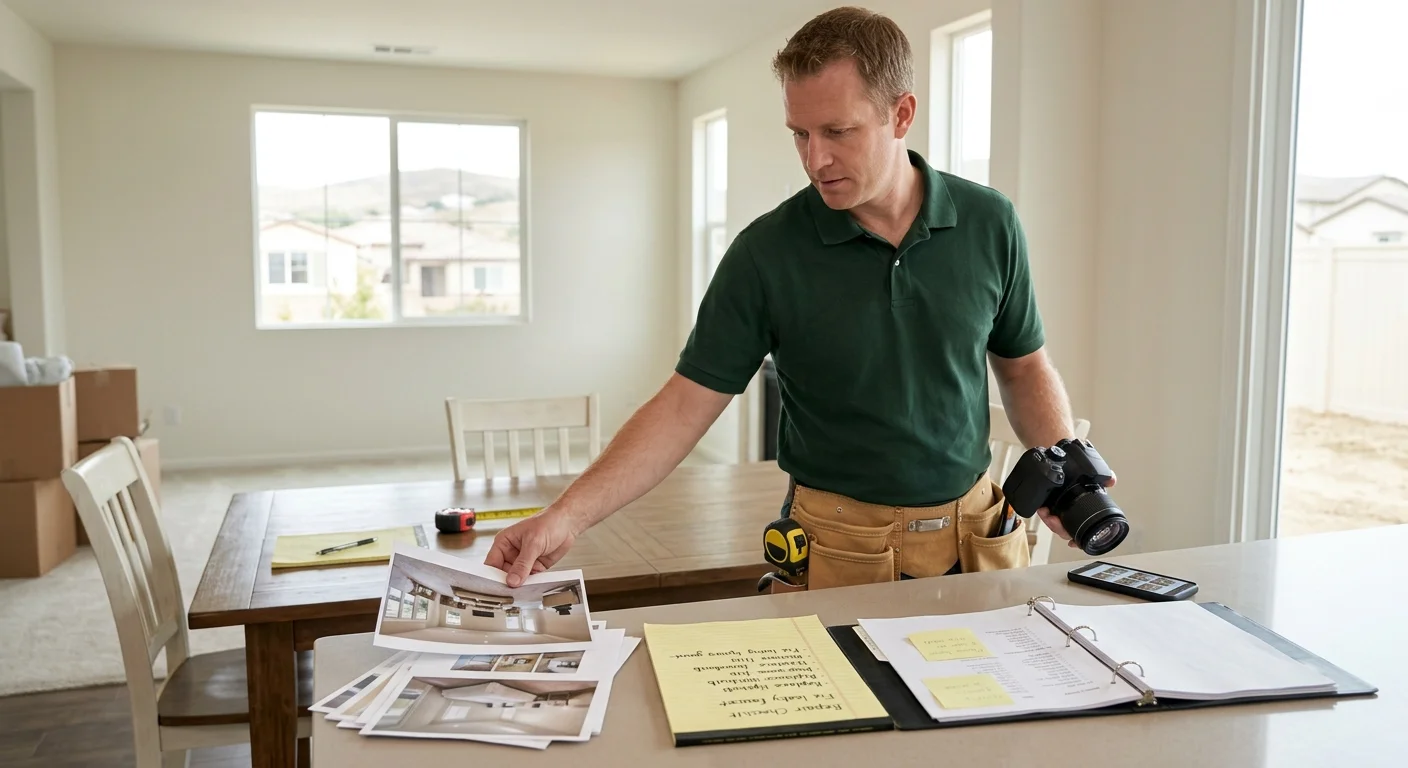
Start with visible repairs in each room
Begin at the main entrance, then walk through the home in one direction. Moving clockwise helps prevent skipped walls, closets, and doorways. Finish one room before entering the next.
Look at the room as a visitor would see it. Note loose handles, marked walls, damaged trim, empty mounting holes, and doors that don’t close correctly. Check the areas hidden by furniture before moving day. A wall may need attention once a bookcase or television is removed.
Describe the condition without guessing at its cause. Write “bedroom door rubs near the upper corner,” not “frame is warped.” Record “brown mark below window,” not “window leak.” A local pro can inspect the condition and determine the next step. Clear observations are more useful than an uncertain diagnosis.
Give each item a short number and a fixed location:
- 01: Entry door, loose interior handle
- 02: Living room, mounting holes above media cabinet
- 03: Hallway, damaged baseboard beside closet
- 04: Back bedroom, dent in drywall near outlet
Include closets, the garage, and exterior entries in the same walk. Keep cosmetic concerns separate from conditions that may involve water, wiring, plumbing, or structural movement. Those items need their own review.
The San Diego home maintenance checklist can help you inspect areas beyond the obvious move-related touch-ups. Use it as a prompt, then keep your Santee repair list tied to conditions you can actually see.
Group doors, trim, drywall, and mounting work
After the walkthrough, sort related items together. A long room-by-room list is useful for inspection. A grouped list is easier for a handyman to review and quote.
Start with doors and hardware. Include rubbing doors, loose handles, damaged stops, and trim gaps. State which door has the problem and whether it leads outside, into a room, or into a closet. Don’t combine a minor hardware adjustment with an unexplained frame or wall issue.
Place baseboards, casing, and other finish carpentry in a trim group. Note missing pieces, open joints, dents, and sections that have pulled away. Add close photos and one wider photo showing the location. If you have leftover matching material, photograph its profile and finish.
Drywall items should identify the room and damage type. Separate small holes, dents, loose tape, cracks, and stained areas. A stain or soft surface deserves inspection before anyone treats it as a basic patch. Our drywall repair and patching service page explains the scope a matched pro can review.
Create another group for wall-mounted items. List mirrors, shelves, curtain hardware, televisions, and artwork separately. Include the item dimensions and intended wall location. Mention any hardware you already have, but don’t assume it’s suitable for that wall.
This grouping also helps when deciding who to call for small home repairs. One handyman may handle several ordinary finish repairs. A regulated or permit-related project may need a contractor with the proper classification.
Separate small fixes from specialty projects
A move or sale deadline can make every item feel equally urgent. The work itself may not belong in one category. Separate ordinary finish repairs from anything involving structural, electrical, plumbing, mechanical, or fire-protection systems.
California’s minor-work exemption has specific limits. Under Business and Professions Code section 7048, the aggregate contract price must be less than $1,000. That total includes labor, materials, and all other items. The work must also be casual, minor, or inconsequential, and it can’t require a building permit.
The exemption doesn’t apply when work is part of a larger operation. A larger project also can’t be divided into smaller contracts to avoid licensing requirements. Any project requiring a building permit requires a licensed contractor regardless of price.
Don’t decide permit or trade requirements from appearance alone. A small opening in a wall may be only surface damage, or it may expose another issue. A loose fixture may need more than a simple adjustment. Describe what you see, then ask the professional to identify the proper scope.
Permit details for a specific Santee property weren’t confirmed in the approved research for this guide. Before authorizing uncertain work, ask which authority handles the project and confirm the current requirements with that authority. Don’t apply City of San Diego permit guidance automatically to a Santee address.
Fix Pro San Diego matches homeowners with licensed, independent local handyman professionals. The customer contracts with and pays the professional directly. You can also use the CSLB license check to verify a contractor’s current license status before signing an agreement.
Record materials, dimensions, and access details
Good notes reduce the number of unknowns in your request. They don’t replace an on-site review, but they help a professional understand what needs inspection.
Create one entry for each repair. Record the room, exact location, visible condition, preferred finish, and approximate dimensions. Note whether you have matching paint, tile, trim, hardware, or other materials. Photograph any label or packaging that remains.
Take three useful photos when possible. Start with a wide image showing the room. Add a middle-distance image showing the repair location. Finish with a close image showing the damaged area. Keep the item number in each photo’s filename or caption.
Measurements should describe the scope, not settle the repair method. For a drywall opening, record its height and width. For damaged trim, measure the affected length and photograph the profile. For a shelf or mirror, record the object’s dimensions and intended position. Let the pro confirm final measurements before materials are purchased or cut.
Access notes matter too. State whether the home is occupied or vacant. Mention stairs, locked gates, pets, heavy furniture, or items that must be moved. Identify any room that won’t be available during a proposed visit.
When arranging an on-site review, give the Santee address and a useful reference point. State Route 52 and Mission Gorge Road can help distinguish the general part of Santee, but the full address is still needed. Include parking or entry instructions that apply to the property.
Add your move, photography, inspection, or listing dates as planning information. Present them as deadlines, not as demands for a promised response or completion time.
Turn the list into one clear service request
Your final request should fit on one page, with photos attached separately. Start with the property address and contact details. Then state the situation plainly: preparing to move, preparing to list, or clearing repairs after furniture removal.
Divide the work into three priority levels:
- Must address before the scheduled milestone
- Should address if the scope allows
- Optional work that can be quoted separately
Keep the numbered repair entries beneath those headings. Each entry should name the room, condition, dimensions, and related photos. Flag uncertain items for inspection instead of placing them inside a cosmetic repair bundle.
Ask the professional to identify anything outside the proposed handyman scope. Request a written quote that explains the work, materials, and exclusions. For licensed contractor work, CSLB recommends getting at least three written bids. CSLB also says contract changes should be written and signed by both parties.
If your search began with “handyman Santee CA” or “home repairs near me,” don’t send only a keyword and phone number. Share the organized list. A specific request helps the matched professional decide what requires inspection and what information is still missing.
You can review the general home repairs service to see the types of small projects commonly submitted for matching. The Santee handyman service page is the local starting point for requesting a referral.
Fix Pro San Diego doesn’t perform the repairs, set the professional’s price, or provide a warranty. We match you with an independent local pro. Review that professional’s written scope, credentials, payment terms, and warranty details before approving the work.
When to call us
Hand the list to a pro when it spans several rooms, requires unfamiliar tools, or includes work you can’t classify safely. Fix Pro San Diego can match you with a licensed independent local handyman professional serving Santee.
Call us at (858) 400-4611 and we’ll match you with a local pro who quotes the job before starting.
Would you rather hand this one to a pro than do it yourself? Call (858) 400-4611.
Request a quote